

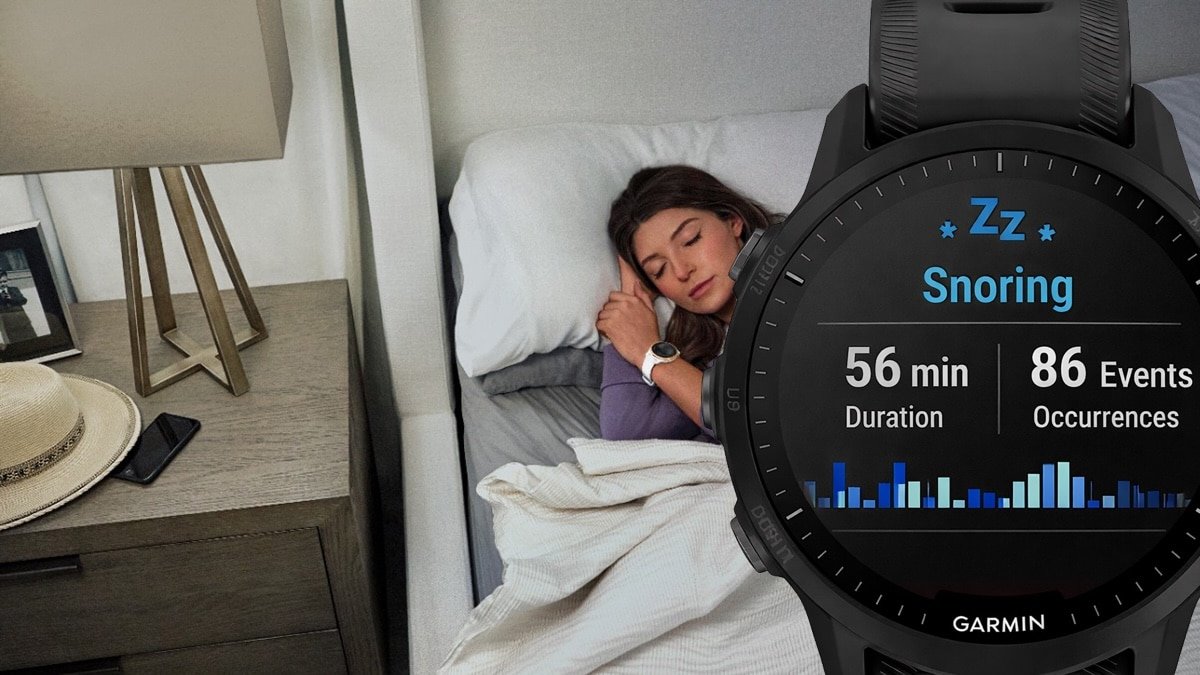
Garmin may be preparing to add snore detection to its lineup of health-tracking features. The system goes beyond simple sound analysis, combining audio with biometric data to identify true snoring events during sleep.
Garmin working on advanced snore detection for its wearables
Snore tracking is nothing new. We’ve see other brands with devices that can track such things. But Garmin is looking to take things further. Rather than relying solely on sound picked up by a microphone, this system pairs audio input with optical heart rate signals to verify whether the user is actually snoring.
This dual-sensor approach makes sense. Environmental noise, partner movements or even pets can trigger false positives in basic audio analysis. By adding in photoplethysmography (PPG) data, the device can look for signs of disrupted breathing, fluctuating pulse rate or other physiological indicators that typically accompany snoring.
The setup starts by recording audio during the night using a microphone built into the watch or paired device. That stream is then filtered to isolate potential snoring patterns. In parallel, the device captures PPG signals from the optical sensor on the wrist, allowing it to monitor heart rate and respiration variability in real time.
If both inputs line up, this means a possible snore sound matches with biometric activity suggesting an actual snoring event. The watch marks the data as valid and adds it to the user’s sleep metrics.
This system could also adapt the microphone’s sensitivity during the night. For example, once audio activity is detected, the device might briefly increase sampling frequency to get a more detailed waveform. There’s also potential for extra inputs like skin temperature, movement data or positional awareness to refine the signal even further.
From the end-user perspective, the snoring data would likely appear as part of the regular sleep report, alongside metrics like sleep stages, Body Battery and respiration rate. The feature could also help flag issues like frequent awakenings or light sleep fragmentation caused by heavy snoring.
Feature
Traditional Wearable Snore Tracking
Garmin’s Patented Correlation System
Primary Data Source
Relies almost exclusively on microphone audio to identify sounds.
Combines microphone audio with biometric data from PPG and inertial sensors.
User Identification
Often struggles to distinguish between the wearer and a partner or pet.
Uses your specific heart rate and respiration timing to verify the snore is yours.
False Positive Filtering
High potential for false positives from ambient noise or external sounds.
Filters out external noise by matching sound timestamps with internal physical responses.
Battery Management
Continuous microphone use can significantly drain small wearable batteries.
Uses intelligent periodic sampling and predicts breathing windows to save power.
Verification Method
Simple threshold-based sound detection.
Cross-correlates audio events with SpO2 drops, HRV changes, and respiratory cycles.
Hardware Flexibility
Usually limited to the processing power of the watch itself.
Can offload audio recording to a smartphone to conserve watch battery life.
Context Awareness
Standard sensitivity regardless of how the watch is being worn.
Adjusts detection models if sensors identify the microphone is blocked by a blanket or pillow.
Our takeaway
What’s notable here is Garmin’s attempt to confirm rather than just guess. Many current wearables treat snoring as a binary on/off event based on sound alone. By layering in PPG, Garmin may be able to identify not just the presence of snoring, but the impact it’s having on the user’s recovery and overnight physiology.
It’s still unclear when or if this feature will roll out to actual devices. Garmin has been expanding its wellness suite steadily, with recent additions like Sleep Alignment. If snore detection does arrive, it could fit neatly into the company’s broader effort to surface deeper sleep insights without requiring extra accessories.
This article originally appeared on Gadgets & Wearables, the first media outlet to report the story.
Subscribe to our monthly newsletter! Check out our YouTube channel!
And of course, you can follow Gadgets & Wearables on Google News and add us as your preferred source to get our expert news, reviews, and opinion in your feeds.
