

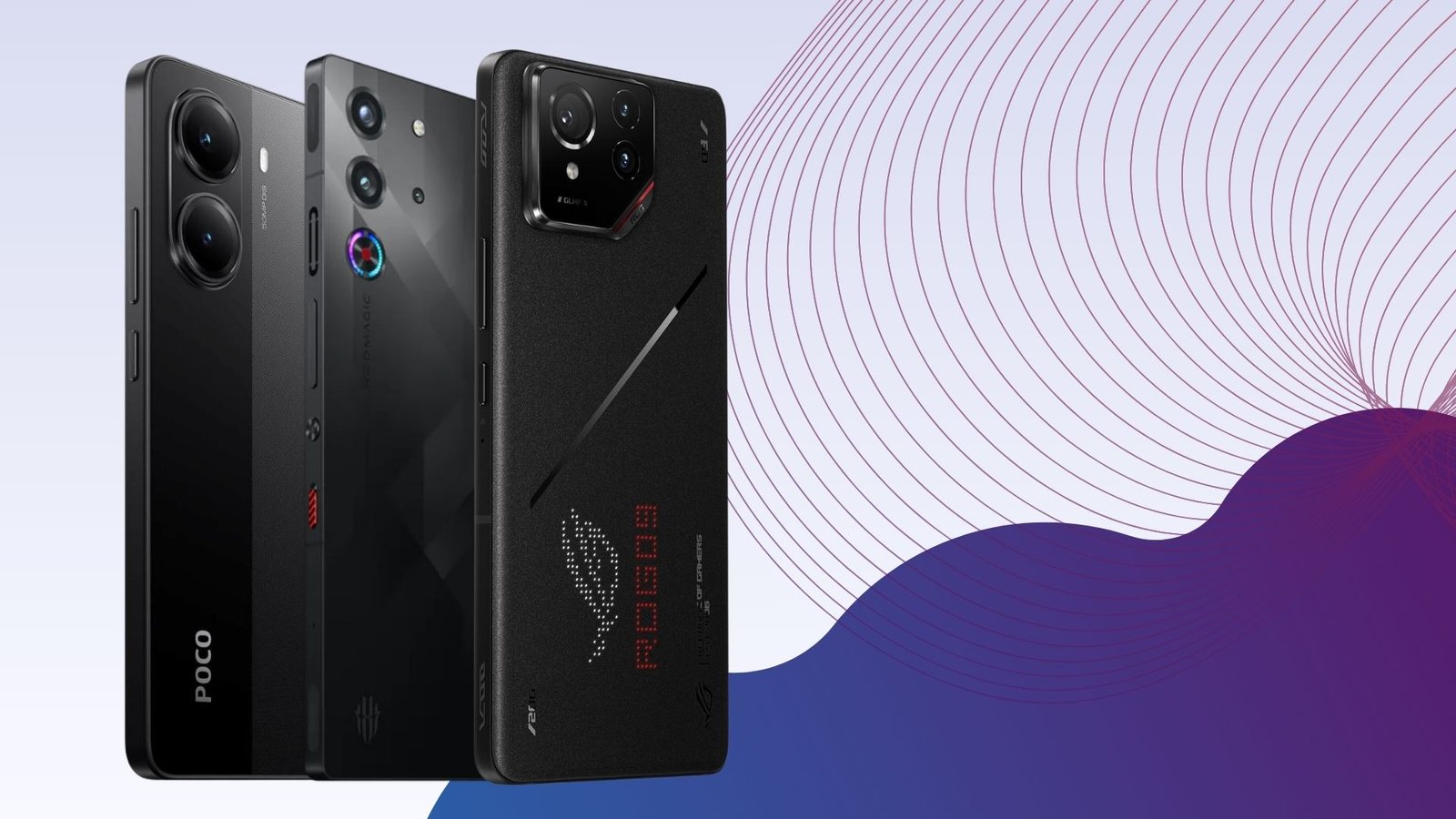
Once upon a time, getting through a single round of Angry Birds was enough to send your phone’s processor into a meltdown. Fast forward to 2026 and the best gaming phones are basically pocket-sized consoles, happy to chew through full-fat triple-A titles rather than just casual time wasters.
Of course, a phone that can keep up with modern games isn’t just any old handset. You’re looking at the very top end of mobile specs: a powerful processor to keep frame rates smooth, a fast, punchy display to show off all that action, and a battery big enough to survive those “just one more match” sessions.
That’s where our testing comes in. Every phone we review, gaming-focused or otherwise, goes through the same rigorous benchmarking process so we can see how it really behaves under pressure, not just how good the spec sheet looks.
We push performance, check thermals, live with the battery day-to-day and see how the screen and audio hold up in actual games. The result is a list of gaming phones that aren’t just powerful on paper, but genuinely worth your time and money.
All of the options featured below have proven themselves to be stellar in this category, but if you’re interested in seeing what other handsets are out there, we’ve got you covered with our guides to the best camera phones, best mid-range phones and the best smartphones overall.
Advertisement
SQUIRREL_ANCHOR_LIST
Learn more about how we test gaming phones
Every phone we review undergoes a series of uniform checks designed to gauge key aspects, including build quality, screen accuracy, battery life, performance, and camera prowess.
These include formal synthetic benchmarks, scripted tests, and real-world checks, such as how much battery it loses per hour streaming video. We pay particular attention to how well gaming phones run some of the most popular mobile titles.
We also use every phone we review as our primary handset for at least a week to ensure our review is as accurate as possible. You can see a more detailed breakdown of our testing methodology in our how we test phones guide.
Pros
- New liquid cooling system
- Mega powerful
- The most advanced gaming options around
- Huge battery and fast charging
- Gorgeous screen
Cons
- Under-display camera is still poor quality
- No telephoto camera
- Some software quirks
Pros
- Incredible performance
- Excellent speakers
- Slick professional design
- Awesome LED lighting effects
Cons
- Very expensive
- Cameras aren’t the best
- Charging could be quicker
Pros
- Great battery life for the smaller Pro
- Finally, some fun colours
- Versatile camera system with welcome upgrades to zoom and the front camera
Cons
- Not the best looking iPhone
- Apple Intelligence is still a miss
Pros
- Stylish design with unique finishes
- Top-end processing power without getting warm
- Huge battery and rapid charging
- Gorgeously detailed, smooth screen
Cons
- No more Alert Slider
- Only four OS upgrades promised
Pros
- Speedy performance from the Snapdragon 8 Elite
- Big, vibrant 120Hz display with fast response times
- Proper zoom lens adds versatility to the camera system
- Battery refills in about half an hour
Cons
- Regular Wi-Fi connection issues
- Ultrawide camera is poor
- HyperOS remains a cumbersome Android skin
- 120W charging doesn’t quite charge as fast as expected
Pros
- Plenty of power
- Excellent charging speeds
- Great value for money
Cons
- Bloated software
- Average camera performance
- Some connectivity concerns
Pros
- Lightest book-style foldable around
- Ultra thin design makes it really nice to use
- Larger, wider, wholly more useful screens
- Same main camera as Galaxy S25 Ultra
Cons
- Relatively small 4400mAh battery
- Slow 25W wired charging
- Zoom camera could be better for the price
Pros
- Much lighter than the 10 Pro
- IP54 rated
- Beautiful uninterrupted screen
- Excellent performance for the money
Cons
- No headphone socket
- Gets hot with heavy workloads
- Cameras aren’t the best
New liquid cooling system
Mega powerful
The most advanced gaming options around
Huge battery and fast charging
Gorgeous screen
Under-display camera is still poor quality
No telephoto camera
Some software quirks
The RedMagic 11 Pro is an easy pick for the best gaming phone. It features plenty of gaming-focused features, the latest Snapdragon chipset and a price tag that won’t break the bank. What’s not to like?
As mentioned, this phone boasts several excellent gaming features that set it apart. Most notably, the RedMagic has integrated touch triggers, allowing you to use the phone’s rim as makeshift triggers rather than having to slap on a controller accessory.
It also sports integrated cooling, with vents on both sides of the phone to draw in and expel air, along with proper liquid cooling – a first for a smartphone.
RedMagic hasn’t skimped in the screen department either, offering a massive 6.85-inch AMOLED screen with a slick 144Hz refresh rate. Combined with uniform 1.25mm-thick bezels that’d give the iPhone 17 Pro a run for its money and an under-display camera, the screen is essentially clear of obstructions, perfect for gaming.
This is also one of the most powerful gaming phones ever tested, boasting the Snapdragon 8 Elite Gen 5 at its core, and surpassing the ROG Phone 9 Pro despite its more affordable price. This means you’ll be able to play any mobile game with ease, and with a massive 7500mAh battery at its core, it’ll just keep on going.
Incredible performance
Excellent speakers
Slick professional design
Awesome LED lighting effects
Very expensive
Cameras aren’t the best
Charging could be quicker
When it comes to pure performance, our money is on Asus’ top-end ROG Phone 9 Pro Edition. The highlight of the phone is undoubtedly the inclusion of the incredibly powerful (but no longer top-end) Snapdragon 8 Elite alongside 24GB of RAM, offering massive year-on-year gains and, importantly, good enough cooling to sustain that top-end performance for longer than any of the competition, gaming-focused or not.
In fact, you’ll even get a dedicated cooler in the box with the 9 Pro Edition, helping keep your phone cool to the touch and offering improved audio performance with a built-in subwoofer. It’s a nice touch rarely seen in the gaming phone market.
Like the RedMagic 11 Pro, this phone is brimming with gaming features such as the AirTriggers, key mapping and Macros. The software is excellent too, enabling you to make tweaks on the fly, even in the middle of an intense match, and Asus is a rarity in that it gives you the choice between a clean ZenUI and a gaming-focused UI.
Elsewhere, Asus has doubled down on making this phone not look or feel like a gamer phone. It has a pretty simplistic look compared to the likes of RedMagic, albeit with an improved AniMe panel that can display text, graphics, and even elements like battery life when the phone is screen down.
Despite a renewed focus on camera tech, the rear cameras still can’t compete with efforts from Apple and Samsung. But if you’re happy to make that sacrifice in the name of gaming performance, then this is a great, albeit premium, option.
Great battery life for the smaller Pro
Finally, some fun colours
Versatile camera system with welcome upgrades to zoom and the front camera
Not the best looking iPhone
Apple Intelligence is still a miss
If you’re an iPhone user who cares more about frame rates than f-stops, the iPhone 17 Pro is the one to buy. It might not be the showiest member of the 17 family – that honour goes to the ultra-slim iPhone Air – but the 17 Pro is the proper workhorse, and that really pays off for gaming.
Apple has given it the “true” A19 Pro treatment with a beefier GPU and much-improved cooling, and in testing, it simply holds high frame rates for longer than the Air while staying noticeably cooler in the hand. Long sessions of Call of Duty or more demanding titles don’t send it into thermal panic quite as quickly, which makes a big difference if you actually play for hours rather than minutes.
It helps that there’s now a genuinely strong library of premium games to take advantage of all that power. Console-style releases like Red Dead Redemption and recent Assassin’s Creed entries feel surprisingly at home on the 17 Pro, both visually and in how smoothly they run.
It’s also just a more comfortable size than the Max for many people, making it easier to grip during longer play sessions without feeling like you’re holding a tablet.
Crucially, the iPhone 17 Pro backs all this up with the basics done well. Battery life is a clear step up over previous smaller Pro models, and we ended most days with a comfortable buffer even after a fair bit of gaming.
Faster wired and Qi2 wireless charging help you top up quickly between sessions, and you’ve got plenty of storage options if you want to keep multiple big titles installed at once.
Stylish design with unique finishes
Top-end processing power without getting warm
Huge battery and rapid charging
Gorgeously detailed, smooth screen
No more Alert Slider
Only four OS upgrades promised
If you want a flagship smartphone with excellent gaming performance as just one of its many accomplishments, the OnePlus 15 is the phone to go for.
It can easily deliver excellent performance using the ultra-powerful Snapdragon 8 Elite Gen 5 alongside up to 16GB of RAM, delivering better performance than Asus’ ROG Phone. The difference between it and the ROG Phone? You’re getting much more than just top-end performance.
You also get a high-end 6.8-inch AMOLED display with an LPTO-enabled 165Hz refresh rate and 3200Hz touch sample rate, vanishingly slim bezels and a pixel-packed 1.5K resolution. Oh, and did we mention it supports 165fps in games like Call of Duty Mobile? Because, it does.
It also sports a versatile triple 50MP camera setup, innovative cooling systems that utilise aerogel, a massive 7300mAh battery and rapid 120W charging, all of which should appeal massively to gamers.
Of course, you won’t get some purist gaming enhancements, such as shoulder trigger buttons, but it does support bypass charging, which powers the chipset and not the battery to avoid heat generation during longer gaming sessions.
If you’re looking for a top-end Android device that can handle games without breaking a sweat and much more to boot, the OnePlus 15 is an easy recommendation.
Speedy performance from the Snapdragon 8 Elite
Big, vibrant 120Hz display with fast response times
Proper zoom lens adds versatility to the camera system
Battery refills in about half an hour
Regular Wi-Fi connection issues
Ultrawide camera is poor
HyperOS remains a cumbersome Android skin
120W charging doesn’t quite charge as fast as expected
If you’re looking for the best performance possible without splashing out on flagship-level devices, the Poco F7 Ultra is the phone to buy.
Despite its mid-range price tag, the smartphone packs the same ultra-powerful Snapdragon 8 Elite as some of the best phones around right now.
As such, the F7 Ultra can handle practically anything you throw at it, delivering faster speeds and better gaming performance than practically anything else at its price point, making it ideal for mobile gamers who want to save a bit of cash.
Plus, with a 6.7-inch 120Hz AMOLED screen and a pixel-packed WQHD+ resolution, the latest 3D titles will look absolutely amazing.
It’ll also keep on going with a large 5300mAh battery, and with 120W charging, it’ll go from flat to full rather quickly too.
The camera performance isn’t much to write home about, and the software is packed with bloatware to offset the price of that flagship chip, but these are worthy sacrifices for that level of performance.
Plenty of power
Excellent charging speeds
Great value for money
Bloated software
Average camera performance
Some connectivity concerns
The £309 Poco X7 Pro offers incredible performance and a slew of gaming features at a very reasonable price, making it a great option for mobile gamers.
It packs MediaTek’s Dimensity 8400-Ultra, just a step down from the flagship 9000 series, but don’t let that fool you; the X7 Pro is slick, fast and perfect for gaming, It could handle games like Call of Duty Mobile with high-end graphics enabled, with no notable heat build-up or performance drop-off thanks to its built-in liquid cooling.
In both real-world use and in benchmark testing, the Poco X7 Pro can comfortably hold its own against flagships twice the price.
It also has a few gaming-focused features to improve the experience, including software that automatically optimises performance for gaming workloads and a 120Hz refresh rate to keep the on-screen motion smooth on that lovely 6.67-inch AMOLED panel.
Of course, bagging this phone at a cheaper price than the competition does come with compromises. The performance isn’t quite as good as the Asus ROG Phone 9 Pro Edition, and while camera performance is fine for the price, it’s not exactly going to win any awards.
Nevertheless, those flaws are easy to forgive when you’re getting such an excellent gaming experience at a budget-friendly price.
Lightest book-style foldable around
Ultra thin design makes it really nice to use
Larger, wider, wholly more useful screens
Same main camera as Galaxy S25 Ultra
Relatively small 4400mAh battery
Slow 25W wired charging
Zoom camera could be better for the price
If you want a totally different gaming experience, look no further than the foldable Samsung Galaxy Z Fold 7.
The foldable nature of the book-style smartphone means you’ve got access to a large, high-res 8-inch 120Hz AMOLED display when you want to play games on a big screen while still folding down to a size resembling a standard smartphone.
And, with the phone measuring just 4.2mm unfolded and weighing in at 215g, it’s still lighter and thinner than most dedicated gaming phones.
It’s not just the sheer size of the foldable display that makes the Z Fold 7 the best foldable for gaming either; it’s also pretty powerful, sporting the same custom Snapdragon 8 Elite for Galaxy as the S25 Ultra.
It’s more than capable of powering high-end AAA gaming experiences with high-level graphics and consistent gameplay even over longer periods of use, with a built-in vapour chamber for added cooling.
Elsewhere, a 4,400mAh battery should be enough to get you through even demanding gaming sessions, a triple rear camera setup headed by a 200MP lens that offers more versatility than a regular gaming phone, and it has a whopping seven years of OS upgrades to look forward to.
Much lighter than the 10 Pro
IP54 rated
Beautiful uninterrupted screen
Excellent performance for the money
No headphone socket
Gets hot with heavy workloads
Cameras aren’t the best
As much as we love the Redmagic 11 Pro, the phone will feel a bit bulky to some which is why the Redmagic 10 Air is the perfect alternative just waiting to be snapped up.
Being just 7.85mm thick and only weighing in at 205g, the Air is much lighter than both the 11 Pro and the 10 Pro, but it still manages to pack an official IP54 rating to keep it well protected over time.
Even though it has a slimmer build, the 10 Air still brings a ton of power to the table thanks to the Snapdragon 8 Gen 3 chipset. In our testing we were able to get through high-end 3D titles like Zenless Zone Zero without seeing any drops in frame rate. For less taxing titles like Call of Duty Mobile or anything that runs in 2D, you’ll be in for a super smooth experience.
One of the key reasons why Redmagic phones are appealing to gamers is the Game Space software. This unique bit of tech operates as a home dashboard where you can see all of your downloaded games in one uncluttered space, so you don’t have to scroll through a library of apps every time you want to dive into a bit of gaming. You can view all your plugins here as well, providing you with plenty of freedom to customise your experience to suit your needs.
Just in case you were concerned that having a slimmer build might come at the cost of battery life, you can rest easy as the Redmagic 10 Air boasts a massive 6000mAh cell. With that kind of energy to back it up, it’s perfectly possible to get up to two days of use under moderate circumstances. Of course, if you want to enjoy a few hours of gaming in a single day, then you’ll still have plenty of juice left in the tank before you head to bed.
There’s also 80W fast charging available, so you won’t be waiting long to top up the phone when needed. In our tes,t it only took 57 minutes to jump from 0% to a full battery. The fact that all of this comes in a package that’ll only set you back £439/$549 is incredible, and the only reason why you might want to opt for a larger Redmagic phone is for a more recent chipset.
FAQs
What is the best gaming phone?
Overall, we’d pick the RedMagic 11 Pro as the best overall gaming phone you can buy.
Which iPhone should I buy if I like gaming?
We’d recommend the iPhone 17 Pro if you love gaming but want to stick with an iPhone.
Test Data
RedMagic 11 Pro
Asus ROG Phone 9 Pro Edition
Apple iPhone 17 Pro
OnePlus 15
Poco F7 Ultra
Poco X7 Pro
Samsung Galaxy Z Fold 7
RedMagic 10 Air
Geekbench 6 single core
3720
3055
3870
3553
2283
1575
2318
2250
Geekbench 6 multi core
11617
9658
9994
10642
8033
5884
8828
6672
Max brightness
–
–
–
–
–
3200 nits
–
–
1 hour video playback (Netflix, HDR)
5 %
6 %
5 %
–
6 %
7 %
8 %
10 %
30 minute gaming (light)
9 %
10 %
7 %
–
6 %
5 %
7 %
10 %
Time from 0-100% charge
52 min
46 min
80 min
45 min
32 min
48 min
87 min
57 min
Time from 0-50% charge
19 Min
18 Min
21 Min
19 Min
12 Min
23 Min
31 Min
25 Min
30-min recharge (included charger)
70 %
76 %
–
70 %
98 %
–
–
57 %
15-min recharge (included charger)
42 %
39 %
–
42 %
58 %
–
–
34 %
30-min recharge (no charger included)
–
–
67 %
–
–
71 %
49 %
–
15-min recharge (no charger included)
–
–
40 %
–
–
33 %
24 %
–
3D Mark – Wild Life
8113
5948
5400
6166
6023
3706
5574
5047
GFXBench – Aztec Ruins
127 fps
138 fps
59 fps
90 fps
80 fps
63 fps
70 fps
60 fps
GFXBench – Car Chase
142 fps
160 fps
60 fps
90 fps
87 fps
78 fps
71 fps
60 fps
Advertisement
Full Specs
RedMagic 11 Pro Review
Asus ROG Phone 9 Pro Edition Review
Apple iPhone 17 Pro Review
OnePlus 15 Review
Poco F7 Ultra Review
Poco X7 Pro Review
Samsung Galaxy Z Fold 7 Review
RedMagic 10 Air Review
UK RRP
£629
£1299
£1099
£849
£649
£309
£1799
£439
USA RRP
$749
$1499
$1099
$899
–
–
$1999
$549
Manufacturer
Nubia
Asus
Apple
OnePlus
Xiaomi
Xiaomi
Samsung
Nubia
Screen Size
6.85 inches
6.78 inches
6.3 inches
6.78 inches
6.67 inches
6.7 inches
8 inches
6.8 inches
Storage Capacity
256GB, 512GB, 1TB
1TB
256GB, 512GB, 1TB
256GB, 512GB
256GB, 512GB
256GB, 512GB
256GB, 512GB, 1TB
256GB, 512GB
Rear Camera
50MP + 50MP + 2MP
50MP + 32MP + 13MP
48MP + 48MP + 48MP
50MP + 50MP + 50MP
50MP + 50MP + 32MP
50MP + 8MP
200MP + 12MP + 10MP
50MP + 50MP
Front Camera
16MP
32MP
18MP
50MP
32MP
20MP
10MP + 10MP
16MP
Video Recording
Yes
Yes
Yes
Yes
Yes
Yes
Yes
Yes
IP rating
IPX8
IP68
IP68
IP69K
IP68
IP68
Not Disclosed
IP54
Battery
7500 mAh
5800 mAh
3998 mAh
7200 mAh
5300 mAh
6000 mAh
4400 mAh
6000 mAh
Wireless charging
Yes
Yes
Yes
Yes
Yes
–
Yes
–
Fast Charging
Yes
Yes
Yes
Yes
Yes
Yes
Yes
Yes
Size (Dimensions)
76.5 x 8.9 x 163.8 MM
76.8 x 8.9 x 163.8 MM
71.9 x 8.8 x 150 MM
76.7 x 8.1 x 161.4 MM
75 x 8.4 x 160.3 MM
75.2 x 8.3 x 160.8 MM
143.2 x 4.2 x 158.4 MM
76.6 x 7.9 x 164.3 MM
Weight
230 G
227 G
206 G
211 G
212 G
195 G
215 G
205 G
ASIN
–
–
–
–
B0DSG6G62L
B0DKP4M9DS
–
–
Operating System
RedMagic OS 11 (Android 16)
Android 15
iOS 26
OxygenOS 16 (Android 16)
HyperOS 2 (Android 15)
Android 15
OneUI 8 (Android 16)
RedMagic OS 10 (Android 15)
Release Date
2025
2024
2025
2025
2025
2025
2025
2025
First Reviewed Date
03/11/2025
19/11/2024
18/12/2025
13/11/2025
27/03/2025
31/01/2025
17/07/2025
23/04/2025
Resolution
1216 x 2688
2400 x 1080
1206 x 2622
1272 x 2772
1440 x 3200
1220 x 2712
2184 x 1968
1116 x 2480
HDR
–
Yes
Yes
Yes
Yes
Yes
Yes
Yes
Refresh Rate
144 Hz
185 Hz
120 Hz
165 Hz
120 Hz
120 Hz
120 Hz
120 Hz
Ports
USB-C, 3.5mm headphone port
USB-C x2, 3.5mm headphone port
USB-C
USB-C
USB-C
USB-C
USB-C
USB-C
Chipset
Qualcomm Snapdragon 8 Elite Gen 5
Qualcomm Snapdragon 8 Elite
Apple A19 Pro
Qualcomm Snapdragon 8 Elite Gen 5
Qualcomm Snapdragon 8 Elite
MediaTek Dimensity 8400-Ultra
Qualcomm Snapdragon 8 Elite for Galaxy
Qualcomm Snapdragon 8 Gen 3
RAM
12GB, 16GB
–
12GB
16GB
12GB, 16GB
12GB, 8GB
12GB, 16GB
12GB, 16GB
Colours
Nightfreeze, Subzero, Cryo
Black
Silver, Cosmic Orange, Deep Blue
Infinite Black, Ultra Violet, Sand Storm
Black, Yellow
Black/Yellow, White, Green
Blue Shadow, Silver Shadow, Jet-black, Mint
Twilight, Hailstone, Flare
Stated Power
–
65 W
–
120 W
120 W
90 W
25 W
80 W
