

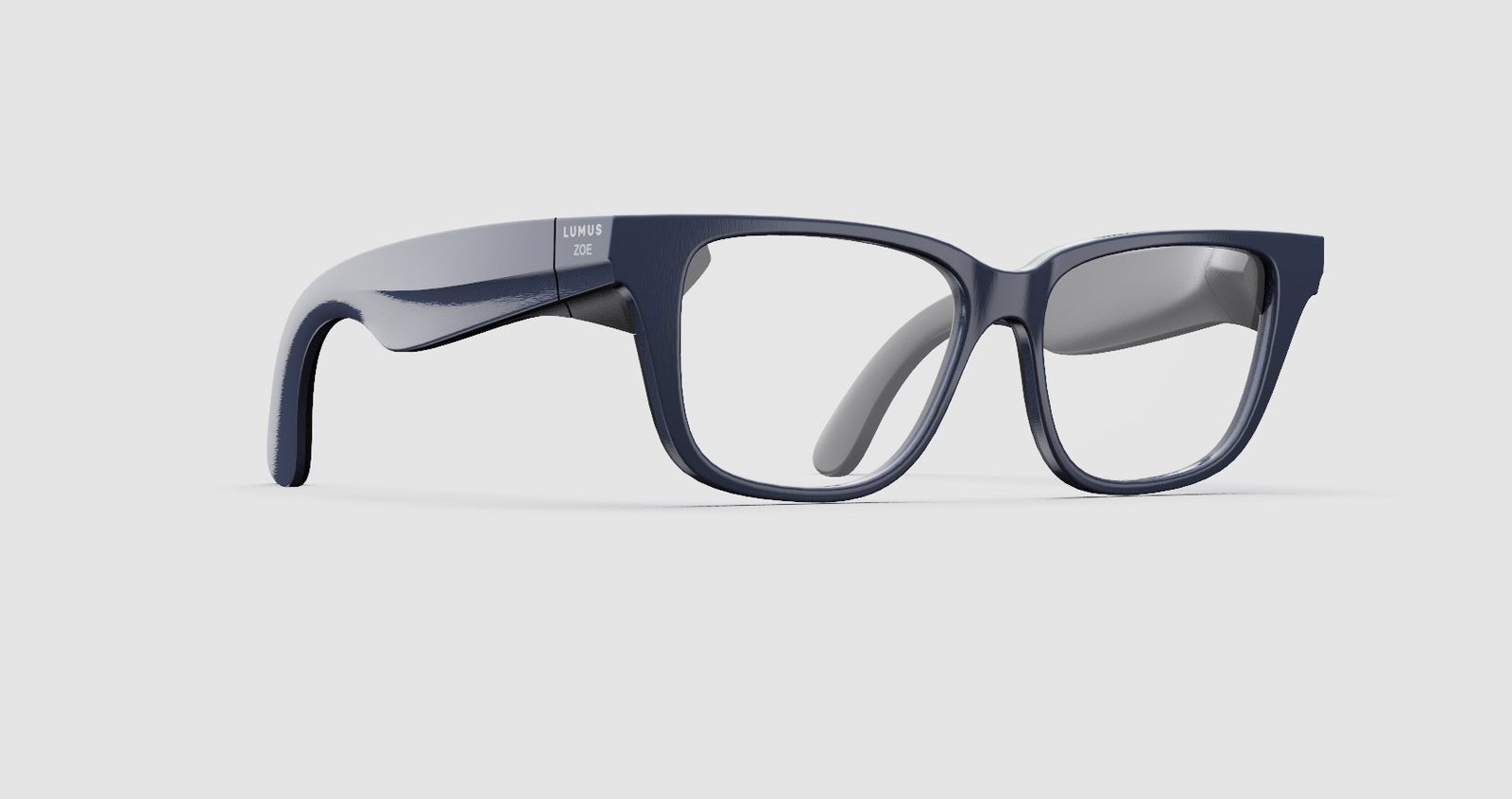
Many associates Augmented Reality (AR) with bulky headsets. After all, it seems like the ideal form factor for these types of experiences. However, it seems that the industry is quietly moving toward a future where the technology disappears into standard-looking eyewear. At CES 2026, Lumus showcased the specialized AR glass components, known as waveguides, that make this transition possible.
Lumus had a very positive 2025 with the Meta Ray-Ban Display smart glasses adopting its technology. Now, the company is expanding the possibilities for what we see through our lenses.
Lumus ZOE: Expanding the FOV
The biggest technical hurdle for AR glasses has always been the “field of view.” That is, the “digital window” where images appear in front of our eyes. If the window is too small, the immersion breaks. Lumus is addressing this with its new “ZOE” model, which offers a field of view greater than 70 degrees.
This is a significant jump for geometric waveguides. It provides enough digital real-time space for immersive entertainment or even multi-screen productivity. Despite the wider view, the glass maintains 1080p resolution and high color accuracy, ensuring that digital objects look sharp while the lenses remain as transparent as regular glasses.
Lumus Z-30 engine: The solution for thinner frames
While some users want immersion, others prefer “glanceable” tech. There is an audience that likes glasses that show simple navigation, translations, or notifications without the bulk. For this, Lumus updated its Z-30 engine. This version is 40% brighter than its predecessor but weighs only 11 grams. High brightness is key for outdoor use, as digital text needs to compete with sunlight to remain readable.
The company also gave a look at the near future with the Z-30 2.0. This prototype is 40% thinner and 30% lighter than current versions. For the average person, this is the most important update because it allows manufacturers to design frames that are indistinguishable from high-end fashion eyewear. The goal is to move away from “tech-heavy” aesthetics and toward something people are comfortable wearing to a dinner or a meeting.
Lumus’s strategy relies on “geometric” or reflective waveguides. Unlike other architectures that can be difficult to produce at scale, these use standard optical glass and existing manufacturing processes. This approach is what allowed the technology to reach the consumer market so quickly last year.
High versatility
Offering a range of optics from 20 to 70 degrees opens the door to many adoption possibilities. Some brands might choose Lumus’ ZOE engine for a dedicated gaming wearable, while others will likely adopt the Z-30 2.0 for lightweight, all-day smart glasses.
