

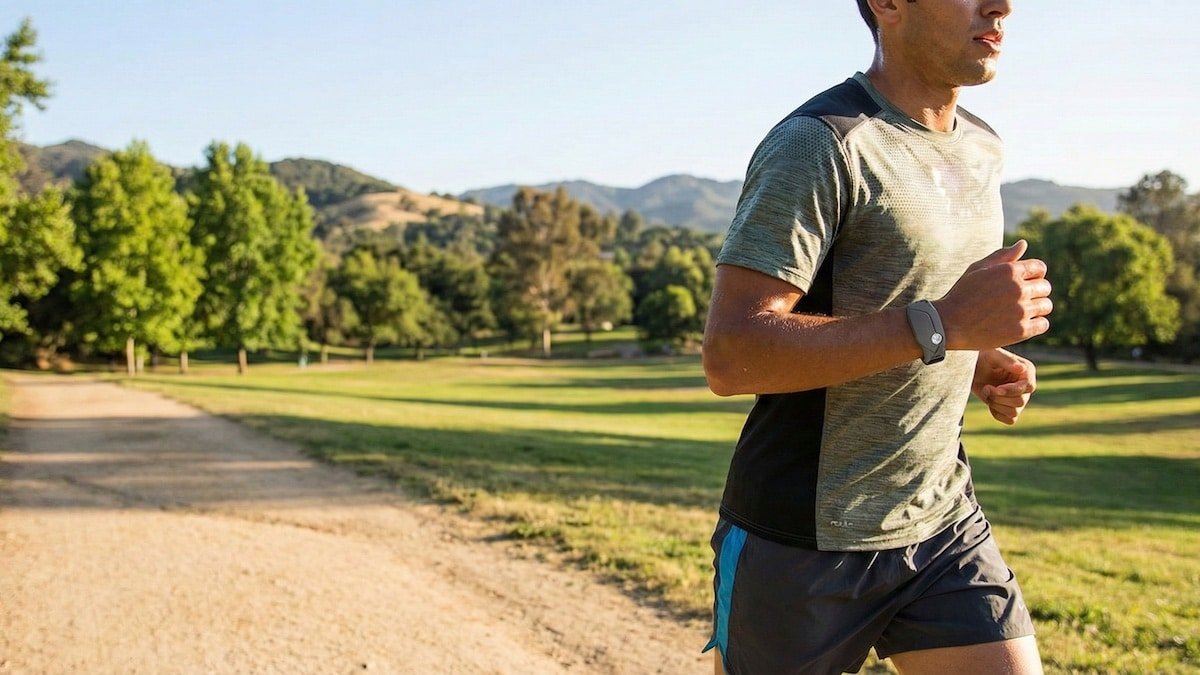
Zepp Health is considering a wearable device that uses your body’s physiological signals to decide when to start recording. Instead of pressing a button, the system quietly watches for emotional or stress-related changes and uses those as triggers to capture short video clips.
A wearable that listens to your body, then records the moment
This would be a wrist-based wearable, like a smartwatch or fitness band, equipped with both biometric sensors and a small image sensor. The camera runs in the background, continuously buffering a stream of video. But unlike typical action cams or smart glasses, it doesn’t aim to record everything or offer real-time visuals. Instead, it pairs what you feel with what the camera sees.
When your heart rate spikes, or a stress response is detected through something like skin conductance, motion, or breathing changes, the system flags that moment as meaningful. At that point, it extracts a clip of what the camera was seeing just before and after the event. That footage is then tagged with contextual metadata, such as time, location, and physiological state. The goal isn’t to create beautiful footage, it’s to give your reaction a frame of reference.
This isn’t a traditional user-activated camera. You don’t tap to record. You don’t need to aim it. It’s designed to sit on the wrist and observe the environment passively. What it sees might not be cleanly framed, but it could include your hands, nearby objects, flashes of people, surroundings, or rapid movement. That’s often enough to explain what just happened without needing to explicitly film it.
Adding context to physiological reactions
The camera is only part of the equation. The rest comes from sensors that interpret how your body is responding. These could include heart rate, HRV, motion, respiration, temperature, or stress indicators. The wearable uses these to detect when your internal state shifts. If it notices a change, let’s say a jump in heart rate during a conversation, or a stress response while commuting, it will pull the surrounding footage from its video buffer and log it as an event.
This is an image concept we put together, based on the product schematics. We couldn’t spot where the camera would sit, but the mood tracking sensors can clearly be seen as described in our earlier piece.
Concept pic of a potential design under consideration | Image source: Gadgets & Wearables
This would be a system that evolves over time. A machine-learning model can learn your specific patterns, adapt what it considers important, and even personalise how clips are tagged or summarised. The wearable may work with a companion app or cloud backend to refine this model in the background.
So you’re not just getting a dump of clips. You’re getting a system that learns what’s worth remembering based on how your body reacts to the world around you. This could result in a timeline of moments where something felt important, whether you consciously noticed it or not, and tie those moments to fragments of visual data.
So instead of just saying “you were stressed at 3:42 pm”, it might show you what was in front of you at the time. Maybe a heated conversation. Perhaps a traffic jam. Or something completely unexpected.
What this could mean for wearables
There’s no indication when and if such a product is imminent. But according to information we have seen, Zepp Health is exploring this direction in detail. They’re thinking beyond charts and graphs. It’s not just about tracking steps or sleep. It’s about giving your data a story.
If this technology does make it to a future Amazfit device, it could signal a shift in how wearables help us reflect. Not just through stats, but through selective glimpses of the world our body reacted to.
Subscribe to our monthly newsletter! Check out our YouTube channel.
And of course, you can follow Gadgets & Wearables on Google News and add us as your preferred source to get our expert news, reviews, and opinion in your feeds.
