

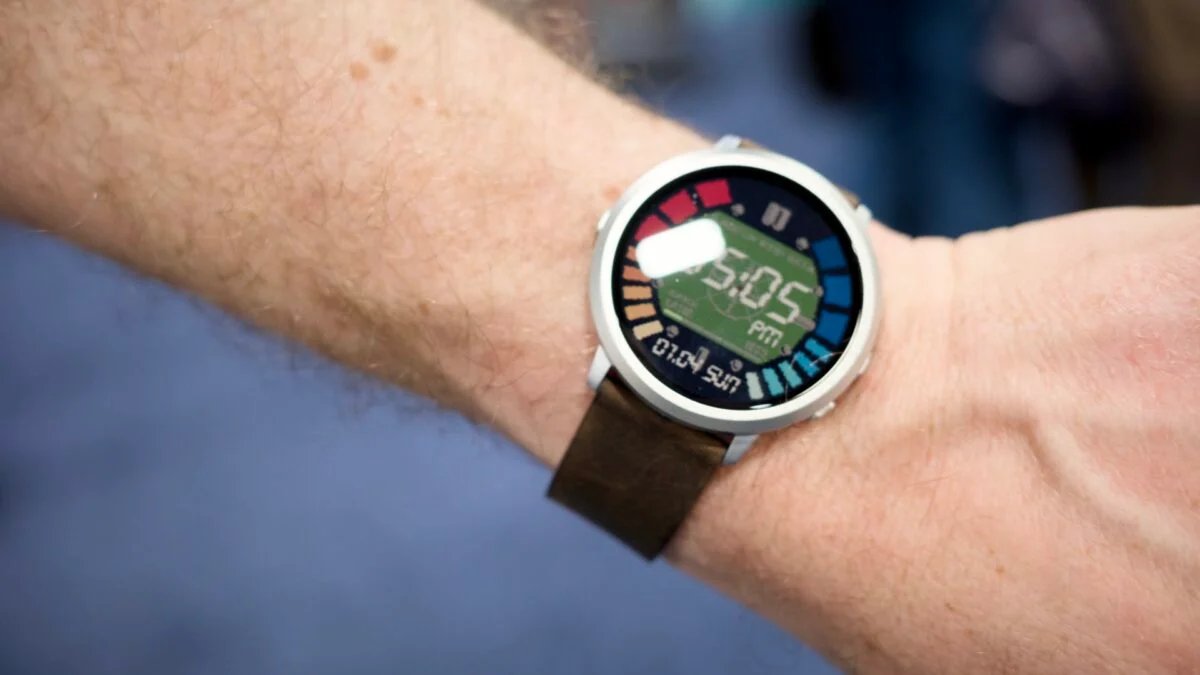
If history is as cyclical as the Buddhists and Cynics would want us to believe, then the return of the Pebble smartwatch was inevitable. I’ve largely eschewed any smartwatches in my daily life, mostly because I can’t stand the feeling of being an ever-connected cyborg inundated with notifications on my wrist. Eric Migicovsky, the founder of the original, long-deceased Pebble, who created the new company named Core Devices to bring it back, now has several new products slated for this year, two of which are circular in nature, and not just because they are—well—round. They may be exactly what I’m looking for.
I spoke with Migicovsky during CES 2026. The Pebble founder has a genial affectation—a major reason why old-timey Pebble users and younguns who never picked up these older smartwatches are interested in the company’s new/old gadgets. But times have changed, technology has progressed, and Migicovsky is trying to match some of those new expectations.
We crowned the $200 Pebble Round 2 as the best smartwatch we saw at CES 2026. It’s a simple smartwatch with extra quirks that don’t feel out of place in 2026 but are wholly welcome. The main thing is the four buttons—yes, physical buttons on a smartwatch—that spark a sense of joy when we’ve spent the last decade beholden to screens.
Bringing back buttons
The old Pebble Time Round, left, compared to the new Pebble Round 2. © Kyle Barr / Gizmodo
“I love this watch,” Migicovsky told Gizmodo, holding up the older Pebble Time Round from 2015 and comparing it to the new wearable. “But it had a few glaring issues… mainly the large bezel.”
A 1.3-inch screen (260 x 260 pixel resolution) isn’t as large as either of the 41mm or 45mm-sized Pixel Watch 4 models from last year. On my wrist, the rounded Pebble’s Goldilocks size felt just right. It’s far larger than the face on the 10-year-old original Pebble Time Round. You can get it with either a 20mm or 14mm watch band. If you want the larger size, you’ll opt for a silver- or black-colored stainless steel frame. The smaller size only comes with the rose gold or a separate silver frame. The Round 2 should ship sometime in May, after the Pebble Time 2 ships in April.
The smartwatch is technically more limited than the still-to-be-released Pebble Time 2. The rounded design lacks a speaker and promises two weeks of battery life instead of the estimated 30 days on the Time 2. It’s missing heart rate tracking as well. And even after Migicovsky listed all that, I realized I didn’t necessarily want more health metrics. I don’t need to listen to my watch (although I would of course love better battery life).
A not-so-smart ring with a short shelf life
The Index 01. © Kyle Barr / Gizmodo
Then there’s Index 01. It’s easily Core Device’s most controversial product the company has thought to offer since coming online in 2025. What is essentially a ring with a button acts as a voice recorder you can have on you at all times. There’s no built-in AI, though the in-app transcription is your barebones transcription (which won’t require an extra subscription). The ring is a voice recorder, as much as your phone is a voice recorder.
Migicovsky told me that he was trying to craft an ever-present device that could act as his “external memory for [his] brain.” He said he came up with the idea while he was biking, and he wanted something to jot down an idea without needing to take a break and rip the phone out of his pocket. Pebble initially tried creating an app on a watch to accomplish the same thing, but Migicovsky said that would still require using two hands to operate the watch.
The one, obvious flaw in this design is the lack of a rechargeable battery. Instead, when the Index 01 runs out of juice in approximately two to three years, depending on your usage, the device is effectively kaput. When I mentioned that some users didn’t like the idea of a gadget with a limited lifespan, he was skeptical. To him, the ring is a simple tool. If it were rechargeable, it would be more expensive.
© Kyle Barr / Gizmodo © Kyle Barr / Gizmodo
Index 01 has some built-in storage, and it can record “a couple minutes” worth of audio at a time. If your phone’s around, it will upload your voice clips via Bluetooth. The onboard AI should be able to comprehend if the voice clip is a note to self, a reminder, or an alarm, and then present all that in a feed within an app.
“If you want something more, just get a Whoop or an Oura ring,” the Pebble founder said. “There are tons of different options.”
The Index 01 will sell for $75 if you preorder before the shipping date in March. Otherwise, it’ll cost $100 afterwards. For all that, I’m not a person to wear jewelry on my hands. The early version of the ring didn’t exactly feel cheap, but it wasn’t a surface I would especially enjoy fidgeting with all day. The button, however, is the star of the show. I would have a hard time keeping myself from diving my thumb down on the rubberized tip, even when I have nothing of interest to say.
Is a recorder ring you’ll eventually need to toss away worth $100? That’s a question for the full review. At the very least, Pebble seems to be offering something few companies want to in the age of ever-present AI and overt health tracking: something straightforward, or—in Migicovsky’s words—”doesn’t take itself too seriously.”
