

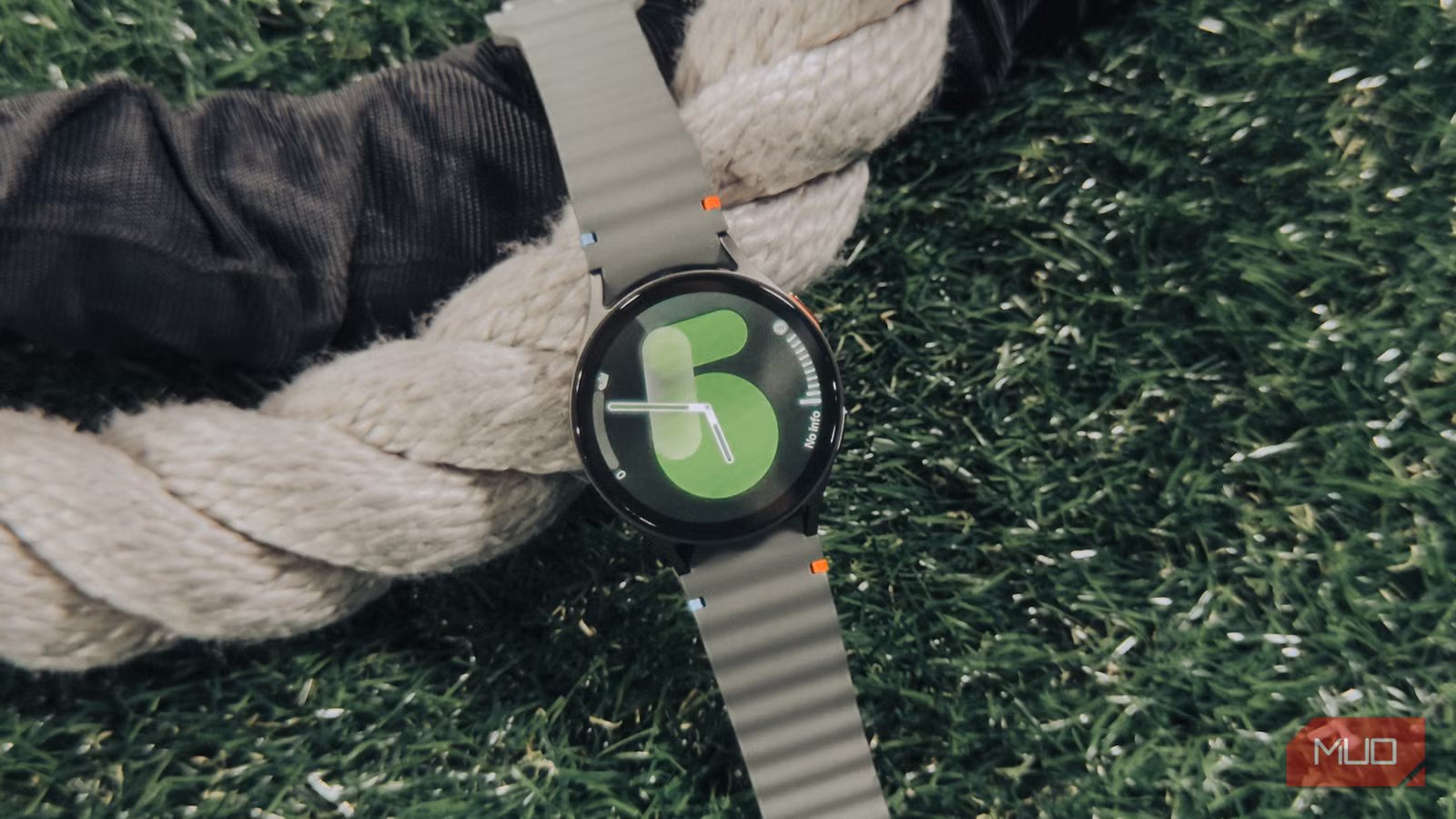
Being a technology geek, I am a person who loves getting the latest piece of tech or gadget as soon as it launches. I remember the time when smartwatches broke into the scene and how everyone, including me, was quite fascinated with them. Samsung Gear, launched in 2013, and the Apple Watch, launched in 2015, were (and are now as well) the crème de la crème of smartwatches.
I appreciate the data, the aesthetic, and the luxury of keeping my phone inside my pocket. Yet, those perks seemed superficial rather than necessities, and once I took the watch off some months ago, I simply never found a compelling reason to put it back on.
Smartwatches are not smart anymore
For most tasks, you have to take out your smartphone anyway
Credit: Zarif Ali / MakeUseOf
Smartwatches were introduced with a selling proposition that they are here to take things into their own hands. And by that I mean they are meant to handle the barrage of notifications we receive on our smartphones. A quick glance at your wrist would give you a clear picture of whether that notification deserves your attention or not. It was a filter, plain and simple.
But with the rise of artificial intelligence (AI) and its integration inside smartphones, such as Google Gemini, Apple Intelligence (still half-baked though), Samsung Galaxy AI, etc., everything is being taken care of by our phones themselves.
For a long time, Android was the king of managing notifications, and now Apple has also joined the league. Instead of tapping through ten different emails and messages, the AI on my phone gives me a summary of the whole stack. It reads the messages and tells me the important parts I actually need to know.
Moreover, frankly, I never considered a smartwatch to be a good communication device. I never felt comfortable talking on it, dictating things to Siri or Gemini feels awkward in public, and trying to type on those tiny displays adds to the inconvenience. For responses that required more than sending a generic thumbs up or any emoji, I had to take out my phone anyway.
Related
Why I’ll (Probably) Never Buy a Smartwatch
It’s just hard to justify their existence.
Just another battery to charge every day
Another device to take care of and recharge every day
Many people buy smartwatches just to show off their loyalty to a specific ecosystem. Whereas some buy them to fulfill their New Year’s resolution, i.e., to get fitter. But the fact of the matter is, smartwatches won’t make you fitter.
You are presented with a lot of health data, including daily heart rate rhythm, blood oxygen levels, sleep patterns, calories, steps, and even blood pressure. While these data look impressive, it is often dangerously inconsistent. Tech reviewers have proven time and again that sensors vary widely across models, and even basic step counters show discrepancies. If you are really concerned about your health and want to track it, then you should invest in a reputable fitness tracker.
Even the manufacturers know this. Samsung explicitly states that its smartwatches are general electronic devices, not medical devices. Similarly, the FDA published a report classifying the Apple Watch as a wellness tool. This just means you cannot rely entirely on smartwatches for your health.
And if you still need to use a medical device or talk to a medical specialist for concerns regarding your health, smartwatches become redundant. It is just one more battery to worry about in a sea of other gadgets you might own, as they won’t last for more than a day.
They cost the same as a mid-range smartphone
A secondary mid-range smartphone seems a better deal than buying a smartwatch
After ditching a smartwatch and switching to actual wristwatches, I realized I was more focused on my tasks. Rather than spending time glancing at my wrist and ignoring those notifications, I am more concerned about completing my routine on time.
Besides, I have reached a point where smartwatches are just another screen, and they do no better than that. For those arguing that they let you take calls when you are on the move, etc., I came to the conclusion that you should not take any calls or do any activities that distract you from the road.
On top of that, the cost of a smartwatch from brands like Samsung and Apple starts at around $300 and goes up to $700–800, which is insane. For that price, you can get a brand-new mid-range phone (sometimes a flagship on sale) and be good with two phones.
In more serious terms, you can save that money, invest in gold or bonds, or, if you really want to spend it, spend it on good food and maintaining a healthy lifestyle.
Related
Tech Fatigue Is Real: Here’s How I Avoid It
Here’s how I unplug without going off the grid.
The smart features are mostly gimmicks
Smartwatches pack a wide range of nifty features. You can use the voice assistant to play music, send messages using your voice, accept calls, play some games, control the camera remotely, and much more. None of this is useful to me, as I usually do all the stuff by taking out my phone.
Checking the temperature or weather isn’t that important and worth a hard-earned $300-$400. Also, they can be quite uncomfortable to wear, especially in regions like India, where the temperature is mostly hot and humid.
Overall, a smartwatch is just a novelty device that can do tasks similar to your phone but is an additional device you need to take care of. And in my opinion, simply a useless piece of gadget.
