

It’s no secret that smartphones are incredibly mature, and the days of justifying annual upgrades are over. Processors are fast, displays are crisp, cameras are sharp, and crucially, phone makers are supporting devices for longer than ever with up to seven years of Android OS upgrades. On the flip side, budget devices are winning the price-to-performance ratio, but they often fall short in one major area: memory.
Frankly, it’s easy to switch from the most expensive Android phones to the cheapest ones. I’ve recently moved from the Samsung Galaxy S25 Edge to the TCL 60 XE NXTPAPER, and these are phones priced roughly $900 apart. Sure, one feels snappier and more premium, although both handle all my daily needs perfectly fine. I can live with a budget processor, display, or camera, but doing the same with low RAM is much trickier.
You may like
Today’s best Google Pixel deals
The Google Pixel 9a started at a major disadvantage
(Image credit: Harish Jonnalagadda / Android Central)
Ideally, you want to buy a phone with future-proofing in mind. To keep a phone for a half decade or longer, it’s essential to pick a device based on your needs today and in the future. This is why it’s recommended to upgrade the storage configuration of your smartphone if you can afford it, because it’ll give you the room to take on photos, videos, media, and apps as you live with a device for years.
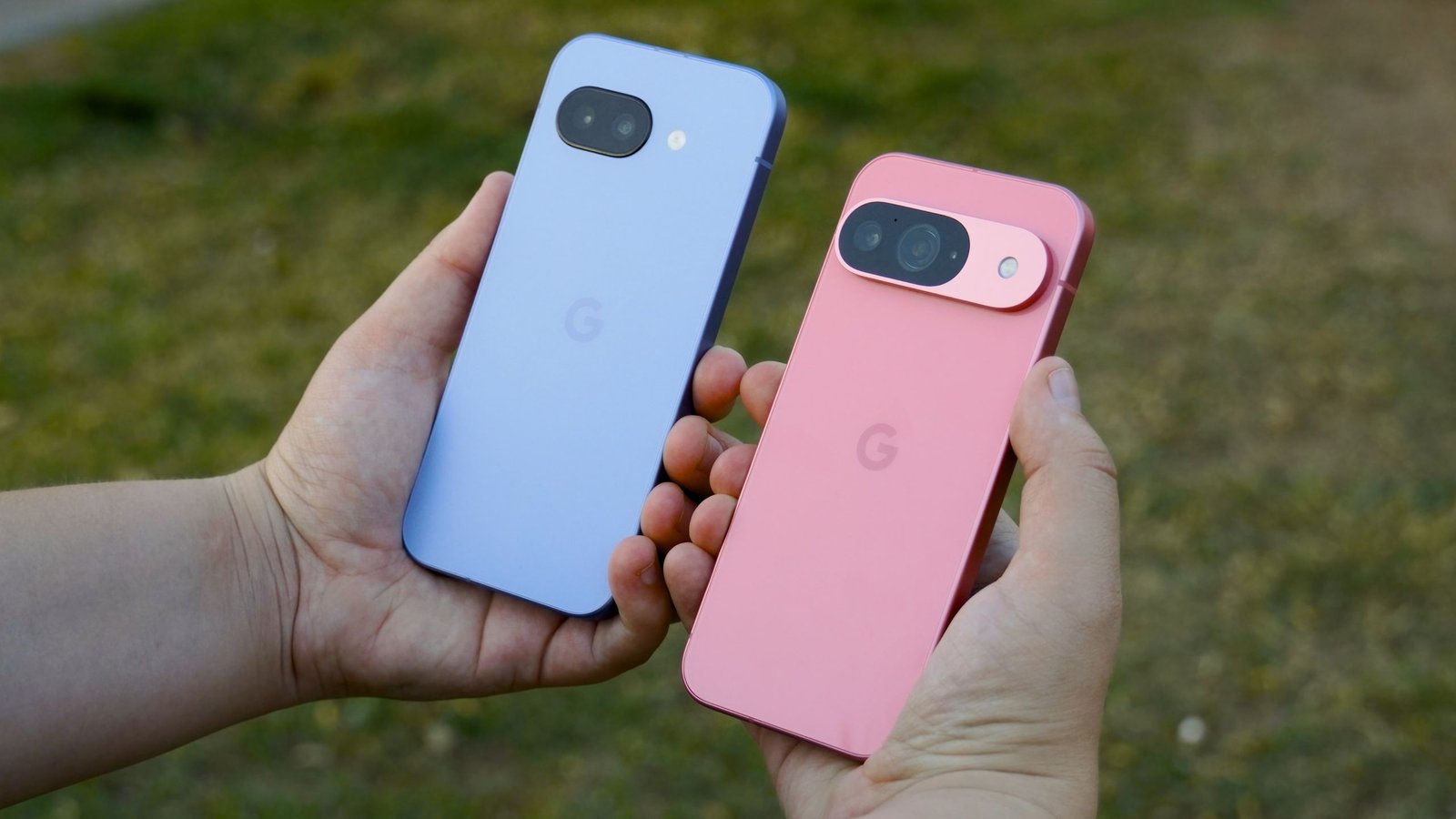
As a result, it’s hard to justify purchasing a phone that’s already behind the curve on day one. Those limitations will only become more apparent as time goes on. However, that’s what Google is asking Pixel 9a buyers to do. This phone ships with only 8GB of memory, which is much less than you’ll find on the rest of the Pixel 9 and Pixel 10 series.
This is a modest amount of RAM that will be fine for daily use, until you want to use on-device AI. Artificial intelligence demands large amounts of available RAM. Since the Pixel 9a only has 8GB of RAM, it can’t utilize the latest Gemini Nano models with multimodality. It has to use the Gemini Nano XXS model, which is a text-only model that only runs when it’s needed.
(Image credit: Nicholas Sutrich / Android Central)
The rest of the Pixel 9 and Pixel 10 series use Gemini Nano models that run all the time and utilize multimodality to handle text, audio, and visuals simultaneously. With only the Gemini Nano XXS model, the Pixel 9a started at a disadvantage in terms of feature set. It missed out on Pixel Screenshots and Call Notes, which are features that every mainline Pixel 9 and Pixel 10 series phone received.
It’s possible that you consider the lack of AI features a benefit instead of a drawback. Some would rather not have their phone riddled with unwanted AI tools. However, when the Pixel 9a launched, I suspected this would only be the beginning of the feature omissions for this phone. Google’s promise of seven years of Android OS upgrades and regular Pixel Drops won’t mean much if the Pixel 9a misses out on the best features.
Not even a year into the Pixel 9a’s existence, it’s already starting to miss out on more new features. Scam Detection won’t work on the Pixel 9a in certain regions. Additionally, the new AI notification summaries aren’t available on the Pixel 9a. These are just a few features introduced with recent Pixel Drops that aren’t available on Google’s current midranger.
Some features simply can’t use cloud processing
(Image credit: Brady Snyder / Android Central)
Theoretically, the Pixel 9a’s onboard memory limitations shouldn’t be much of an issue. Lots of AI processing can be offloaded to the cloud for additional power. Google Pixel 9a users can still use Gemini, Gemini Live, Nano Banana, and plenty more AI features that leverage the cloud. The handset can even use some on-device AI features, like Google Recorder transcription, since these features use older models that predate Gemini Nano.
The issue is that some AI features you really don’t want processed in the cloud to protect your privacy. It’s possible Google could bring Call Notes, Pixel Screenshots, and AI notification summaries to the Pixel 9a via cloud processing. But that would mean your calls, screenshots, and notifications being sent to Google servers for privacy. It’s an option on paper, but not in reality.
The other reason certain AI features run on the device is for speed. It takes time to transmit data to a cloud server, process it, and return it to your device. In some applications, this rules out cloud processing as a viable option.
To sum up, features like Call Notes and AI notification summaries need to be processed on your device for low-latency responses and security, but they can’t be on the Pixel 9a due to its RAM shortcomings.
Every other smartphone part has effectively peaked
(Image credit: Harish Jonnalagadda / Android Central)
Google is behind, even in comparison to other Android midrangers. The Samsung Galaxy A56 is configurable with up to 12GB of RAM, while the OnePlus 15R offers 12GB of memory as standard. To be fair, this is not a problem exclusive to Google phones, or the Pixel 9a specifically. The aforementioned Galaxy A56 gets “Awesome Intelligence” features instead of Galaxy AI due to its lower standard memory than flagship Galaxy phones.
In 2026, whether you use a Snapdragon 8 Elite or a newer Snapdragon 8 Elite Gen 5 chip is inconsequential for most users. The same goes for Apple, Qualcomm, or Google smartphone processors. There are clear differences between them, and we have benchmarks to demonstrate that, but the bottom line is that every modern system-on-a-chip (SoC) can handle the basics for the vast majority of customers.
While almost every other smartphone part has peaked, phones will always require more RAM to accommodate newer, more demanding AI features. The Google Pixel 9a is proof of what can happen if you ignore the RAM specification of your next smartphone. It’s perhaps the only smartphone spec that still matters, because without enough of it, you’ll be left without the latest and greatest features.
