

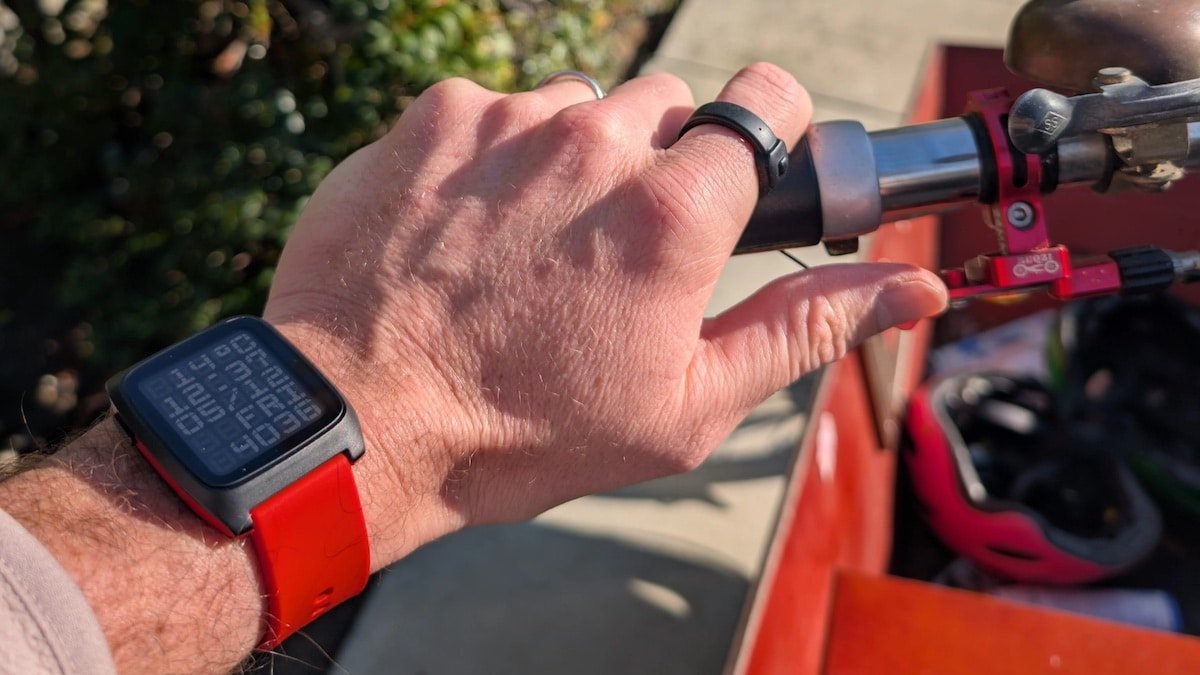
Thanks to new development work, microPebble now runs on iOS. The open source Pebble companion app, originally built for Android, has just taken a big step forward with the help of the Intent team and Rebble’s ongoing support.
Why microPebble exists
microPebble was first created by Matej Drobnič in 2023 as a lightweight, flexible Pebble companion built on libpebble3. He wanted something that focused only on the features he cared about, without the overhead of a full ecosystem app. Even though Core Devices later open sourced their official Pebble companion, microPebble kept evolving in its own direction.
The main difference between the two is scope. CoreApp, now simply called Pebble in app stores, supports Core Devices’ full hardware range. It’s built to serve their current and future watches. It’s also tied into their official Pebble Appstore and is designed with new customers in mind.
Essential reading: Top fitness trackers and health gadgets
microPebble, on the other hand, is vendor-neutral. It’s designed for the whole PebbleOS ecosystem, not just one manufacturer. The idea is to offer something more flexible that can support watches from any source, including past Pebble models, community-made devices, and possibly even future hardware that doesn’t come from Core. That also includes deeper integration with Rebble services like the Timeline, Bobby (the voice assistant), and shared pins.
How it fits with the other Pebble app
At the moment, Pebble users have two options. One is Core Devices’ Pebble app, available on Android and iOS. It pairs with Pebble watches, manages apps and settings, and connects to the Pebble Appstore. It’s designed to work out of the box for new buyers and reflects Core’s priorities.
The other is microPebble. It’s not intended as a competitor to CoreApp, but as an alternative for users who want more control, or for those using devices that Core’s app doesn’t focus on. For example, Rebble has no reason to expect Core Devices to support watches made by other groups, but the Pebble community still values that kind of inclusiveness. That’s where microPebble fits in. It gives the community a way to shape the experience, build new features, and keep things running, even if Core’s priorities shift elsewhere.
There’s also a development angle. microPebble is open source and community-driven. That means people can contribute, test, and even fork it as needed. The recent work on iOS was only possible because the codebase is open, and the Rebble team could fund Intent to jump in and bring Compose MP to life on Apple’s platform.
A roadmap in progress
The current iOS build is a working proof of concept. It still needs polishing, and a few screens are missing. The plan is to reach feature parity with Android, clean up the branches, and merge the work back into Matej’s main repo. There are also changes to libpebble3 that need upstreaming.
Once that’s done, the goal is to start building more visual polish using the old Cobble UI designs. Intent will lay the groundwork, and other contributors can follow. The hope is that even people without app experience can get involved once the framework is in place.
Rebble sees this as a long-term play. They want microPebble to be a daily driver for anyone using Rebble Web Services. That includes getting Bobby fully functional, adding iOS features, and eventually making it easier to install through F-Droid or other alternative platforms. There’s even talk of desktop versions, thanks to the flexibility of Kotlin Multiplatform.
You can try it now
If you’re curious, you can already build and test microPebble on iOS. The source code and instructions are available in the micropebble-ios-poc repository on GitHub. Just clone it with submodules and follow the build steps. It’s early, and the repo will likely be temporary, but it’s a working demo that shows what’s possible.
Community feedback will shape what comes next. The team is discussing the next steps on the Rebble Dev Forum and Discord, and they’re open to ideas, testers, and contributors. Whether you’re using Core’s Pebble app or exploring microPebble, both paths help keep the Pebble platform alive.
Pebble’s new hardware is picking up steam right alongside the work on companion apps. The company has recently confirmed the Pebble Round 2, a circular watch running PebbleOS with a touchscreen, speaker, mic and battery life that can stretch up to a month. It’ll join the Pebble 2 Duo and Time 2, which are both already in production. There’s also the Index 01 smart ring on the way, built for quick voice memos that sync straight to your phone. With more PebbleOS devices landing this year, having something like microPebble in the mix makes a lot of sense.
Subscribe to our monthly newsletter! Check out our YouTube channel.
And of course, you can follow Gadgets & Wearables on Google News and add us as your preferred source to get our expert news, reviews, and opinion in your feeds.
