

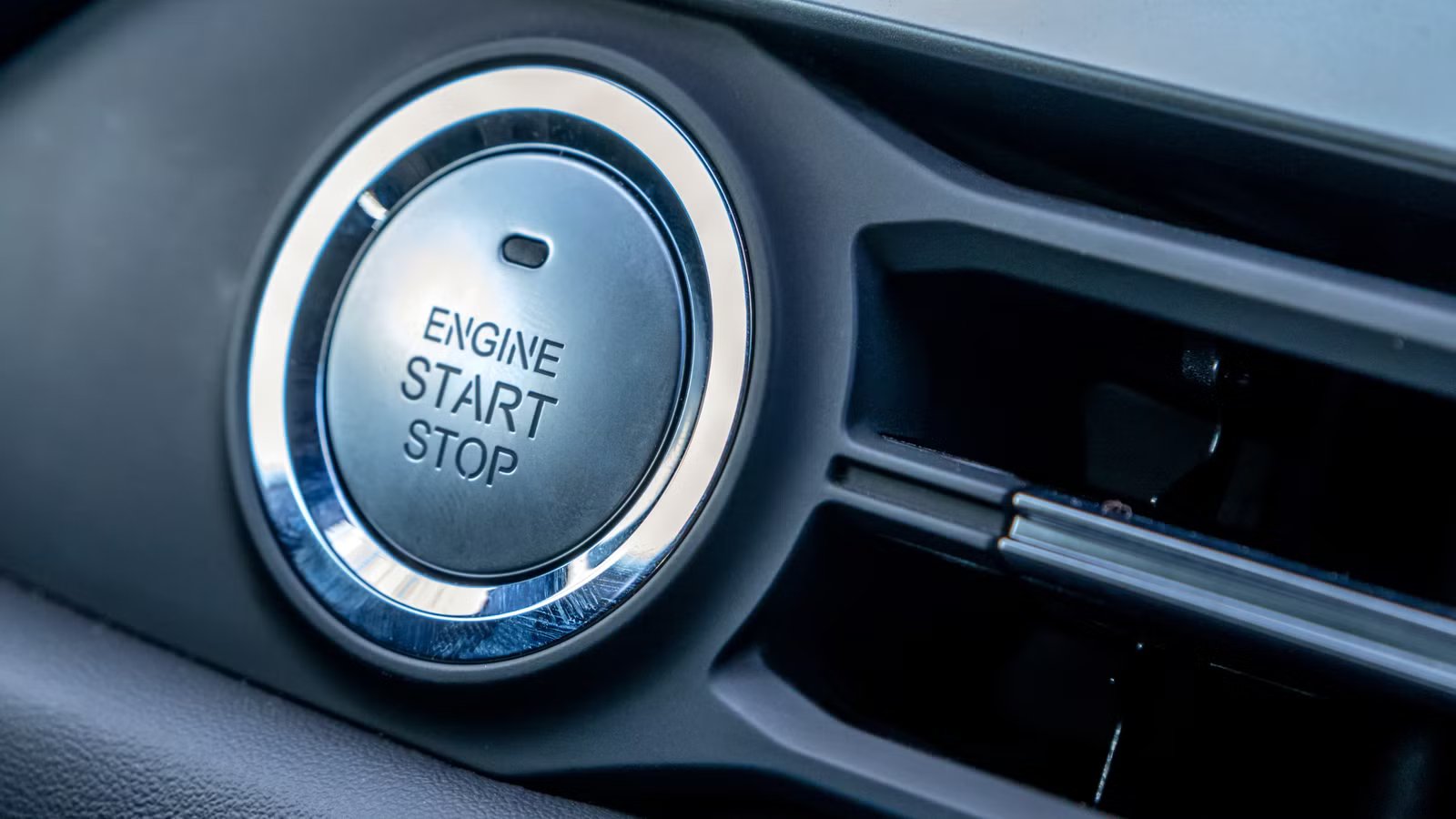
No matter what type of vehicle you drive, be it a beautiful luxury sedan or some fangled hoopty, your engine has to work harder during the winter. Data from the U.S. Department of Energy shows that fuel economy drops in line with the outside temperature, with quick trips, defined as three to four miles, seeing the greatest decreases.
While a loss in fuel economy will happen during the winter regardless, you can minimize it to some degree. The next time a cold spell is in the forecast, try these simple tips to save gas.
Avoid long idle times
30 to 60 seconds is enough
Credit: Mehaniq41
It might seem like a good idea on the surface, but letting your engine “warm up” in the traditional sense isn’t really necessary these days. If you are of a certain age, you may recall the logic about having your engine run for a bit before driving, especially on cold mornings. That advice stems from an era of carbureted engines and is less relevant today, given advancements in powertrain and lubrication technologies, such as synthetic oils.
Although good advice back then, there is no need to let a late-model vehicle run for more than about 60 seconds on a cold day. Letting your engine idle for an extended period will only burn more gasoline. It’s better to start your vehicle, take a moment to buckle up and get situated, and then drive gently as the engine finishes warming up. Thanks to modern synthetic oils and their optimal viscosity, your engine will be fully lubricated by this point, so even if it is still slightly cold, there isn’t a risk of mechanical damage.
Remote starts can be tempting to use while you are still inside, so you can walk out to a warm vehicle. Having a remote start is a handy feature, but if you are prioritizing fuel economy during the winter, try to use it sparingly.
If your vehicle is equipped with an automatic start/stop, it may disable itself without your input. These systems in late-model vehicles are designed to deactivate on their own when excessive load or demand is placed on the engine, which can occur on cold days.
Personally, when the temperatures drop here in Detroit, I shut off the automatic start/stop in my vehicle. I like the system, and it does conserve fuel in ideal driving conditions, but I’ve had situations where, on a cold day, my engine will shut off at a stoplight, only to immediately kick back on.
Stay up on routine maintenance
Follow your oil life monitor
Credit: APchannel
It’s okay with a late-model vehicle to follow the oil life monitor, even if that mileage interval seems to run long. However, even though modern synthetic oils are leaps and bounds ahead of their conventional counterparts, it’s best to make an appointment for service as soon as the oil light comes on. Synthetic oils are good, but they can’t run forever.
Routine maintenance keeps your vehicle in tip-top shape, which translates into improved fuel economy. As your vehicle ages and more extensive services are needed, you can follow the mileage intervals detailed in your owner’s manual or as recommended by a trusted mechanic.
Check tire pressures
Portable inflators can be a good investment
Credit: GreensandBlues
On average, your tires will increase or decrease about one psi (pounds per square inch) for every 10-degree change in outside temperature. During the winter, just a one psi drop in tire pressure is enough to cut into your fuel economy and your overall tread life.
The best defense against this is to invest in an affordable battery-powered inflator with a digital gauge. Many portable inflators today come with a range of attachments, a built-in flashlight, and a storage bag.
Your TPMS (tire pressure monitoring system) light will illuminate and remain on as soon it detects one of your tires is low. If your car does not have a TPMS light, check pressures before you leave when your tires are still cold, as friction and heat from pavement contact while driving can affect pressure. The recommended tire pressure for your vehicle is on a placard inside the driver’s side door jamb.
Take advantage of the garage
Declutter for better fuel economy
If your garage is littered with Christmas decorations, patio furniture, and that one project you swore you were going to finish back in 2020, it’s time to clear it all out. Parking in the garage overnight prevents your windows from icing up. You won’t have to wait for the defroster to do its thing in the morning while your engine is idling and using fuel.
Related
Can’t afford a Bugatti? These LEGO sets are the next best thing
The ultimate hypercar toy for kids and grown-ups alike.
Stay home
All the cool people do it
Credit: Anna Stills
This has as much to do with safety as it does fuel economy, but if you absolutely don’t need to travel, stay home.
If you are lucky and your company lets you work a hybrid or remote schedule during the winter, take advantage of it. If you have a cat or dog, use them as an excuse to avoid going to that party you don’t really want to attend anyway. You will maximize your gas mileage to infinity by sitting on your couch on a Saturday night with your pets and watching The Pitt, versus driving halfway across town to the bar that inspired the Finger Eleven song Paralyzer.
