

Amazfit Active Max
Use of information
8.0/10
Pros
- Beautiful design with a vibrant 1.5-inch AMOLED display
- Aluminium body keeps it light but sturdy
- Strong navigation support with offline maps and route
- 4GB storage lets you save music and podcasts locally
- Good value for money
Cons
- GPS lacks dual-band
- Display dims as battery drops
- Zepp app has come a long way, but still could do with a bit of polish
The Amazfit Active Max arrived earlier this month, just ahead of CES 2026. With its bold design and large display, it’s clearly positioned to catch the eye. This is Zepp Health pushing further into the large-screen territory, without pushing the price up to match.
I’ve been wearing the timepiece since launch and putting it through its paces in daily use. From training sessions to sleep tracking and everyday tasks, it’s been a chance to see how the experience holds up over time. Here’s what I made of it.
Amazfit Active Max: One minute review
The Amazfit Active Max does exactly what it sets out to do. It’s bright, comfortable and well-built, with reliable tracking and battery life that goes the distance without needing constant attention. Health features cover all the basics, and the Zepp Health app continues to get better with each update.
Sports tracking performs surprisingly well, even when lined up against more expensive watches. You don’t get all the deeper training analysis that brands like Garmin are known for, but you still get plenty. Plus the data you get is consistent and easy to work with day to day.
For me, this is the most attractive watch Zepp Health has dished out so far. And I’ve reviewed a lot of their devices over the years. The design feels more polished, the screen is a pleasure to look at, and the whole thing just works without being overcomplicated. If you want something that nails the basics, looks good doing it and doesn’t cost a fortune, the Active Max is one of their strongest efforts yet.
Amazfit Active Max can be purchased from Zepp Health or Amazon*
Jump to
Design, hardware
Health & fitness tracking
Sports tracking
Smartwatch features
Design, hardware
Look & feel
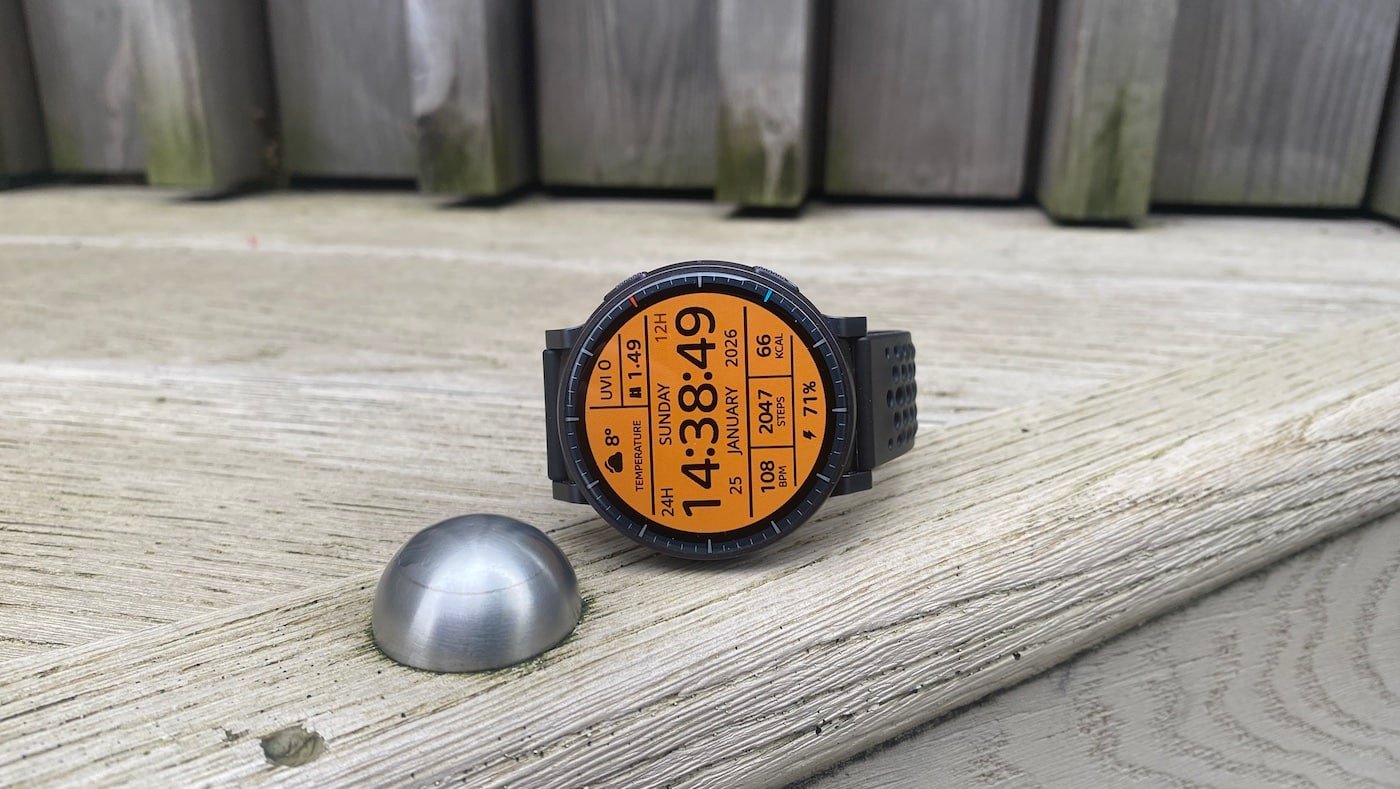
I wasn’t expecting the Amazfit Active Max to look this sharp on the wrist. It’s got that big, bold 1.5-inch AMOLED display that dominates the front, and it really works. Everything feels bigger, brighter and better looking than you’d expect at this price. Text is sharp, colours pop, and it’s easy to read in full sun thanks to that 3,000-nit brightness.
Despite the size, the thing doesn’t feel heavy or bulky. I have rather slender wrists and it didn’t look out of place.
The case measures just over 48mm across, but Zepp Health has kept the weight down by using aluminium around the frame and polymer elsewhere. Without the strap it’s under 40 grams, and that helps it sit comfortably on the wrist. I’ve worn it for full days, including sleep tracking, and barely noticed it was there. The strap is silicone and soft enough to wear all day, with a standard pin buckle that stays put. It’s also a regular 22mm width, so easy to swap if you want a different look.
There are two side buttons that come in handy when you’re in the middle of a workout or just don’t feel like swiping. They’ve got a solid click to them and feel well made. My one complaint is that they perhaps sit a bit too flush against the case – so you need to push firmly for a press to register.
The overall build is sturdy. It’s not pretending to be a rugged adventure watch, but it feels like it can handle daily knocks and splashes. With 5 ATM water resistance, you don’t need to worry about wearing it in the rain or rinsing it off after a workout.
In black, which is the only option it comes in, the device looks clean, minimal, with a bit of a sporty edge. It’s the kind of design that works for both workouts and everyday wear. You could easily dress it up or down, and make it look very pretty with some really nice watch faces.
For a timepiece this big, it’s surprisingly easy to live with. Some oversized watches feel awkward or top-heavy, but this one sits flat and stays put. It’s clearly been designed with wearability in mind. From the first day I put it on, it just felt right.
Under the hood
The Active Max might look clean and simple on the outside, but it’s packing a decent set of components inside. At the core is Amazfit’s latest BioTracker sensor. It combines five photodiodes and two LEDs to track heart rate, blood oxygen, along with stress levels.
The sensor package covers all the basics. You also get an accelerometer, gyroscope, ambient light sensor, barometric altimeter, temperature sensor and a geomagnetic sensor. The altimeter and compass make it a good fit for hiking or trail running, and the temperature sensor logs ambient data throughout the day. It’s not skin temp like in some newer wearables, but it’s still useful for context during outdoor activities.
On the positioning side, the watch connects to five satellite systems. It doesn’t use dual-band GNSS, so it sticks to single-frequency tracking, but it still locks on quickly and held signal well in most conditions. In open areas it stayed accurate, and only dense tree cover or tall buildings caused minor drift. For a watch at this price, that’s about what you’d expect.
There’s also a speaker and mic onboard, both neatly integrated. You can use them for Bluetooth calls or music playback, and while the speaker won’t blow you away, it’s loud enough. Inside, there’s a rotor motor for vibration alerts. It’s quiet, but the feedback is clean and not too sharp. The whole thing feels well balanced for the kind of user this watch is aimed at. It’s not trying to pack in every possible sensor, but it does enough to hold its own for daily health tracking and weekend activities.
Battery life
Battery life is one of the bigger strengths of the Active Max. Amazfit says you can get up to 25 days on a single charge, and while that’s with lighter use, the real-world numbers are still impressive. I had most of the bells and whistles switched on, and it lasted well over a week without needing to charge. No special settings or tricks. Just put it on and use it.
If you like having the always-on display turned on, you’re looking at about 10 days. That’s still way ahead of most smartwatches out there. One thing you may notice, the display dims a bit if the battery is close to empty.
GPS tracking can stretch to 64 hours, which makes this watch a solid pick for anyone doing longer outdoor sessions or multi-day events. Even when I added music playback while using GPS, it still pushed through about 22 hours without cutting out.
Charging takes a bit over two hours, so it’s not blazing fast. But with the kind of endurance you get, that charge time doesn’t really matter. I never found myself stressing about battery percentage or planning around it.
Tech specs
Feature
Details
Display
1.5″ AMOLED, 480 x 480, 323 PPI, up to 3,000 nits
Touchscreen
Strengthened glass with anti-fingerprint coating
Case size
48.5 x 48.5 x 12.2 mm
Weight (without strap)
39.5g
Frame material
Aluminium alloy
Case material
Polymer
Water resistance
5 ATM
Buttons
2
Sensors
BioTracker PPG (5PD + 2LED), acceleration, gyroscope, geomagnetic, barometric altimeter, ambient light, temperature
Positioning
5 satellite systems (no dual-band GNSS)
Microphone and speaker
Yes
Vibration motor
Rotor motor
Bluetooth
BLE 5.3
Battery life
Up to 25 days (typical), 13 days (heavy use), 10 days (AoD), 64 hrs GPS, 22 hrs GPS with music
Strap material
Silicone
Strap width
22mm
Buckle
Classic pin buckle
Colour
Black
Health & fitness tracking
The Active Max keeps tabs on heart rate, blood oxygen, stress and more. And all of it just runs in the background once you’re wearing it. There’s also a handy one-tap check that pulls in all the main stats at once. You don’t need to scroll through menus or launch separate apps to see how your body’s doing.
BioCharge is Amazfit’s take on a readiness score. It’s been around for a few months and is one of the more useful features on this watch. It pulls in sleep quality, stress, and other recovery metrics to give you a simple number each day. It’s not as detailed as what you’ll get from Garmin or Whoop, but it’s a decent overview of how recovered you are and whether you’re ready to train. PAI is also here if you prefer a more effort-based goal, built around your heart rate zones instead of daily steps.
Heart rate tracking holds up well for day-to-day use. It stays consistent throughout the day and during regular activity. SpO₂ and stress tracking have also been reliable.
Sleep tracking has also been accurate for the most part. It breaks things down into REM, light, deep and awake, and also keeps track of overnight heart rate and breathing. It even logs naps, which a lot of watches still miss.
The Zepp app gives you a sleep score and a few insights each morning. The data won’t blow your mind, but it’s enough to spot patterns and understand your recovery. Plus you get some more novel information such as hypopnea – which makes an interesting read.
A recent revamp to the Zepp app brought in a new badges system, and it’s actually a fun little addition. You now get a dedicated spot in the app where all your achievements live, like personal bests, streaks and completed challenges. It’s not something you see on the watch itself, but in the app it gives your stats a bit more life. The update also freshened up the overall look with softer colours and cleaner cards.
Sports tracking
There are over 170 workout modes on the Active Max, which sounds like overkill, but you can hide the ones you don’t use and keep the list manageable. The usual stuff like running, walking, cycling and strength is all there, and you can also import routes and use offline maps, which is great if you’re heading out without your phone.
I tested it on several runs against a Garmin Forerunner 955. On a 7.5 km city run, the Garmin logged 7.58 km, and the Amazfit came in at 7.48 km, which sits well within normal GPS variation for stop‑start urban routes. Average heart rate was 140 bpm on the Active Max and 139 bpm on the Garmin, with peak readings of 160 bpm and 166 bpm. But for most of my other runs, the data was even closer together – so this was actually a bit of an outlier.
The core heart rate pattern was similar on both devices throughout my runs, including sections with changes in pace and rhythm. The Amazfit tends to stick slightly higher on cadence, with 180 steps per minute for this 7.5K compared to 176 on the Garmin. Stride length was effectively the same, sitting at 97 cm versus about 1 metre.
Amazfit data for Zone 1 Central London run
Where the numbers split a bit is in running dynamics. The Active Max reported a bit more vertical movement, and ground contact time was shorter compared to the Garmin.
Training load and effort feedback on the Active Max felt off, because the watch had estimated my maximum heart rate at 164 bpm using a simple age-based calculation. Garmin had mine at 174 bpm based on years of data. That affects how zones are calculated and how hard a run feels in the summaries.
This is actually a limitation introduced with the latest version of the Zepp Health app – you can’t manually edit the max HR like you could previously. No doubt, in the coming days it will be resolved.
After workouts you still get pace, heart rate zones, calories, recovery time and a VO₂ max estimate right on the watch, with a session summary in the Zepp app. VO₂ max was about 42 ml/kg/min on the Amazfit, a few points below Garmin, but again that’s tied to how each ecosystem builds your baseline. Indoors, strength workouts and treadmill runs tracked fine too. Overall it’s solid enough for everyday running and general training without making you constantly question the numbers.
Garmin data for same run
Smartwatch features
Finally, let’s talk about the general smartwatch features. The Active Max covers plenty, without getting bogged down in extras you won’t use.
Notifications from your phone come through without delay, and on Android you can even send quick replies straight from the watch. It handles calls too. You can answer, reject or take the call on your wrist using the built-in mic and speaker.
Music controls and offline music storage are there, and iPhone users get remote camera control which is a nice bonus. You can also ping your phone if it’s gone missing in the couch cushions again.
Beyond that the watch supports calendar reminders, to-do lists, alarms, world clock, Pomodoro timers, weather, along with even a morning summary with the day’s basics. There’s also a basic voice memo feature if you want to quickly record something on the go. It locks when you need it to, has Do Not Disturb when you don’t want to be bugged, and keeps track of sedentary time with gentle nudges to move around. Plus you can install lots of other apps via the Zepp Health App Store.
If you’re in a supported country, you also get Zepp Flow, which brings voice control into the mix. You can talk to the watch to set reminders or launch apps, or just ask general questions. It almost functions like a full-blown assistant. Plus it’s more useful than most of the voice control efforts I’ve seen on other budget watches.
There’s even some nice quality-of-life stuff built in. You can add digital membership cards to the watch, customise shortcut cards for quick access to your favourite features, and check the temperature straight from the wrist. It doesn’t overcomplicate things, but there’s just enough here to feel like a proper smartwatch, not just a fitness tracker with notifications.
Amazfit Active Max can be purchased from Zepp Health or Amazon*
*We are a review site that receives a small commission from sales of certain items, but the price is the same for you. Purchasing items by clicking on links in this article allows us to run this website. We are independently owned and all opinions expressed here are our own. See our affiliate disclosure page for more details.
Like this article? Subscribe to our monthly newsletter and never miss out!
