

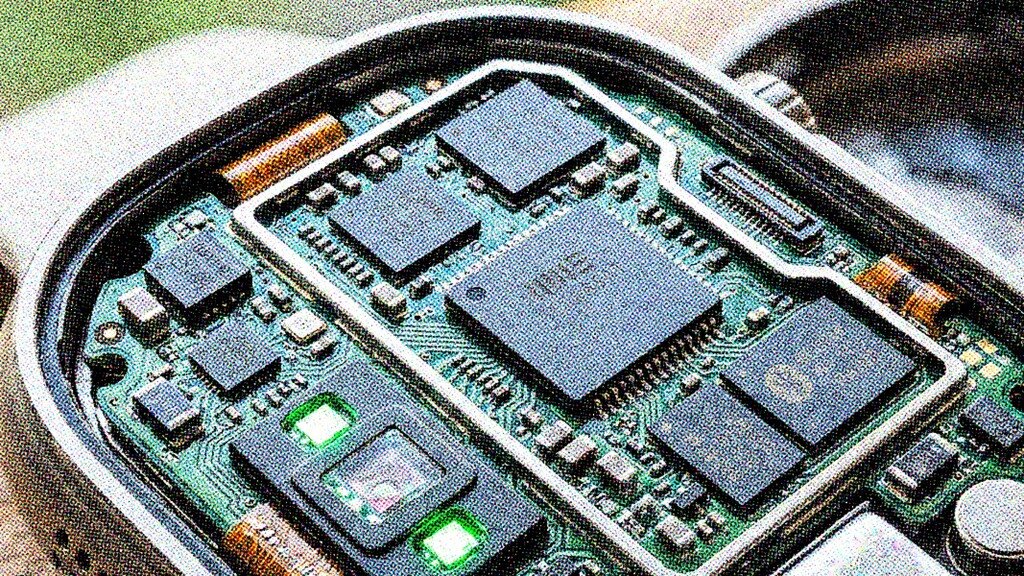
The flexible processor could revolutionize the independence of future wearables
A newly developed, hair-thin chipset could soon enable wearables and health devices to perform advanced functions without a phone.
Due to the high power consumption of advanced processing, the brains of devices like the modern smartwatch are typically still managed via a connected smartphone or the cloud.
However, a breakthrough from researchers at Tsinghua and Peking Universities suggests that this dependency might soon be a thing of the past.
As highlighted in a paper, researchers have developed Flexi, a flexible AI chip thinner than a human hair that can be bent, twisted, or even crumpled without losing functionality.
Built on a pliable plastic substrate, Flexi withstood more than 40,000 bending cycles in stress tests, demonstrating its durability for integration into the likes of smart clothing or adhesive health patches. And in real-world testing, the chip also demonstrated a 99.2% accuracy in detecting irregular heartbeats and a 97.4% accuracy in tracking daily activities.
A game-changer for battery efficiency?
Crucially, it managed these feats while consuming less than 1% of the energy required by conventional rigid chips.
Advertisement
This efficiency is the key to a future where wearables can run advanced neural networks locally, providing real-time health insights without nuking the device’s battery life.
The implications for privacy and performance are massive. By keeping sensitive health data on the chip rather than transmitting it externally, Flexi could potentially offer a more secure way to monitor chronic conditions.
While we aren’t likely to see it in a consumer device this year, the prospect of an AI chip that can be mass-produced for under $1 signals a shift toward a more autonomous wearable market. Keep an eye on this one.
