

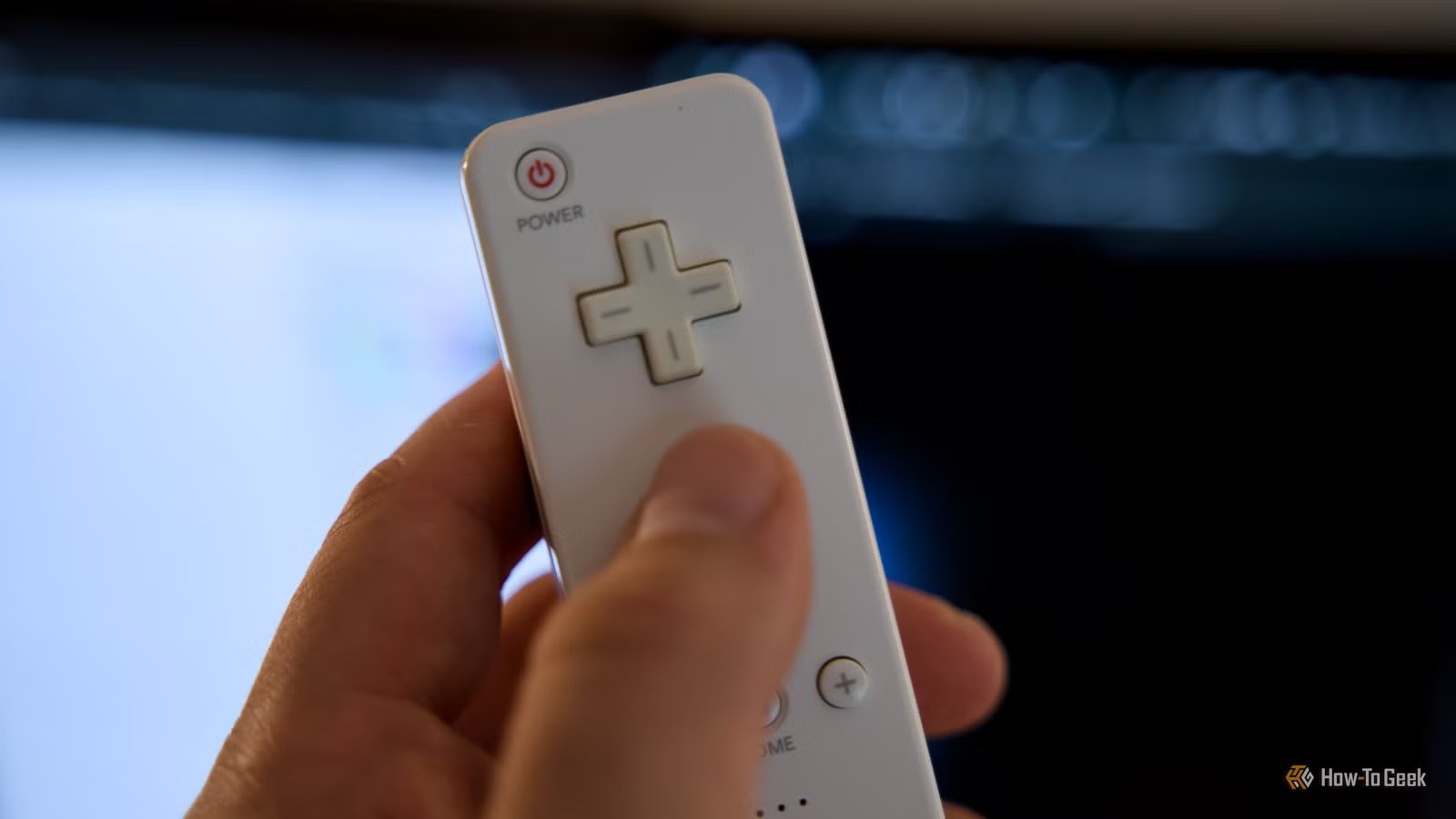
The Nintendo Wii Remote (or Wiimote) is a device that everyone associates with casual games and just shaking the controller. However, it actually hides some serious technological muscle that makes it perfect for repurposing. If you still have that plastic wand tucked away somewhere, you can turn it into a perfectly functional, if unconventional, computer mouse.
Keep in mind you should approach this ready to tinker and iterate, prepared to dive into the settings and troubleshoot until the motion control feels genuinely responsive and stable enough for basic pointing and clicking tasks. It’s fun when it’s ready, but it has to be perfect for your specific setup.
What you need
If you want to successfully turn that old plastic wand into a working mouse, you first need to grab the right hardware and software. Just a heads-up, getting started isn’t exactly plug-and-play. Connecting through Bluetooth is easy, but the real headache is the original sensor bar; you have to realize this component isn’t actually a receiver.
You have to realize the sensor bar isn’t actually a receiver. It’s an infrared emitter that gives the fixed reference points the Wiimote’s internal camera needs to figure out its position. That original bar has a proprietary red connector made only for the Wii console, and because it needs constant power to light up its infrared arrays, you can’t just plug it into a standard USB port on your PC.
Also, you’ll need a PC that can handle Bluetooth and a Wiimote as well. These are great for the Dolphin emulator, but you can use them for your PC just fine. If your computer lacks built-in Bluetooth, you can buy a USB adapter from Amazon. I use a $7 USB Bluetooth Adapter from Ugreen that has worked well.
How to do it
The initial hurdle when you try to reuse Nintendo’s hardware is definitely the Bluetooth pairing. It’s notoriously tricky on modern Windows systems because they often demand a PIN code that the device just doesn’t have. While the Wii Remote sends out a standard Bluetooth signal, the newer Windows Settings app usually refuses the connection or won’t give you an option to skip the PIN.
To get around this mess, avoid the modern menu and instead dive into the old Control Panel and find the legacy “Devices and Printers” screen. Select “Add a device” up top. Grab your controller and press the 1 and 2 buttons together, or that little red Sync button under the battery cover, to kick off discovery mode. The four blue LEDs will flash to indicate it’s searching.
As soon as your computer finds the device (mine came out with an input device name), select it right away. If that old menu asks for a pairing code, you can just click “Next” or even leave the field totally blank to force the driver to install.
You should put the sensor bar centered either directly above or below your monitor. Make sure it’s flush with the edge, so the screen’s bezel doesn’t block the IR lights. Download specialized mapping software, like Touchmote or WiinUPro, so you can translate the controller’s raw input data into actual cursor movements and clicks.
Inside that program, you’ll manually map the physical buttons to mouse inputs. You’ll want to assign that large A button to the left-mouse click for standard use and the B trigger on the back to the right-mouse click for context menus.
Just using the raw IR tracking is usually way too shaky for the precision a desktop interface needs. To sort this out, you must calibrate the dead zones and tweak the X/Y axis sensitivity. Increasing the smoothing variables helps filter out those natural slight tremors in a human hand, making sure the cursor glides smoothly across the desktop instead of shaking erratically.
If you don’t have a Wii sensor
Credit: Jorge Aguilar / How To Geek
If you don’t have the original sensor bar or simply don’t want to deal with all that wiring clutter, that’s completely fine. Calling it a “Sensor Bar” is actually wrong because it’s a surprisingly simple device that doesn’t contain any sensors or receivers itself. It doesn’t send any content or data to your computer; it only acts as two fixed reference points using infrared light.
The real intelligence is housed inside the Wii Remote, which features a high-resolution infrared camera capable of tracking these two light sources to figure out its position and triangulate where it is pointing. Since the hardware is essentially just two lights, you can entirely bypass the original console equipment and swap it out with almost any source of infrared illumination.
For quick testing or temporary calibration, you can actually fool the Wii Remote into seeing a sensor bar by setting up two lit tea-light candles roughly 8 to 10 inches apart. Since fire gives off infrared light, the remote detects the two flames as the necessary tracking dots, letting you move the cursor just like you would on the console.
While this solution is incredibly cheap, it’s unstable because the flickering flames can cause the cursor to jitter, and putting open fire near a monitor is a genuine safety risk. If you want a safer permanent setup, you can buy a wireless or USB sensor bar online. You can buy one from Amazon for a cheap $10.
This means a nearby Wii console isn’t necessary just to provide reference points. If you prefer to avoid extra hardware completely, you could also try using a script that relies solely on the Wii Motion Plus gyroscope for mouse movement.
Software like GlovePIE can translate the pitch and yaw data from the Motion Plus sensors into mouse cursor movements, letting you control the computer without pointing at the screen at all. This gyroscopic mouse setup is perfect for presentations or situations where sunlight might mess with infrared signals. However, this method lacks the absolute precision of IR tracking, and you’ll have to re-center it often due to natural drift.
Turning an old gaming peripheral, like the Nintendo Wii Remote, into a proper computer mouse doesn’t take much work when you have the equipment. It also proves that nothing is really obsolete, and even discontinued products can get a productive second life.
The resulting weird mouse might not replace your modern, fast version, but it’s definitely a win for a DIY project. It’s a good idea to take your old devices and see if they can find new life on other platforms. You never know if they are pieces to a project you may not know exists.
