

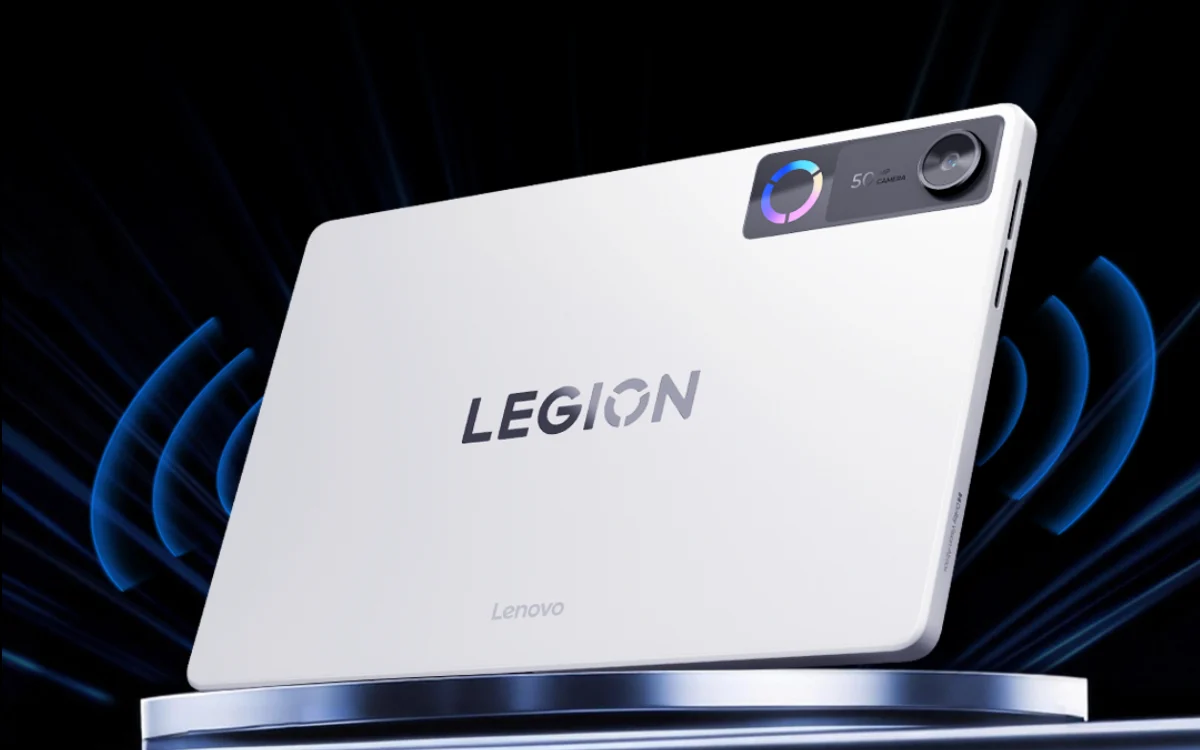
Lenovo seems to be pushing the boundaries of the small-form-factor gaming market with its fifth-generation Legion Y700. The 2026 iteration integrates artificial intelligence to solve two of the most persistent issues for mobile gamers: network latency and eye fatigue.
The centerpiece of the new model is the “Super Internet 3.0” suite. This AI-driven connectivity engine is designed to stabilize pings in crowded network environments. More impressively, it introduces cross-platform synergy, allowing users to quickly drag and drop game files between the tablet and iOS devices. The software also enables the Y700 to act as a high-performance secondary monitor for PCs with a simplified, low-latency setup.
Lenovo Legion Y700 (2026)
The tablet retains its popular 8.8-inch footprint but upgrades the experience with a 3K (3040 x 1904) resolution and a 165 Hz refresh rate. To cater to competitive players, the panel supports an instant touch sampling rate of 2640 Hz, ensuring near-zero input lag.
Recognizing that gaming sessions often span hours, Lenovo has implemented AI-adaptive eye protection. This system uses sensors to match the screen’s color temperature and brightness to the surrounding environment. The hardware has already secured TÜV Rheinland certifications for being flicker-free and maintaining low blue light emissions.
Rumored “Elite” Internal Hardware
Under the hood, the 2026 Legion Y700 is expected to be a performance monster:
Chipset: Qualcomm’s next-gen Snapdragon 8 Elite Gen 5.
Memory & Storage: Options reaching 24 GB of RAM and 1 TB of storage.
Power: A 9,000 mAh battery paired with 68 W fast charging.
Design: A 50 MP rear camera featuring an RGB lighting ring and dual USB-C ports for simultaneous charging and data peripherals.
More details about Lenovo’s upcoming gaming tablet should be shared in the following days, including price, specs, and global availability, so stay tuned.
