

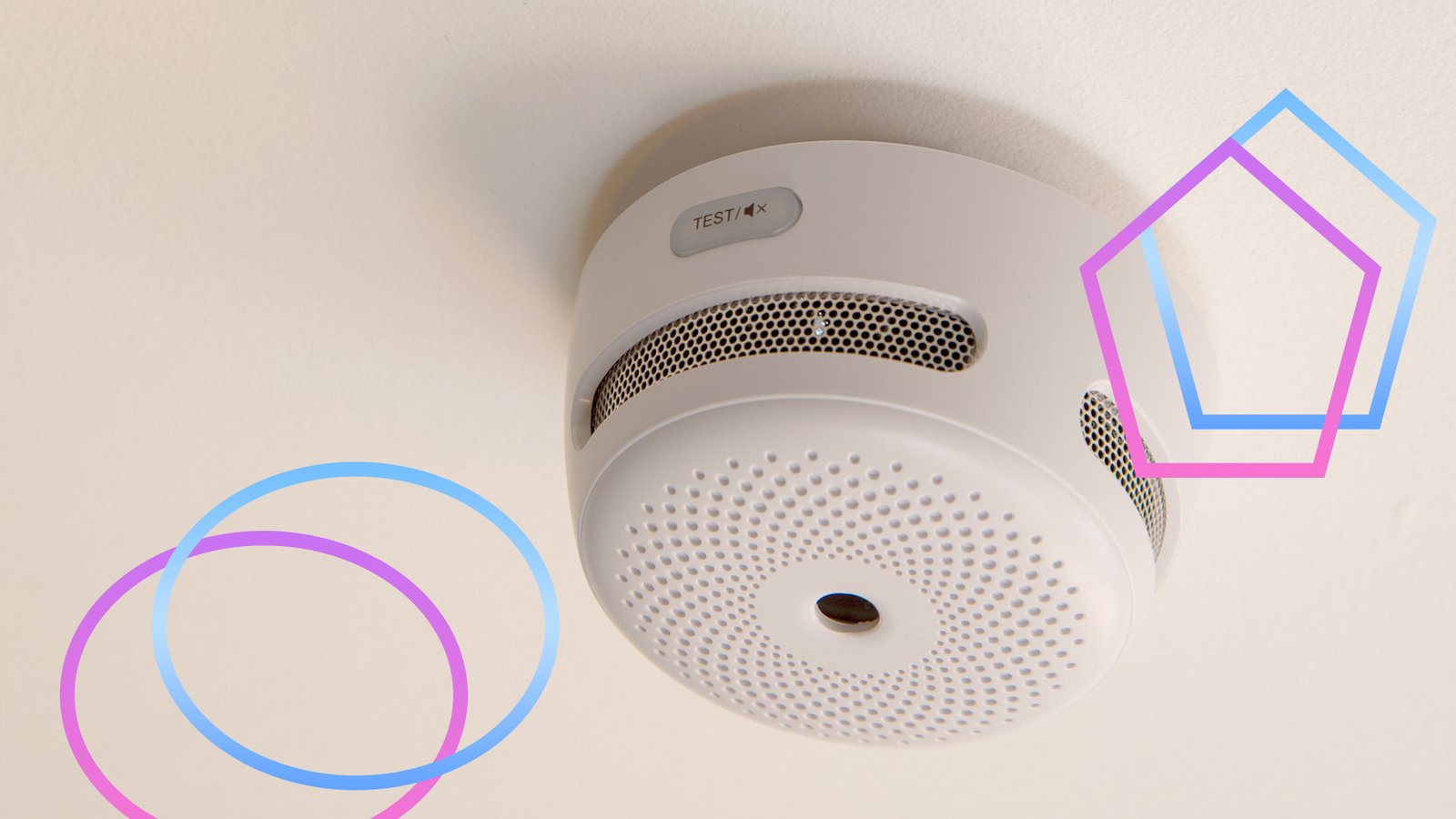
As a smart home reviewer, you can well imagine that my home is properly kitted out with connected devices.
What’s become clear over the years is the dearth of smart fire detection products that are actually suitable for UK homes. It’s a perplexing black hole.
It’s not just about smoke
There’s no shortage of smart smoke alarms, even after Google has killed off Nest Protect, perhaps the best-known device.
Hunt around, and it’s easy to find enough smart smoke detectors: the Aqara Smoke Detector, for example, or the Drayton Wiser Smoke Alarm, compatible with the company’s new bridge, which allows for a wider range of devices, not just the heating products (review coming shortly).
All of them have the issue that they’re just smoke alarms. That is, they detect smoke in the air, and then sound the alert.
Advertisement
For most rooms, this is fine. That old adage, “there’s no smoke without fire,” doesn’t actually apply to smoke detectors installed in kitchens, as their sensors can be fooled by cooking fumes and steam.
That’s particularly true of ionisation smoke detectors, which are more prone to false alerts; photoelectric smoke alarms are better, but can still be triggered by general cooking.
While photoelectric smoke alarms can be placed in a kitchen, it’s recommended that they be placed 3m from a stove or cooking appliance. Given that I live in a narrow Victorian terrace, and the hob is in the middle of one wall, and the ovens are in the middle of the opposite wall, it’s impossible to place a smoke alarm in the right place.
Heat alarms are best for kitchens
For kitchens, heat alarms are recommended. Rather than reacting to smoke, these alarms detect temperature changes: either when a fixed temperature is hit (typically, 58°C), or by measuring a rapid rate-of-rise (ROR) in the temperature.
In other words, heat alarms are looking for temperature signs that demonstrate there’s a fire, and ignore steam and smoke, so are ideal for kitchens. Or garages, in fact.
Advertisement
It’s the combination that counts
It’s safer to have fire detectors spread through you home, interlinked so that one alarm going off sets all off. By placing detectors around the house, you stand a greater chance of waking people in an emergency and detecting a fire at its origin.
In some cases, regulations even require multiple fire alarms. When I had a loft conversion, we were required to have a smoke detector in every habitable room and each corridor, and a heat alarm in the kitchen.
The ideal thing would be to have these as a smart system for two reasons. First, I can monitor them remotely and get warned of issues when I’m out. Secondly, a smart system tells you which alarm triggered the event, so I can check it out quickly.
Getting such a mixed system is far harder than you’d think. As mentioned, most companies only sell smoke detectors. And, you can’t mix-and-match components from different manufacturers if you need an integrated alarm system that triggers everything to go off at once.
As far as I’m aware, there are two main systems: the FireAngel Pro Connected system and X-Sense.
FireAngel is a system that hasn’t been updated in a long time, and the software and app aren’t very good, although the quality of the individual smoke, heat and CO detectors is excellent. I was originally happy with the system, as it replaced my old dumb system and gave me alerts, but when I had to change a couple of sensors, I found the app had duplicates and dead devices I couldn’t remove. Unless the app gets a major overhaul, I wouldn’t bother with it.
Advertisement
X-Sense is much better with a wide choice of wired and wireless detectors (smoke, CO and heat), all for very reasonable prices. It’s my smart fire detection system of choice, but I’d like it if the system were Matter compatible or at least a bit easier to port into other smart home systems.
This does leave a massive gap, and I don’t really understand why there’s no more competition. Heat alarms are a much-needed component, so why don’t more smart companies manufacture them?
