

We’re living in a golden age of science fiction on TV. Apple TV+ alone has an embarrassment of great sci-fi shows, from Severance to Pluribus to For All Mankind to Silo and beyond, and there are always intriguing new ones coming around the corner.
But that doesn’t mean that the sci-fi shows of the past have nothing to teach us. Take Continuum, a Canadian sci-fi series that ran on the network Showcase for four seasons, from 2012 to 2015. This show rarely gets brought up when people start talking about history’s greatest sci-fi shows, but it deserves a place in the discussion, if for no other reason than because it was uncomfortably dead-on with some of its predictions.
Continuum provides a grim look into our possible future
Corporations being more powerful than the government? Ridiculous
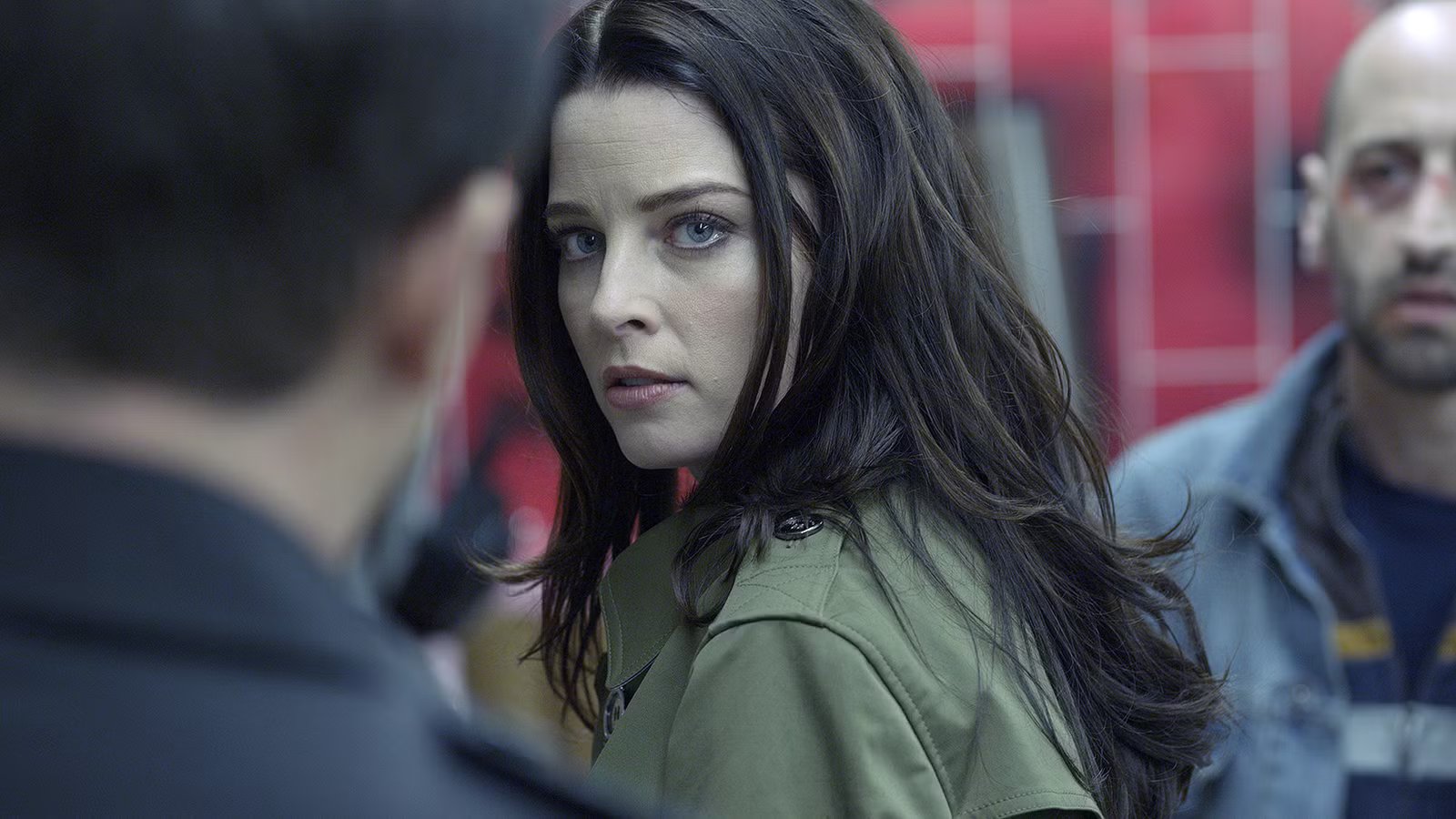
Continuum begins in the year 2077. It revolves around a City Protective Services operative (that’s future-speak for police officer) named Kiera Cameron (Rachel Nichols) who’s working to take down a terrorist ring called Liber8. She’s successful, but the terrorists pull a fast one by sending themselves back into the past, with Kiera accidentally making the jump with them. The members of Liber8 only wanted to go back a few years, but find themselves in the year 2012. Making the best of the situation, they set about trying to change the past so the future is no longer a police state where corporations call all the shots.
Reading that, you might ask: are Liber8 the good guys? Preventing a corporate dystopia sounds like a worthy goal. That’s one of the many twisty questions that makes Continuum such a satisfying watch. At the start, it feels like a straightforward crime show where the police officer is out to get the bad guys, but the more time Kiera spends in a world where her every waking moment isn’t surveilled, where police officers occasionally do things other than enforce the self-interested whims of their corporate overlords, where people are considered to have some level of intrinsic value beyond their usefulness to their employers, the more she starts to wonder if her future might actually be worth preventing.
Corporations are important, of course, but they’ve long been in a delicate dance with government, and over the past few decades we’ve seen corporate power get more of a foothold. We’ve seen corporate bailouts, mass deregulation, and corporations combining with each other to the point where they threaten to stomp out any competition. The idea of a corporate dystopia has been around in sci-fi for a long time — Blade Runner comes to mind as a well-known movie that predicted it — but it’s feeling more possible today than ever, and Continuum reflects that.
Technology is great, but…
Is there a point where we become too dependent?
Sci-fi has long foreseen ways that technology could alter the human body, for better and for worse. Continuum shows us both sides of the coin. As a law enforcement officer, Kiera has cybernetic implants that let her interface with computer systems and enhance her physical capabilities. There’s a power fantasy in that, and her future technology gives her a leg-up over pretty much everyone else in the year 2012. But we also see the downside, as her entire body can effectively be hacked and controlled if someone figures out how.
In 2026, we’re still at the beginning of being able to enhance the human body in this way, but we’re getting there, with companies like Neuralink making new discoveries all the time. And the advent of generative AI has led to some people essentially off-loading their brains to it, which some studies find is reducing their ability to learn new skills. At what point does technology do so much for us that we can’t do anything for ourselves anymore?
This is another question that Kiera asks herself the longer she remains in the past. In 2077, the corporate-controlled order uses technology to pacify the population. Without so much of it, Kiera finds herself reclaiming her autonomy as a person.
Related
NASA says this is the most realistic sci-fi movie ever, but you probably missed it
Gattaca was prophetic when it came out in 1997 and eerily realistic now.
But this isn’t to say that Continuum is anti-technology. It treats the subject with nuance, depicting it as a tool that’s only as good or bad as the people that use it.
Continuum: A Ripping Good Yarn
Four seasons of solid sci-fi you’ve never heard of to binge
Beyond all the social commentary, Continuum is just an entertaining show. The budget wasn’t huge, but they did the most with what they had, resulting in some very solid action scenes. We get to know a good number of well-developed characters. For instance, Carlos Fonnegra (Victor Webster) is a modern-day police officer who becomes Kiera’s guide to the 2010s. And Alec Sadler (Erik Knudsen) is a teenage computer genius responsible for inventing some of the technology that will be used in the future to turn North America into an oppressive surveillance state. The show uses his character to work through some fascinating questions about technology.
As Continuum goes on, it plays with time travel and timelines in a way that gets pretty complicated, almost joining the ranks of those mind-bending sci-fi shows that require a college dissertation to untangle. But in the end, Continuum keeps things simple enough that you can watch it without getting overwhelmed.
Continuum ended too soon, but only just
Continuum was canceled before its time, but was allowed to make a fourth and final season of six episodes that wrapped up the story, so it’s not left in a lurch. It’s a show that deserves to be remembered, and I suspect will be brought up more and more as our world comes to resemble the one it predicted.
Release Date
2012 – 2015-00-00
Network
showcase
Directors
Pat Williams, David Frazee, William Waring, amanda tapping, Mike Rohl, Jon Cassar, Simon Barry, Paul Shapiro
Rachel Nichols
Kiera Cameron
Victor Webster
Carlos Fonnegra
Stephen Lobo
Matthew Kellog
