

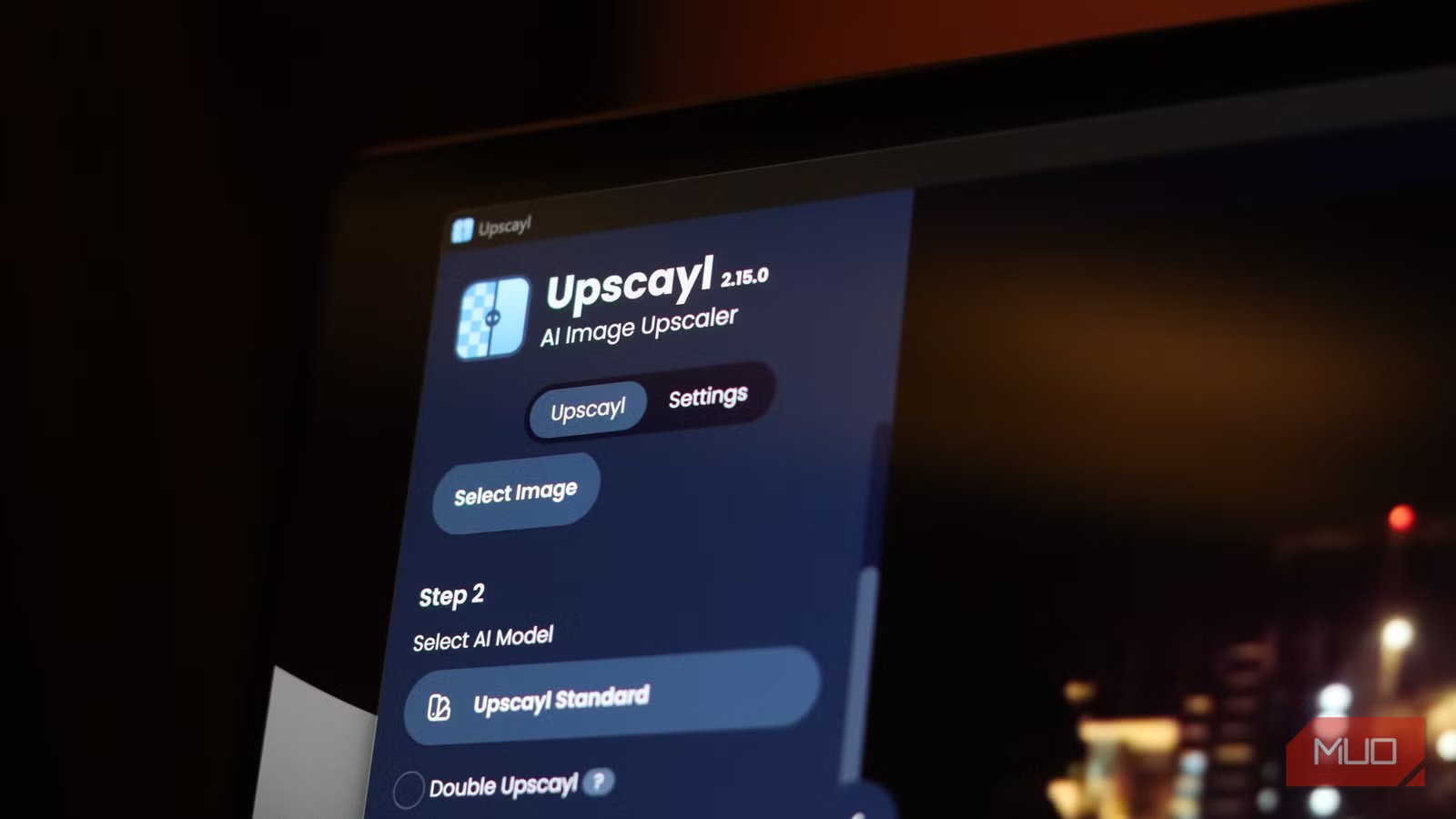
A blurry photo is one of the most disappointing things ever. You frame the perfect shot, tap the shutter and later, when you look back at it, you realize the image looks soft and out of focus. The moment is still there, but the details are missing. That’s frustrating, especially when you were excited to share it or save it as a memory. Thankfully, we’re no longer stuck with “it is what it is” as the only option.
There’s a growing wave of free, open-source tools solving everyday problems. Built by communities, these tools aim to make technology more useful and accessible. One such app uses AI to fix blurry images. It analyzes the photo, enhances details, and restores clarity. This isn’t an app you’ll open daily. Most photos turn out fine. But when a special moment ends up slightly blurred by movement, a quick solution makes all the difference. It’s simple, free, and doesn’t require any complicated editing skills. You won’t use it every day, and I don’t either. But whenever I do, it rescues the photo that otherwise I’d have deleted. And that alone makes it worth keeping around.
Related
I Tested 8 Free AI Image Upscalers—This Is the Only One That Worked
I ran the same photo through eight AI tools so you don’t have to. You’re welcome.
How upscaling changes the way your photos look
A glow-up for your grainy photos
Credit: Shimul Sood / MakeUseOf
Upscaling is basically a way to enlarge a small or low-resolution photo without making it look terrible. When you increase an image’s size, the software simply stretches the existing pixels. That’s why enlarged photos often look blurry, soft or blocky. Upscaling, however, tries to increase the resolution in a smarter way.
When done properly, upscaling increases the number of pixels in an image and reorganizes them, so the picture looks clearer and more defined. It can reduce visible noise, soften rough edges, and make textures appear more detailed. In simple terms, it takes a photo that looks dull or fuzzy and makes it appear sharper and cleaner, especially useful for old pictures, cropped shots, or images saved in low quality. There are two different styles:
- Traditional upscaling simply enlarges the image by stretching pixels. The software fills in the gaps using basic calculations. The result is a larger image, but often with visible pixelation and reduced clarity.
- AI-based upscaling, on the other hand, uses machine learning models trained on millions of images. Instead of just stretching pixels, it predicts what extra details should look like, such as edges, textures, skin tones, and hair strands, and generates new, realistic looking information. The result usually looks more natural and refined compared to traditional methods.
Upscayl uses AI-based upscaling. It doesn’t just increase the image size; it also gives you multiple AI models to choose from, depending on the kind of image you’re working with. For example, some models are better for standard photos, some focus on restoring real-world details, while others are optimized for digital art or illustrations. You can also choose how much you want to enlarge your image.
- 2x mode: This doubles both the width and height of your photo. So a 1000 x 1000 image becomes 2000 x 2000. It is useful when you need a slightly larger and better version without pushing the image too far.
- 4x mode: This multiplies the width and height by four, dramatically increasing the total number of pixels. The image becomes much larger and noticeably sharper, though it is still not the same as a photo originally shot in native 4K resolution.
- 8x mode: This increases the dimensions by a factor of eight, making it suitable for high-resolution displays. It is especially helpful when restoring old, compressed, or heavily pixelated images.
Beyond upscaling, this app also includes AI-powered editing features. You can upload an image and modify certain elements, adjust colors, change the mood, or tweak specific parts of the scene. There is also an AI-image generation feature that lets you describe what you want, select styles, lighting, and lens effects, and have the tool create an image from scratch.
In short, upscaling is not just about making a photo bigger. With AI tools, it is about intelligently rebuilding detail, so the image looks better and sharper.
Stitching lost details back together
Giving “almost” the upgrade it needed
Yadullah Abidi / MakeUseOfCredit: Yadullah Abidi / MakeUseOf
I tested the free version of Upscayl, and the setup couldn’t be simpler. It’s available on Linux, macOS, and Windows, and once you download it, you can start working with your images immediately. Alongside the app, Upscayl also offers a cloud version. This plan includes a limited free trial with 10 credits to test its performance. If you need more, the Pro plan provides 300 credits per month for $24.99, which makes sense if you frequently upscale images or work with multiple files.
I used the app on my Windows machine, and the experience felt surprisingly smooth and polished for a free tool. There are no ads interrupting the workflow, and the processing time was fairly quick. All in all, the interface is clean, doesn’t overwhelm you with unnecessary tools, and it feels thoughtfully built. When a free app delivers that kind of experience, it becomes something you naturally want to return to. The results also seem to improve over time as the tool evolves.
That said, there are some cons, too. If your original photo is extremely blurry or lacks basic details, the app cannot magically create information that does not exist. In those cases, the improvement will be limited. Upscaling works best when the image is already clear but slightly soft, pixelated, or missing fine details. That is where you will actually notice a meaningful difference.
It is particularly useful for older photos, such as childhood pictures scanned from prints, where the base image is decent but lacks clarity. In those situations, Upscayl does a better job of enhancing details without making the image look artificial.
Related
These Free Apps Will Instantly Improve Your Smartphone Photos
Edit like a pro, shoot like a pro—all for zero dollars.
Travel back in time
Photos hold more power than we often admit. They freeze moments that once felt ordinary. A random birthday snapshot, a blurry vacation picture, or a late-night selfie can instantly take you back to a version of yourself you almost forgot. But before you post these memories online, there’s something most people overlook: metadata. So, running a quick audit before uploading ensures you’re sharing only the memory.
At the same time, technology has made it easier than ever to improve older photos. AI-powered tools can now enhance slightly blurry, soft, or low-resolution images to a far greater clarity. From batch-editing multiple images to automatically enhancing details, modern tools reduce much of the manual effort that editing used to demand. AI is definitely reshaping how we edit, create, and share content. It can definitely help you preserve memories more beautifully while also protecting your privacy more responsibly.
