

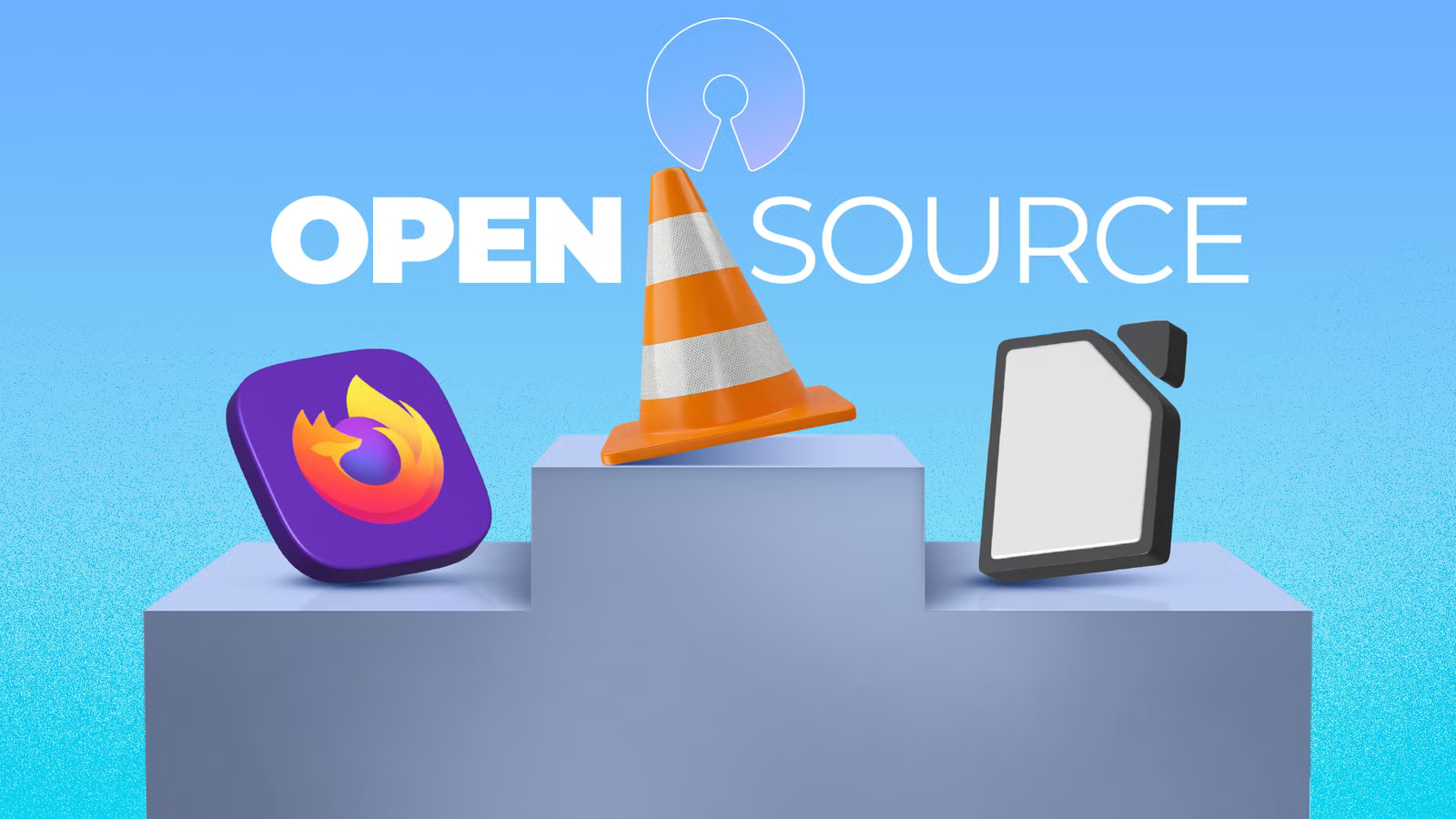
When I say “most important,” I don’t mean the most popular on GitHub, the most beloved by power users, or the project with the loudest community. I mean software that measurably changed the direction of computing. Tools that altered user behavior at scale, forced billion-dollar companies to respond, shifted technical standards, or redefined what people expected from their devices. Importance, in this context, isn’t about vibes or nostalgia. It’s about influence you can see in the market.
You’ll notice Linux itself isn’t on this list. That’s intentional. Linux isn’t just another open-source project. It’s foundational infrastructure that underpins servers, smartphones, supercomputers, and much of the modern internet. Including it would flatten the discussion before it even begins. Instead, this list focuses on open-source software built on top of that foundation, projects that moved markets, shaped culture, and changed how everyday people interact with technology.
For clarity, “most important” here means software that meets at least one of the following criteria:
- Market impact: It disrupted a dominant player, reshaped competition, or forced industry-wide change.
- Behavioral scale: It meaningfully altered how millions of people use technology day to day.
- Standards and ecosystem influence: It pushed open standards, changed developer practices, or influenced the direction of future products.
That’s the lens. Not personal favorites. Not niche brilliance. Software that left a mark on the industry and how people interact with technology.
The browser that restarted the browser wars
How Firefox broke a stagnant monopoly
Firefox didn’t invent everything it popularized, but it’s the project that made those ideas stick. After Internet Explorer crushed Netscape Navigator, the browser market effectively froze. Innovation slowed. Standards compliance stagnated. One company set the pace. Firefox restarted the browser wars by proving users would switch and that competition still mattered. It clawed back real market share and forced Microsoft to resume serious development. That pressure reshaped the trajectory of the web.
Tabbed browsing existed before Firefox. Opera had it earlier, and IE users could install extensions to get it. But Firefox made tabs mainstream. They stopped being a niche feature and became the default way people used the web. The same pattern shows up elsewhere. Early Firefox wasn’t marketed primarily around privacy. It won on speed, standards compliance, and extensibility. But it helped normalize the idea that a browser should give users control, with built-in pop-up blocking, powerful extensions, and later aggressive tracking protection. When Google Chrome arrived, it entered a market Firefox had already reenergized. Without Firefox, modern browser competition, performance races, and user-first features likely wouldn’t have accelerated the way they did in the mid-2000s.
How bundling codecs changed user expectations
Before VLC media player, playing video on a PC often meant installing codec packs, hunting down missing files, or dealing with players that only worked with certain formats. It was fragmented, messy, and occasionally risky. VLC changed that. Originally developed as a student project at the École Centrale Paris, it wasn’t designed to dominate the desktop. It was built to stream video across a campus network. But its architecture, bundled codecs, and open approach made it uniquely capable of playing almost anything you threw at it. And it did so consistently across Windows, macOS, and Linux. You didn’t have to understand formats. You just opened the file and it worked. That simplicity reset expectations.
In the process, VLC pushed aside a generation of media players and shady codec packs that thrived on confusion. It displaced tools that were bloated, ad-supported, or format-limited by offering something radically straightforward: free, open-source software that just played the file. That mattered at scale. Millions of people stopped thinking about codecs because VLC removed the friction. It didn’t just compete. It normalized the idea that a media player should be universal and trustworthy. That shift in expectations is exactly why it’s on this list.
The open-source suite that challenged Microsoft Office
Open standards as leverage, not ideology
When OpenOffice first emerged, it wasn’t just another productivity suite. It was a direct, credible alternative to Microsoft Office at a time when Microsoft effectively controlled mainstream document formats. Governments, schools, and cost-conscious organizations suddenly had leverage. The existence of a viable, open-source office suite forced a broader conversation about file formats, interoperability, and long-term access to documents. That pressure helped push open standards like OpenDocument into the mainstream and made vendor lock-in harder to justify.
When the project forked and became LibreOffice, it carried that mission forward with more aggressive development and community momentum. LibreOffice didn’t win the desktop productivity market, but it didn’t need to. Its importance is structural. It proved that office documents didn’t have to live inside a single company’s ecosystem. It ensured that an open alternative to Microsoft Office would continue to exist. That kind of persistent counterweight changes behavior, pricing, and standards even if most users never install it. That’s why it made the list.
Why open source changes industries even when it doesn’t win
Open-source software doesn’t always win market share. It doesn’t always dominate headlines. But it shapes the market in ways that are harder to quantify and even harder to reverse. Firefox forced competition back into browsers. VLC eliminated codec chaos. LibreOffice ensured that documents didn’t belong to a single company. None of them needed to win outright to matter. They changed expectations, shifted leverage, and altered the trajectory of the industries around them.
That’s what importance looks like. Measurable influence on how software is built, distributed, and used. The most important open-source projects don’t just give people alternatives. They redefine what’s acceptable and what users should demand. And once that shift happens, the industry rarely goes back.
