

My Samsung Galaxy phone is four years old and feeling a bit long in the tooth. I’m planning to finally upgrade this year, but I have to admit that nothing on the market compares to an old favorite. I’d take the LG G2 in a heartbeat. Here’s why.
The LG G2 blew my mind back in 2013
LG’s best phone ever
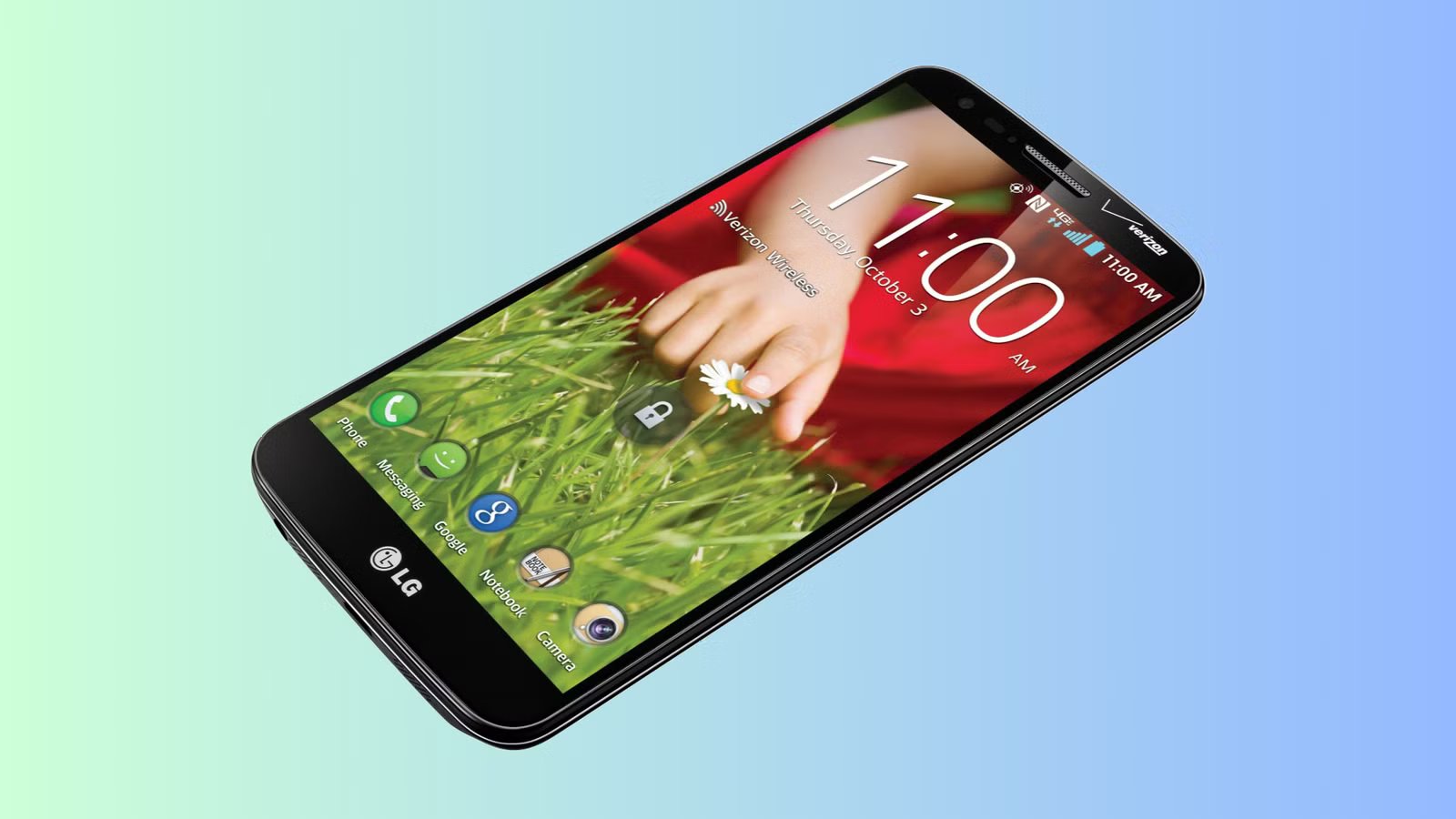
The G2 was peak LG. After a few uninspired attempts that utterly failed to best Samsung and its Galaxy S flagships, LG released the Optimus G Pro in early 2013 and showed the world it still had a few tricks up its sleeve. The G Pro introduced an updated design that borrowed cues from the Galaxy S series while still carving out its own unique identity. LG was on the upswing, and its next phone was—and still is—the best phone the company ever released.
I was blown away by the LG G2 when I first saw it online and then read a review of it in a paper magazine (yep, those were still a thing back in 2013). The sleek body, the almost bezel-less front, and that stunning 5.2-inch edge-to-edge screen made for a winning combo. The phone also ditched capacitive buttons under the screen and went all in with on-screen buttons that would soon become the standard in the world of Android.
The LG Optimus G was anything but exciting, even by early 2010s standards.Credit: LG
Compared to the pedestrian-looking—even for 2012—Optimus G, the G2 looks like a spaceship. I still consider it one of the best-looking phones ever released, with more style and character than any dull slab of a modern flagship. Even today, the G2 could pass as a relatively modern handset, which is kind of impressive considering it came out 13 years ago.
Despite rocking a gigantic screen for the era, the G2 was perfect for one-handed operation thanks to its thin bezels, which made the phone surprisingly compact, and the clever placement of the volume rocker and power button on the back, just behind the camera.
Credit: LG
At the time, I was using a Nokia Lumia 520, and as a broke college student, I couldn’t afford the G2 when it came out. What I’ll never forgive myself for is passing on a great deal on a used G2 in early 2015 that looked like new and fit my budget. But I was all-in on Windows Phone and thought I’d never switch back to Android again, so I passed on the deal.
Once it became clear that Windows Phone was losing market share at a worrying pace and that Microsoft could do nothing to entice developers to bring their apps to the platform, I saw the writing on the wall and got a used HTC One M8 in the spring of 2016—one of my favorite phones ever, and arguably the best Android phone of all time. Still, I should’ve bought that G2 when I had the chance.
Related
Android phones stopped being fun after this legendary brand gave up
Once upon a time, Android phones dared to be weird.
With a few upgrades under the hood, the G2 would make a perfect compact phone
Beef up the hardware, and we’re good to go
Credit: LG
Naturally, I wouldn’t use the LG G2 as-is, since its hardware is dated, and it’s stuck on Android 11 (if you opt for LineageOS, the official firmware is stuck on the prehistoric Android 5.0.2 Lollipop), but with a few hardware upgrades, the phone would become a fantastic compact daily driver.
Bump the SoC (system on a chip) to a modern mid-range Qualcomm chipset, increase the memory to 8GB, give it 128GB of storage, boost the screen brightness, bump the refresh rate to 120Hz, and include a larger silicon carbon battery, and I’d jump all over such an upgraded G2. You wouldn’t even have to upgrade the camera, trim the bezels, or add a fingerprint scanner.
As I’ve already said, the LG G2 still looks stunning, and the only things I’d change are under the bonnet. It would be so refreshing to rock a compact phone that stands out of the pack instead of just another punch-hole, all-screen “AI” flagship, but alas, that will never happen.
The LG G2 isn’t the only Android phone from the 2010s I’d gladly daily drive
The 2010s were chock-full of cool Android handsets
The LG G2 isn’t the only phone I’d daily drive with a few hardware upgrades. The 2010s were teeming with unique-looking, stylish phones that packed interesting features and tried to outdo the competition by going the extra mile in design.
Credit: HTC
The oldest of the group is the legendary HTC Desire from HTC’s heyday. It was HTC’s version of the Nexus One, which it also manufactured, and the Android phone when it came out in early 2010. It had a brilliant AMOLED screen, that cool-looking optical trackpad, and a collection of pleasantly tactile buttons under the screen.
Credit: HTC
The next is the One S and One X duo from HTC. I loved them both, but didn’t have the cash for either, so I ended up with the odd one out, the HTC One V, which was a sluggish mess. I consider the duo one of the high points of HTC’s industrial design, just below the undisputed HTC One and One M8.
Credit: Motorola
Lastly, there’s the Moto Z3, my favorite from Motorola’s Z family. It’s by far the prettiest Moto Z, with a slick profile and those fabulously thin bezels that perfectly frame the 6-inch rounded-corner screen. The Z3 also supports Moto Mods, which would be so fun to use today. The good news is that the phone’s SoC, the Snapdragon 835, is powerful enough to run modern versions of Android, and that you can install LineageOS 22 on it. Unfortunately, I can’t find any used Z3s in my neck of the woods.
While modern phones are hardware powerhouses, with even budget models packing enough firepower to last more than a few years, the modern design philosophy—revolving around all-screen fronts and punch-hole selfie cameras, with rear camera islands and colors as the only point of differentiation—leaves a lot to be desired.
It’s too bad it’s impossible to upgrade their chipsets, add more memory and storage, and make classic Android phones compatible with new versions of Android. If it were, you wouldn’t see me with a phone released after 2020 ever again, and my first choice would be the LG G2.
