

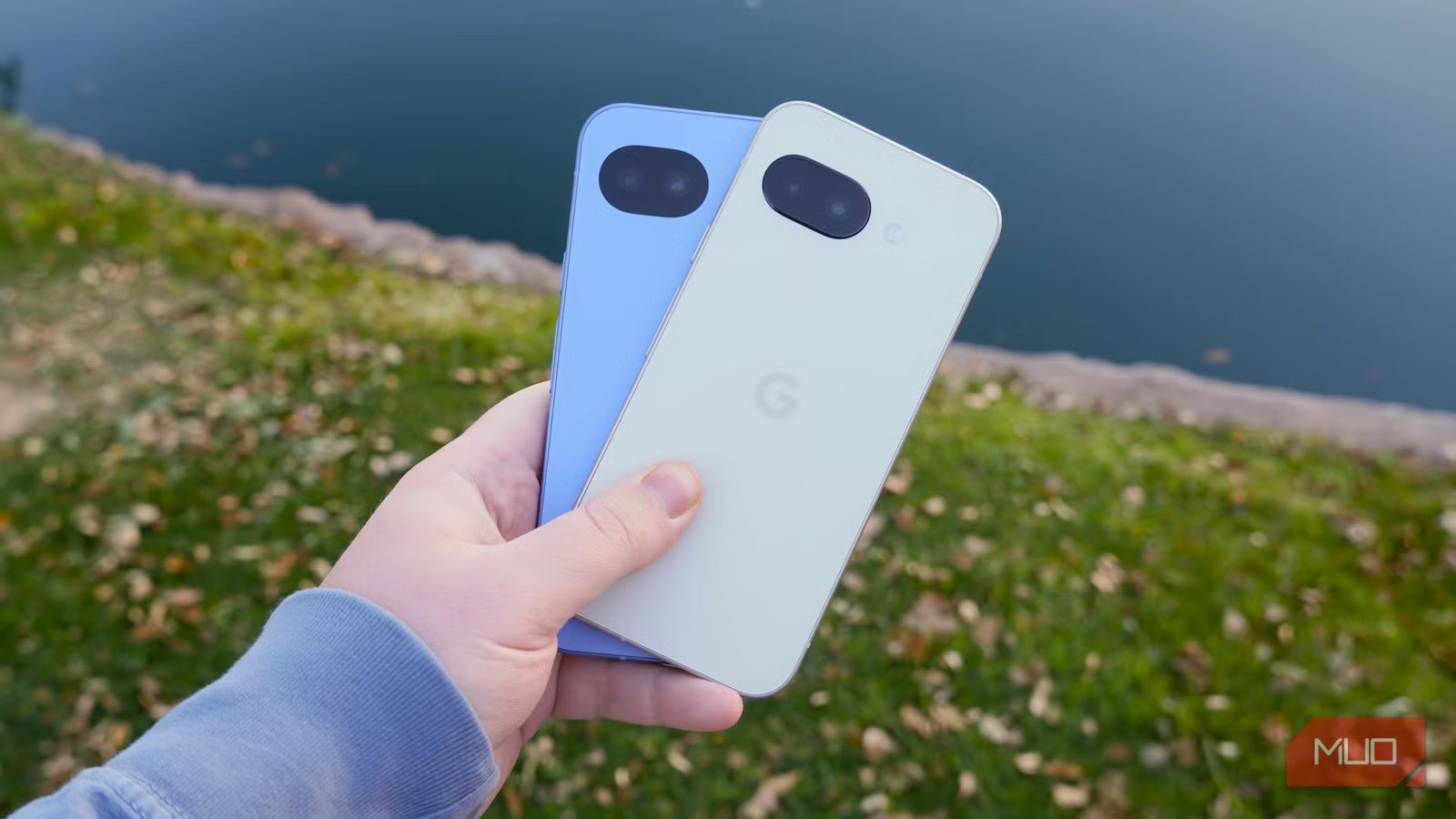
The Pixel 10a is objectively Google’s smallest hardware upgrade ever. The list of components and features carried over from the Pixel 9a is longer than the number of new additions. That said, the Pixel 10 is also Google’s most polished midranger ever, and it keeps its $500 price point at a time when price hikes are becoming the norm. I’ve been using the Pixel 10a in Iris (purple) and the Pixel 9a in Porcelain (white) for a few weeks, and truthfully, there are more upgrades than you probably noticed.
A lot of prospective buyers will look at the identical chipset, memory, and battery life of the Pixel 10a and Pixel 9a, automatically opting for the last-generation model at a lower price. I’m not sure if that’s the wisest option, and software is the primary reason why.
Although the hardware is similar, the newer Pixel 10a launches with Android 16 and has its full seven years of software support remaining. It also has exclusive Pixel 10 series software features like Camera Coach and Auto Best Take. There’s a strong case for paying a little more for the extra features and longer software support you get with the Google Pixel 10a — let’s run through all the changes.
Google’s hardware tweaks pay off on the Pixel 10a
Small design changes and minor component upgrades loom large
Everyone is talking about the lack of a camera bump on the Google Pixel 10a, and for good reason. However, there are a handful of other hardware changes that went completely under the radar. The Pixel 10a still has a physical SIM card tray, even in the U.S., but it’s now positioned on the right side of the smartphone. It was on the bottom of the Pixel 9a, and on the newer model, a symmetrical speaker grille takes its place. It’s worth noting that the left speaker grille simply has a microphone inside, and is mostly for looks.
The top of the Pixel 10a also looks a bit different, as there is now a single cellular antenna band instead of two on the Pixel 9a. You’re probably wondering why anyone would care about that, but there’s a good reason. The latest model uses an Exynos 5400 modem for connectivity compared to the Exynos 5300 modem in the Pixel 9a. The Pixel 10a now uses the exact same modem as the flagship models, and it’s a major upgrade. The Exynos 5400 modem offers support for satellite connectivity, and thus, the Pixel 10a works with Google’s Satellite SOS feature.
Rounding out the design changes are small iterations of thickness and weight. The Google Pixel 10a is ever-so-slightly thicker than the Pixel 9a, measuring 9mm thick. It’s larger than plenty of competing flagships, but that’s part of the appeal. This phone offers a high battery capacity for its size with a 5,000mAh cell, and it also has a flush camera cover. Well, it’s actually recessed under the composite plastic Pixel 10a back, and you can see the difference in the photo below.
A close up of the Pixel 9a camera bump (top) and the Pixel 10a camera cover (bottom).Credit: Brady Snyder / MakeUseOf
To its credit, the Pixel 9a already had a minuscule camera bump, but it was still there. The Google Pixel 10a completely eliminates it, and I love it. It’s so refreshing to see a phone’s thickness on a spec sheet and not have to guess what the actual device thickness is after accounting for the camera bump. On a desk or table, the Pixel 10a doesn’t rock or wobble. This might be the best phone to use without a case — it has a durable IP68 certification and Gorilla Glass 7i cover glass to go with the completely flat back.
Related
I switched from a Pixel 9 Pro XL to a Pixel 10 Pro for 2 weeks — it’s a mixed bag
The Google Pixel 10 Pro offers real upgrades over the Pixel 9 Pro, but whether you actually care will depend on what you need out of your smartphone.
There’s a ton of overlap between the Pixel 9a and 10a
Are you willing to pay for a new phone with last year’s processor?
Credit: Brady Snyder / MakeUseOf
I can’t ignore the similarities between the Google Pixel 10a and the Pixel 9a, however. Both phones are powered by the Tensor G4 chip, a processor that’s more than a year old and struggled to compete with Apple and Qualcomm when it was new. They each have the same memory and storage options, with 8GB of RAM and either 128GB or 256GB of storage. Benchmarks test reveal what you’d expect — the Pixel 10a and Pixel 9a essentially perform the same. If you were hoping for a performance upgrade, skip the Pixel 10a.
I also have to admit that I switched to the Pixel 10a and never really felt like I needed more power. The smartphone powered my international trip to Spain while covering Mobile World Congress, which is about as demanding of a week as any. Long days, extreme battery usage, and critical tasks characterized the trip, and the Pixel 10a passed with flying colors. Considering the Pixel 10a is still $500, I don’t think it’s crazy that the chip is unchanged.
Google Pixel 10aGoogle Pixel 9aSoCGoogle Tensor G4Tensor G4Display6.3-inch Actua pOLED display, 1080 x 2424 resolution, 60-120Hz, 3000 nits peak brightness6.3-inch Actua pOLED display, 1080 x 2424 resolution, 60-120Hz, 2700 nits peak brightnessRAM8GB8GBStorage128GB, 256GB128GB, 256GBBattery5,100 mAh5,100mAhPortsUSB-CUSB-COperating SystemAndroid 16AndroidFront camera13MP13MPRear camera48MP wide camera, 13MP ultrawide camera48MP wide camera, 13MP ultrawide camera Dimensions153.9mm x 73mm x 9mm154.7mm x 73.3mm x 8.9mmColorsLavender, Berry, Fog, ObsidianObsidian, Porcelain, Iris, PeonyWeight183g186gCharge speed23W wired, 10W Qi wireless charging23W wired, 7.5W Qi wireless chargingIP RatingIP68IP68BluetoothBluetooth 6Bluetooth 5.3
The part that worries me isn’t the chip or storage, it’s the memory. The Pixel 9a already missed out on features like full-size Gemini Nano models, Pixel Screenshots, and Call Notes due to RAM constraints. I really would’ve loved to see the Pixel 10a pick up the same 12GB of RAM as the base Pixel 10, but that didn’t happen. Every time I write about the lack of on-device AI features on A-series Pixels, users tell me fewer AI tools is a perk, not a hindrance. If that’s true for you, the Pixel 10a performance should serve you well.
Related
5 Reasons Why the Google Pixel 9a Is the Perfect Mid-Range Phone for Everyone
It’s hard to beat the king.
You’re buying the Pixel 10a for software
If you don’t care about the latest features, pick the 9a
Credit: Brady Snyder / MakeUseOf
There’s little reason to upgrade to the Pixel 10a if you have the Pixel 9a, but if you own an older model? That’s a completely different story. The price gap between the Pixel 9a and Pixel 10a is minimal at the moment, and the newer version offers a few quality-of-life features worth splurging on. The flat back, upgraded modem, faster charging speeds, and extra 300 nits of peak display brightness are just a few upgrades that make the Pixel 10a worthwhile.
Above all, it’s software that seals the deal. If you buy the Pixel 9a, you’re missing out on a year of software support and a slew of Pixel 10 series exclusives. Camera Coach is the best one — it uses specialized Gemini models to give personalized photography tips that help you take better shots. Getting Android 16 and Material 3 Expressive right out of the box, as well as the full seven-year software support window, are other important perks.
The Google Pixel 10a is the cheapest phone in its class, and Samsung, OnePlus, and Apple have all moved their midrangers to higher price points. That alone keeps the Pixel 10a relevant in a market where smartphone prices seemingly keep rising. It’s not the most exciting annual upgrade, but there’s more than meets the eye with the Pixel 10a.
SoC
Google Tensor G4
Display
6.3-inch Actua pOLED display, 1080 x 2424 resolution, 60-120Hz, 3000 nits peak brightness
RAM
8GB
Storage
128GB, 256GB
Battery
5,100 mAh
The Google Pixel 10a is a budget-oriented smartphone with a flat back and long battery life. It’s powered by the same Tensor G4 chip as its predecessor, and many key specs are identical to the Pixel 9a. However, you do get a brighter screen, better modem, new software features, and Android 16 with seven years of software support.
SoC
Tensor G4
Display
6.3-inch Actua pOLED display, 1080 x 2424 resolution, 60-120Hz, 2700 nits peak brightness
RAM
8GB
Storage
128GB, 256GB
The Google Pixel 9a is a year-old smartphone powered by the Tensor G4 processor. It offers a 6.3-inch AMOLED display and a minimal camera bump, though it’s not completely flat like its successor. You get all-day battery life via a 5,100mAh battery capacity and roughly six years of software support remaining.
