

I have been a Spotify Premium subscriber for well over a decade, but I have to admit that, until relatively recently, I paid little attention to its audio settings. Back in the days of hi-fi separates, I was forever twiddling with the amplifier’s controls, trying to squeeze the best tone out of my system, yet for too long, despite having a high-quality setup with some impressive powered speakers, I always just hit play and let Spotify work its magic. After all, default settings sounded good enough, right?
I was wrong. After tweaking just a few settings, I was pleasantly surprised by just how much better my audio sounded. For all this time, I had been paying for Spotify to work at a fraction of its potential. Well, better late than never, as they say. And the best part? Provided you are a Premium subscriber, none of these changes cost a penny more to activate.
OS
Android, Windows, Linux & Mac
Price model
Free, Premium
Setting 1: Boost the audio quality
Switching to Very High streaming quality transforms clarity and depth
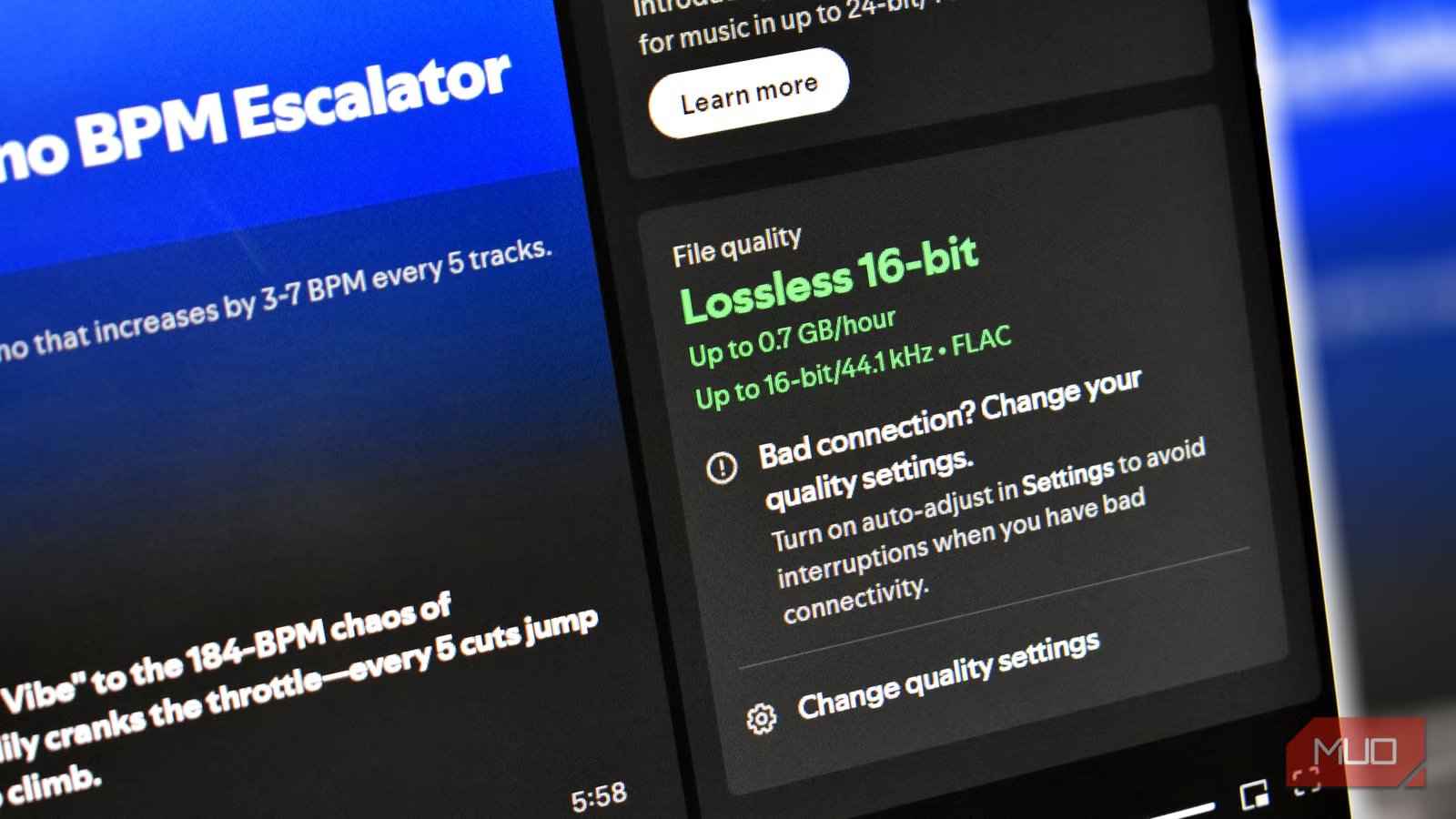
It would be safe to assume that, as a Spotify Premium subscriber, the app would stream at its highest quality. However, by default, it automatically adjusts the bitrate based on your connection, which can result in compressed, muddy-sounding audio. This makes good sense if you’re listening to music in your car or elsewhere with an unstable connection, but for listeners with steady Wi-Fi, this should be the first setting you change.
To fix this, open Spotify and go to Settings > Media quality > Audio streaming quality. You’ll see separate controls for Wi-Fi streaming quality and Cellular streaming quality. I set the Wi-Fi option to Very High (320 kbps) and left cellular on Automatic to avoid dropouts while on the move.
The difference was immediately noticeable, especially with frequencies at extreme ends of the spectrum. Hi-hats cut through the mix and kick drums have more resonance, while overall, the music sounds less washed out, like a good vinyl remaster compared to an early CD release. While it’ll never be on par with true lossless formats, this is about as good as compressed audio gets.
Related
6 Legit Ways to Pay Less for Spotify Premium Right Now
You don’t always have to pay full price for Spotify Premium.
Setting 2: Change your EQ settings
Using the built-in equalizer to tune your audio to your speakers and ears
It’s so easy to tweak bass/middle/treble knobs or physically move an EQ’s faders up and down; however, as soon as I’m required to delve into my app’s equalizer settings, my attention quickly wanes. Yet this is one of the most overlooked ways to personalize your listening experience. No two pairs of headphones are alike, and no rooms are the same size, so by leaving your EQ flat, you are missing out on audio that’s custom-tuned to your ears and your space.
The EQ can usually be found under Settings > Playback > Equalizer. On mobile, it is set to Balanced by default with all faders set to zero. There are some helpful presets worth experimenting with, especially if you are regularly switching settings to suit musical genres. However, when tuning Spotify for my room space from the desktop app, there are many more presets for various genres, speaker sizes, and EQ formats.
The desktop app also has a much more user-friendly EQ with just six parameters, ranging from 60Hz to 15KHz, making it easier to dial in your preferred settings (pick a well-known song for reference). On mobile with headphones, try a gentle V-shaped curve: boost the low frequencies slightly for fuller bass, dip the midrange a touch to reduce harshness, and add a small lift to the highs for added sparkle. Subtlety is always key here.
Setting 3: Normalize your volume
Turning off volume normalization improves dynamics and music hits harder
Spotify’s Volume normalization setting is active by default, and it is one of the main contributors to flat, lifeless audio. A normalizer is a tool that restricts a track’s overall volume to a peak level. This is a great idea in theory, as it keeps levels consistent between songs and ensures you don’t get blasted when “Master of Puppets” is slipped into the playlist.
You’ll find this toggle under Settings > Playback > Volume normalization. Try experimenting with it and see what you think. To me, removing it makes my music sound more dynamic, especially when listening to live concerts and soundtracks. Drums hit harder, crescendos swell more naturally, and there’s a general feeling of a broader dynamic range than with a normalized track.
Sometimes, however, I want normalization. For example, I keep it activated when I’m on the road and want consistent levels in my car or motorcycle helmet speakers. If you do keep normalization on, there is also a Volume level setting just below the Normalization toggle that can be adjusted to Loud, Normal, or Quiet. Choosing “Quiet” actually preserves more of the dynamic range than the default “Normal” setting, which is a good compromise for when I’m not sitting at home.
Better sound is just a few taps away
Having finally started paying attention to Spotify’s audio settings, I feel like I’m in the driving seat and more in touch with my music library than before. Simply bumping Spotify’s streaming quality to Very High, dialing in the optimal equalizer settings for my gear, and rethinking how volume normalization works are all changes that I made in under five minutes, and the results speak for themselves.
Now, whenever I play an album in its entirety, I often jump in and give it a little tweak, whether that’s simply clicking on a preset or boosting the frequency parameters. It’s well worth exploring Spotify’s capabilities and using them to your benefit, especially if you are already paying for a Premium membership.
