

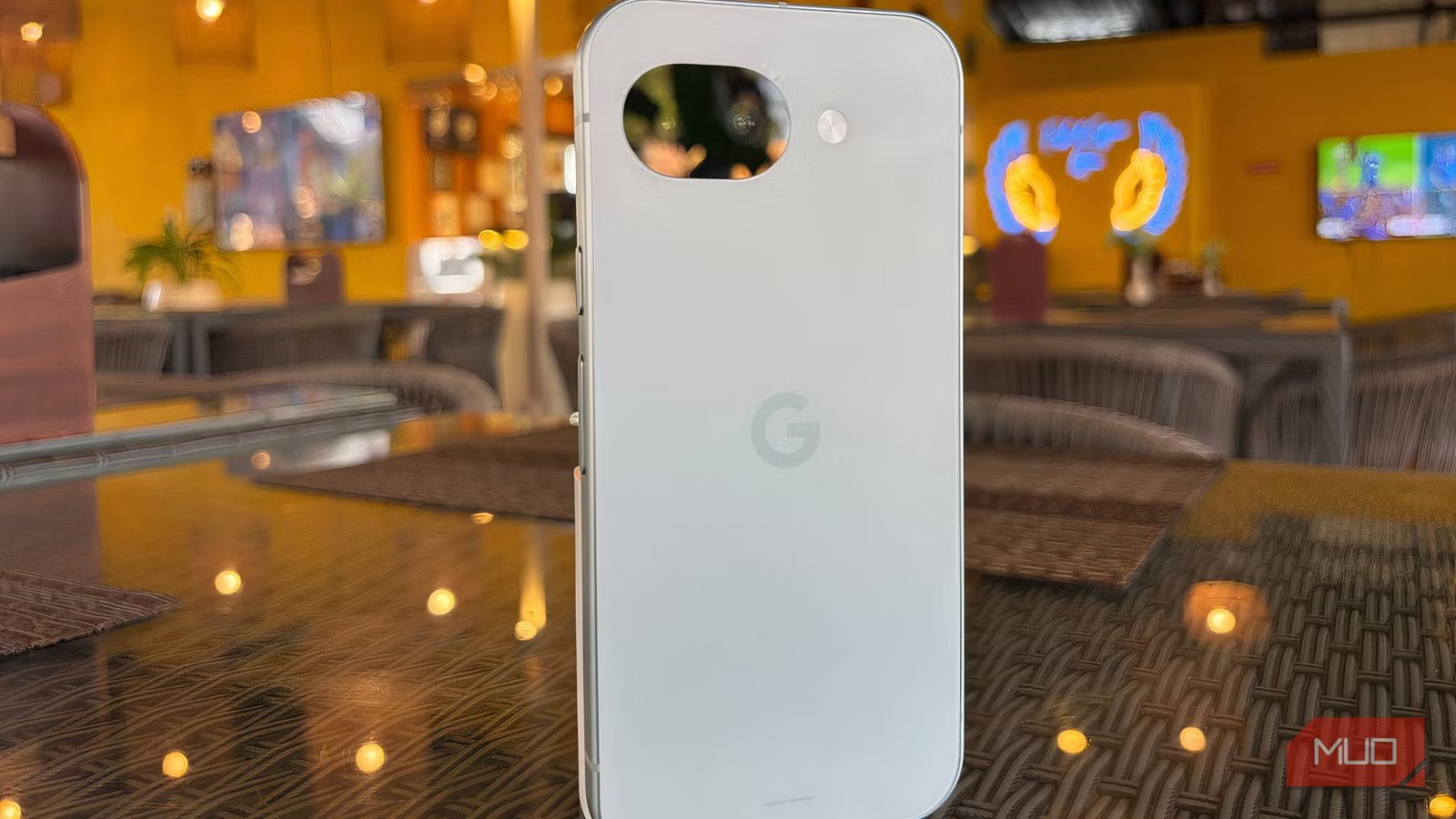
I’ve always had a soft spot for Pixel phones. In fact, they’re the only Android devices I genuinely get excited about. Samsung probably sits comfortably in second place for me, but beyond that, most Android phones don’t really hold my attention. Google’s Pixel A-series sits in the mid-range, promising the Pixel experience without the flagship price tag. Every year, though, the same criticism pops up. It looks almost identical to its predecessor and even carries similar internals, making the launch feel less like a new phone and more like a slightly refreshed version of the old one. Honestly, I kind of agree with that.
But I wanted to see it for myself. So, when I finally got my hands on the Google Pixel 10a, I was extremely curious. Does it actually deserve all that criticism, or is the internet just being a little dramatic again? After using it for about a week, I think I have the answer. I now know everything about it: where Google absolutely gets things right, where the device falls short, and who this “budget-friendly” Pixel is really meant for. Because while the Pixel 10a tries to do a lot, it also reveals a lot about Google’s mid-range strategy.
Related
4 things Android phones still do better than iPhones (that I actually use)
Android habits that don’t survive switching to iPhone.
Flat across the board
Minimalist looks and a cheeky splash of color
Credit: Shimul Sood / MakeUseOf
When I first picked up the Pixel 10a, my immediate reaction was its premium feel. It has this smooth, almost inviting texture that makes you want to keep holding it and actually use it, rather than put it down after a minute.
One thing that really stood out to me was the flat, unibody design — even the camera module follows suit. There’s no bump at the back, which gives the whole device a very clean, uniform look, and I actually like that. Its all-flat design means it sits flawlessly on any surface, and because of that flat rear panel, it actually looks slimmer than the 9mm thickness suggests.
In terms of weight, it feels nicely balanced too. It’s not heavy, which makes it comfortable to hold for longer periods, whether I’m watching a YouTube video or just scrolling through Instagram, and the side frames’ straight contours remind me of an iPhone. That said, Google has always managed to give its phones a premium touch, which helps them stand out in the sea of Android devices.
The unit I received in the Fog colorway looks quite clean and understated. But honestly, the one that really caught my eye was the berry option, a vibrant pink-red shade that instantly stands out. It definitely spoke to me. Don’t get me wrong, though. The Fog finish looks great too and has a more subtle, elegant vibe. But if I were picking one for myself, I’d probably go with the berry without thinking twice. All things considered, the Pixel 10a looks seriously good, and I’m really impressed by it.
Made for the basics, but does them beautifully
Smooth where it matters
Credit: Shimul Sood / MakeUseOf
The Google Pixel 10a runs on the same Google Tensor G4 chip as the Pixel 9 series, including the Pixel 9a. So if you look at it that way, not much has really changed if compared to the Pixel 9a, at least on paper. In real life, though, it’s been a pretty smooth experience for me. I have been using it for everything I usually do: watching random YouTube videos, scrolling through Instagram late at night, reading things I’m interested in, taking photos, and just going about my daily apps and tasks. I even had it with me on a week-long trip, where I was constantly using the camera and relying on it throughout the day. It handled all of that without any hiccups. Performance felt consistent, the battery life held up really well, and it never really got in my way.
Credit: Brady Snyder / MakeUseOf
There was a moment I did notice. On a really hot beach day, the phone got quite warm. But to be fair, that was more because of the harsh sunlight than anything I was doing on it. It settled down soon after, though there was a brief moment when it felt a little too hot to use it comfortably.
Now, while it can handle heavier stuff like gaming, video editing, or jumping between a bunch of apps, you can’t keep pushing it like that all the time. Do it repeatedly, and you’ll start to notice the phone slowing down a bit. At the end of the day, this isn’t a phone built for hardcore performance, and it doesn’t try to be either.
The camera, the software, and the battery
Not flashy, just really, really good
Credit: Shimul Sood / MakeUseOf
The camera setup on the Pixel 10a hasn’t really changed, and that’s not a bad thing. You still get a 48MP primary camera and a 13MP ultra-wide. The photos come out very true to life, which is classic Pixel, but I do feel like they sometimes miss that slight pop in colors. I played around with the settings a bit, and that definitely helped. Once tweaked, the shots look fantastic. You also get features like Add Me, Camera Coach, and Auto Best Take. I won’t say I use them every single day, but when I do need them, they’re actually quite helpful to have around.
Now, coming to the software, this is where Google just does its thing. I’ve always liked the Pixel software, and this one is no different. The AI side of things, especially Gemini, is quite useful. I wasn’t using it right, but once I did, it started fitting into my daily use. I didn’t think I’d rely on it as much, but here we are. On top of that, you’re even getting seven years of OS updates and Android 16 out of the box, which is great to see. The software experience really shapes how a phone feels over time, and Google continues to get this right.
Credit: Shimul Sood / MakeUseOf
As for the battery life, it’s been pretty solid for me. I’m not a heavy user, and with that kind of usage, it easily lasts me a full day. On days when I’m using it less, it stretches even further without me having to think about charging.
Related
How to unlock every AI feature on your new Pixel
Circle to search, AI image tools and more
It plays it safe, and that still works
Pixels have always had a bit of a soft spot with me, and the Pixel 10a continues that feeling this year as well. Starting at $499, it comfortably sits in the mid-range, but what stands out is how it undercuts its biggest rivals from Apple and Samsung. For what it offers, the pricing makes it hard to ignore. What I appreciate here is the consistency. This isn’t a phone that tries to reinvent itself every year, and it doesn’t need to. The Pixel A series has figured out what works, and it sticks to it. You’re getting a reliable camera, good enough performance, clean software, and a dependable battery. For light users like me, it’s a perfect phone.
It might not feel like a big upgrade on paper, but that doesn’t diminish what it does well. In a market that constantly pushes for something new, there’s something refreshing about a phone that focuses on getting the basics right, again and again.
SoC
Google Tensor G4
Display
6.3-inch Actua pOLED display, 1080 x 2424 resolution, 60-120Hz, 3000 nits peak brightness
