

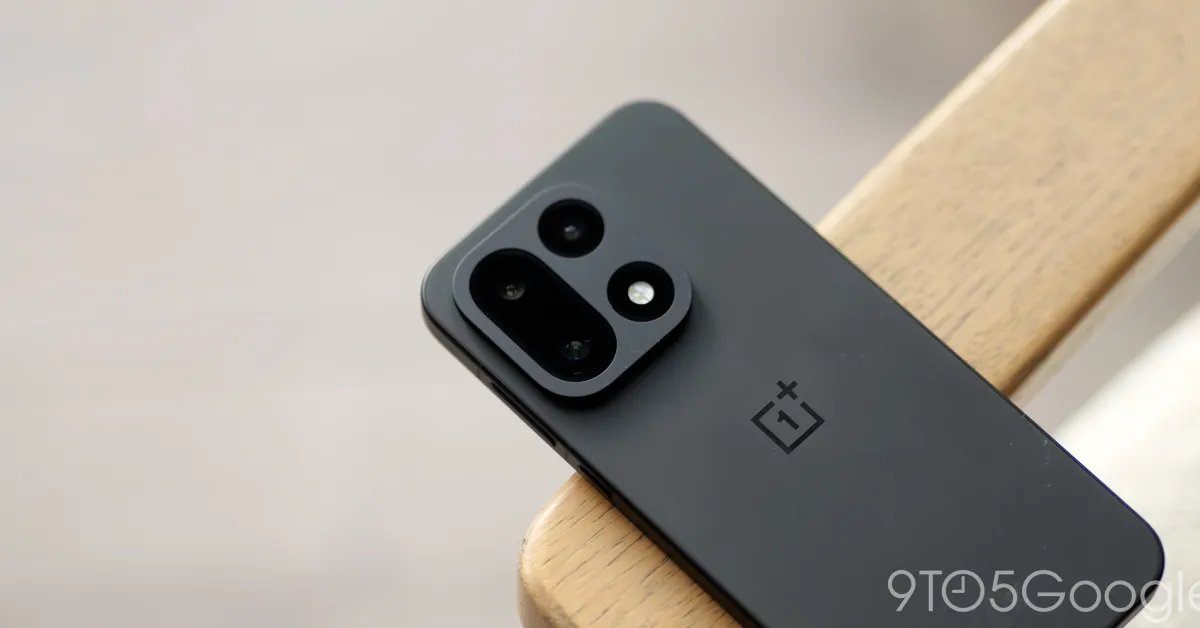
OnePlus is dead – probably. We’re hearing that OnePlus is shutting down much of its global operation imminently and, while it hasn’t happened just yet, it’s got us thinking about OnePlus’ presence in the US and how, sadly, its departure won’t really matter.
This issue of 9to5Google Weekender is a part of 9to5Google’s rebooted newsletter that highlights the biggest Google stories with added commentary and other tidbits. Sign up here to get it delivered to your inbox early!
Hear me out.
OnePlus is perhaps one of the most exciting brands in the past decade of Android, and also one of the most interesting entrants to the US smartphone market in that time. The brand has been responsible for some of my favorite Android phones ever, in particular the OnePlus Open and OnePlus 13, both of which I felt showed just how far behind a lot of US smartphones really are in terms of hardware.
Yet, the loss of OnePlus in the US won’t really matter.
Why?
The US smartphone market is largely a duopoly. Google Pixel has scraped together a growing pile of customers, Motorola has its niche, but this market comes down largely to Samsung and, more so, Apple. And that dominance on Apple’s side really influences the rest of the market. Everyone feels as though they’re just focused on trying to compete with Apple, both in getting people to switch from Apple or, more accurately, prevent their own buyers from switching to the iPhone. That plays a big role in developing new devices.
OnePlus, though, always played things a little differently. Both thanks to its early role as an enthusiast-focused brand and its foundation in the Chinese smartphone market, OnePlus phones sold in the States frankly trounced the competition on paper. Just look back at that OnePlus 13 I loved so much. Compared to the dominant Android phone of the time, the Galaxy S24 Ultra, the OnePlus 13 had a drastically bigger battery, much faster charging, better camera hardware (overall), and all for a much lower price point.
The difference was even bigger with OnePlus 15, which packed a 7,000 mAh battery when most other flagships in the US were just barely, finally, surpassing 5,000 mAh. Regardless of how you might feel about that phone – our Will Sattelberg wasn’t too hot on it, despite his similar appreciation of the OnePlus 13 – it really showed just how far behind a lot of US devices are. OnePlus was the only brand really pushing ahead in the US.
Logically, you’d think such a brand would apply some pressure to the rest of the market, pushing competitors to up their game in order to stay relevant.
It just never happened.
OnePlus never saw the success it needed to in the US, really never making a dent in the market nor becoming a well-known brand. Much of that boils down to a short-lived carrier stint that simply didn’t work out. Without carriers, most smartphone brands can’t survive in the US and, as OnePlus shows us, even that isn’t exactly a silver bullet. OnePlus tried to make it work with a Best Buy partnership, but that was never going to deliver the same impact.
The death of OnePlus seems imminent – the evidence just continues to stack up.
I’m sad about it, especially because it means the US market is losing one of its very few options, and perhaps one of its best when it comes to certain features like massive batteries. But, ultimately, the impact here will be minimal. The market has spoken, and people just aren’t buying OnePlus smartphones in the US in any meaningful numbers – when you’re behind Google Pixel, you know something’s not working. In the US, OnePlus devices are estimated to make up less than 0.5% of active use based on web data (which, as we’ve seen, is not exactly infallible). Even if you combine that with Oppo as a margin of error, it’s still less than Xiaomi makes up. Oof.
The sad truth here is that, after years of OnePlus in the US, it just hasn’t had an impact on the wider market. The likes of Samsung, Google, Motorola, etc just haven’t responded to the “pressure” OnePlus was supposed to provide. That’s very sad, because it leaves most US smartphones feeling quite stagnant compared to Android phones sold in other parts of the globe. The recent Galaxy S26 Ultra, good as it may be, is essentially the same phone Samsung has been releasing for the past several generations.
What do you think? Are you a OnePlus user? Will you miss the brand in the US? Discuss in the comments below!
This Week’s Top Stories
Android 17 Beta 3
Google released the third beta of Android 17 this week, with a few more feature changes ahead of an incoming stable release.
Samsung starts rolling out AirDrop support
Following in the footsteps of Pixel 10 and Pixel 9, Samsung has started rolling out Google’s AirDrop support via Quick Share to the Galaxy ecosystem. This starts with the Galaxy S26 series, and the update is widely available around the globe.
More Top Stories
From the rest of 9to5
9to5Mac: Apple discontinues the Mac Pro with no plans for future hardware
Electrek: New EV sales drop 28% in Q1 2026, but used EVs surge 12% to near-record levels
9to5Toys: Fox McCloud from StarFox is in the new Super Mario Galaxy Movie, Nintendo confirms
Follow Ben: Twitter/X, Threads, Bluesky, and Instagram
FTC: We use income earning auto affiliate links. More.
