

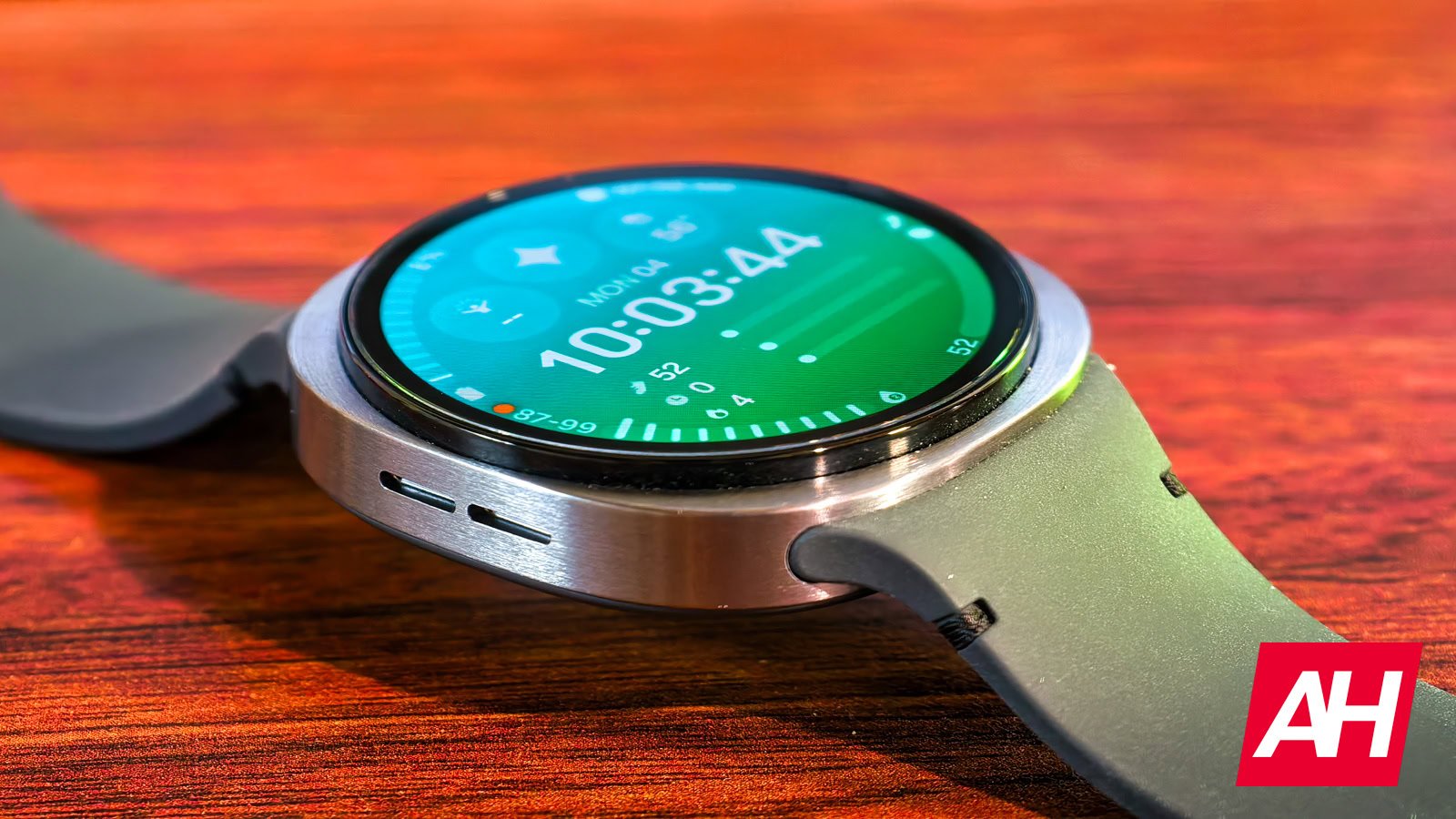
Recent sightings on Samsung’s internal servers have revealed a new firmware for a device labeled SM-L345U (via Mohammed Khatri). For those tracking the leaks, this model number leads directly to the Galaxy Watch 9, suggesting that hardware development is complete and the team is now fine-tuning the software.
If Samsung sticks to its usual release schedule, the Galaxy Watch 9 should arrive in July 2026. It should arrive alongside the next generation of Z Fold and Z Flip devices. However, this year’s update feels like more than just a routine refresh.
Samsung Galaxy Watch 9 firmware hits the test servers
One of the most talked-about leaks involves the watch‘s battery. According to reports, the 44mm variant will likely ship with a 435mAh battery. On paper, this matches the capacity of its predecessor, which might disappoint those hoping for a physically larger cell.
However, the real magic lies in how that power is used. Qualcomm recently confirmed at MWC 2026 that the Galaxy Watch 9 will be powered by the Snapdragon Wear Elite chipset. Built on a cutting-edge 3nm process, this processor bets on endurance. Qualcomm claims the chip is 30% more energy-efficient, which could finally push the Galaxy Watch beyond the “one-day charge” hurdle that has frustrated users for years.
Much-needed efficiency boost
Beyond battery life, the move to the Snapdragon Wear Elite introduces a dedicated Neural Processing Unit (NPU). This means the Galaxy Watch 9 might be able to even run small AI models locally.
The device also appears to be embracing future-proof connectivity. Leaked specifications suggest support for Bluetooth 6.0 and Ultra-Wideband (UWB). So, you could use the smartwatch as a reliable digital key for your home or car.
With testing now in its final stages in the United States, it won’t be long before we see if these efficiency gains live up to the hype. For now, the Galaxy Watch 9 looks poised to be a truly practical upgrade for the series.
