

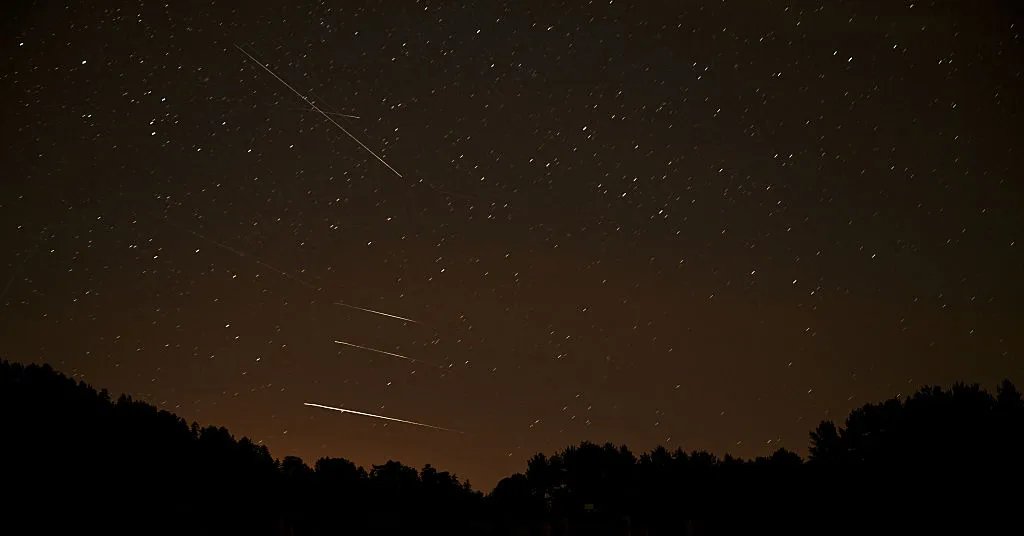
In mid-April, astronomy enthusiasts will be able to enjoy one of the classic celestial spectacles. The meteor shower known as the Lyrids will illuminate the sky, especially in the northern hemisphere, and anyone will be able to see it with the naked eye, weather permitting—if they know where to look.
The Lyrids began to appear as early as April 14, but their activity peaks between the night of April 21 and the early morning of April 22, according to NASA. During those hours, the shower will show 15 to 20 meteors per hour under dark skies.
The shower gets its name because the meteors appear to emerge from the constellation Lyra. Locating the radiant is simple if you use an astronomical mapping app: Just find Vega, the fifth brightest star in the sky, surpassed only by Sirius, Canopus, Alpha Centauri A, and Arcturus. Once you locate it, look around it; the luminous traces of the Lyrids will seem to be projected from that point due to a perspective effect. Keep in mind that it takes 20 to 30 minutes for the human eye to adjust to darkness.
The moon will be in early crescent phase during the peak, so its light will interfere very little. With a dark sky, meteors should stand out easily. The shower is usually visible from 10 pm to dawn, although early morning offers the best conditions. It is best to stay away from light pollution and, if possible, to observe from high ground. An outing to the mountains works well.
Each meteor shower has a different origin. In April, Earth crosses the cloud of fragments left by comet C/1861 G1 (Thatcher) in its orbit around the sun. This comet, discovered in 1861, takes about 415 years to complete its journey. The grains of ice and rock that it released centuries ago enter the atmosphere at high speed and produce the flashes we know as the Lyrids.
After the Lyrids, the calendar still holds several spectacles for those who follow the night sky. The Eta Aquarids will arrive in May with debris from Halley’s Comet. The Perseids will appear in August, the Orionids will return in October, and the year will close with the Leonids in November and the Geminids in December. The latter is considered the most intense and reliable shower on the calendar.
This story originally appeared on WIRED en Español and has been translated from Spanish.
