

Why you can trust Android Central
Our expert reviewers spend hours testing and comparing products and services so you can choose the best for you. Find out more about how we test.
I attend a lot of briefings, and most of these are mundane; I listen to a product guy talk about whatever device is launching, ask a few questions, and be on my way. But when OPPO showed off the Find X9 Ultra, there was a palpable sense of excitement; that particular meeting had over 50 journalists, and we could feel that this phone was different.
That’s why I was excited to get my hands on the Find X9 Ultra; I used the phone as my daily driver for close to two weeks now, and it’s just as good as the Vivo X300 Ultra — something I didn’t think I would say this year. In fact, I prefer the design of the Find X9 Ultra, it somehow has an even bigger 7,050mAh battery, and the software has meaningful features and great customizability.
But those are all secondary considerations. If you’re eyeing this phone, it’s because of the cameras, and to say that OPPO took things to a whole new level would be an understatement. The Find X9 Ultra has two 200MP cameras, but it’s the size of the sensors that’s notable: the 200MP 3x tele lens has a huge 1/1.28-inch sensor, making it the biggest telephoto module yet. The main 200MP camera is a 1/1.2-inch sensor, and it’s clear that OPPO is positioning the Find X9 Ultra as the best flagship camera of 2026. Coming in at £1,499 ($2,023) for the 12GB/512GB edition, it costs the same as the Galaxy S26 Ultra, but you’re getting so much more, as you’ll see in this review.
(Image credit: Apoorva Bhardwaj / Android Central)
Having switched to the phone from the Vivo X300 Ultra, I’ll admit that both devices excel when it comes to the cameras, but the Find X9 Ultra just has that little bit of an edge, and that ultimately makes it a better overall choice. Just like Vivo, OPPO is launching the Find X9 Ultra globally, and the phone will make its way to most countries in Asia, as well as the U.K. and other regions in the west.
There’s so much to talk about with the cameras, with OPPO touting dozens of new features. The Find X9 Ultra comes with a new generation of Hasselblad Master Camera System, and the brand notes that all five cameras on the device are class-leading in their own right.
This camera system is on another level entirely
(Image credit: Apoorva Bhardwaj / Android Central)
The 200MP main camera uses an f/1.5 Sony Lytia LYT-901 1/1.12-inch sensor with a 23mm focal length and OIS. Vivo uses the same sensor in the X300 Ultra, but it has a default focal length of 35mm. Having used the two, I prefer the 23mm focal length on the Find X9 Ultra, as it’s a little easier to use. The main camera has better HDR and dynamic range across the board, and that’s evident when using the phone against the Find X8 Ultra and the Find X9 Pro. OPPO’s Lumo imaging engine is now able to take full advantage of the 200MP sensor, and it doubles as a native 2x lens, delivering shots at 50MP.
It’s the 200MP f/2.2 OmniVision OV52A 3x telephoto lens that gives the phone a definite edge. The 1/1.28-inch sensor is the biggest tele lens on a phone yet, and if anything, it’s bigger than the 1/1.3-inch main camera of the Galaxy S26 Ultra — and this is the secondary lens. The lens has a 70mm focal length, and it gets OIS as well. OPPO says that the lens takes in 8.9 times the amount of light as the S26 Ultra, and that’s clearly evident when using it to shoot 3x photos at night. The telephoto lens produces clean shots at 6x as well, and you get 50MP shots at optical quality. And it doubles as a macro shooter, taking photos of objects just 15cm away.
Now, the Find X9 Ultra has another tele lens, and it uses the 50MP f/3.5 Samsung JNL sensor. This is a native 10x tele shooter, and it has a 1/2.75-inch sensor and 230mm focal length. It has a unique prism system to accommodate the sensor in the phone, and it delivers lossless photos at up to 20x. Now, taking photos at 10x handheld is challenging enough as it is, and as such the lens has a unique sensor-shift stabilization system designed to help in this regard. Oh, and it takes portrait shots too.
Finally, there’s the wide-angle lens, which is a 50MP f/2.0 Sony LYT-600 1/1.95-inch sensor with 14mm focal length. This lens is at least a known quantity, and it gets autofocus. Up front is a 50MP Samsung JN5 sensor, and it also has autofocus.
Image 1 of 5
(Image credit: Apoorva Bhardwaj / Android Central)(Image credit: Apoorva Bhardwaj / Android Central)(Image credit: Apoorva Bhardwaj / Android Central)(Image credit: Apoorva Bhardwaj / Android Central)(Image credit: Apoorva Bhardwaj / Android Central)
OPPO lavished just as much attention on the image tuning as the physical cameras, and the Find X9 Ultra gets a new Hasselblad Master Mode that’s even better. It uses an entirely different architecture to the standard Auto mode, and OPPO says it produces shots with no use of AI whatsoever — you have full control over the entire imaging chain. There are other custom modes, and the phone is the only one to come with Hasselblad’s Natural Color Solution with HDR. You can shoot 50MP RAW as well, and it has additional extras when shooting video.
All five lenses can shoot 4K60 in Dolby Vision, and you can easily switch between the lenses and get the same color rendition. This is a big point of contention on most flagships, as while the main camera is usually good, the auxiliary lenses don’t quite measure up — that isn’t an issue on the Find X9 Ultra, and it makes shooting videos on the phone an absolute joy. The dual 200MP cameras can shoot 4K120 video, and there’s 8K30, a new addition this year.
Image 1 of 15
(Image credit: Harish Jonnalagadda / Android Central)(Image credit: Harish Jonnalagadda / Android Central)(Image credit: Harish Jonnalagadda / Android Central)(Image credit: Harish Jonnalagadda / Android Central)(Image credit: Harish Jonnalagadda / Android Central)(Image credit: Harish Jonnalagadda / Android Central)(Image credit: Harish Jonnalagadda / Android Central)(Image credit: Harish Jonnalagadda / Android Central)(Image credit: Harish Jonnalagadda / Android Central)(Image credit: Harish Jonnalagadda / Android Central)(Image credit: Harish Jonnalagadda / Android Central)(Image credit: Harish Jonnalagadda / Android Central)(Image credit: Harish Jonnalagadda / Android Central)(Image credit: Harish Jonnalagadda / Android Central)(Image credit: Harish Jonnalagadda / Android Central)
Okay, that covers the technical side, and let’s talk about how the cameras hold up. I used the Find X9 Ultra to take hundreds of photos, and I didn’t see any issues with any of the quartet of rear lenses. The main camera does an incredible job in daylight and challenging situations, producing natural tones with excellent white balance and color rendition. There’s no denying that this is the best main camera of any phone, and OPPO did a fabulous job tuning it.
Similarly, the 3x and 10x lenses are among the best you’ll find, and they deliver photos of the same caliber as the main camera — which is an achievement in its own right. The wide-angle lens does a good job in this area too, and honestly, there isn’t a negative when it comes to the cameras.
Image 1 of 9
(Image credit: Harish Jonnalagadda / Android Central)(Image credit: Harish Jonnalagadda / Android Central)(Image credit: Harish Jonnalagadda / Android Central)(Image credit: Harish Jonnalagadda / Android Central)(Image credit: Harish Jonnalagadda / Android Central)(Image credit: Harish Jonnalagadda / Android Central)(Image credit: Harish Jonnalagadda / Android Central)(Image credit: Harish Jonnalagadda / Android Central)(Image credit: Harish Jonnalagadda / Android Central)
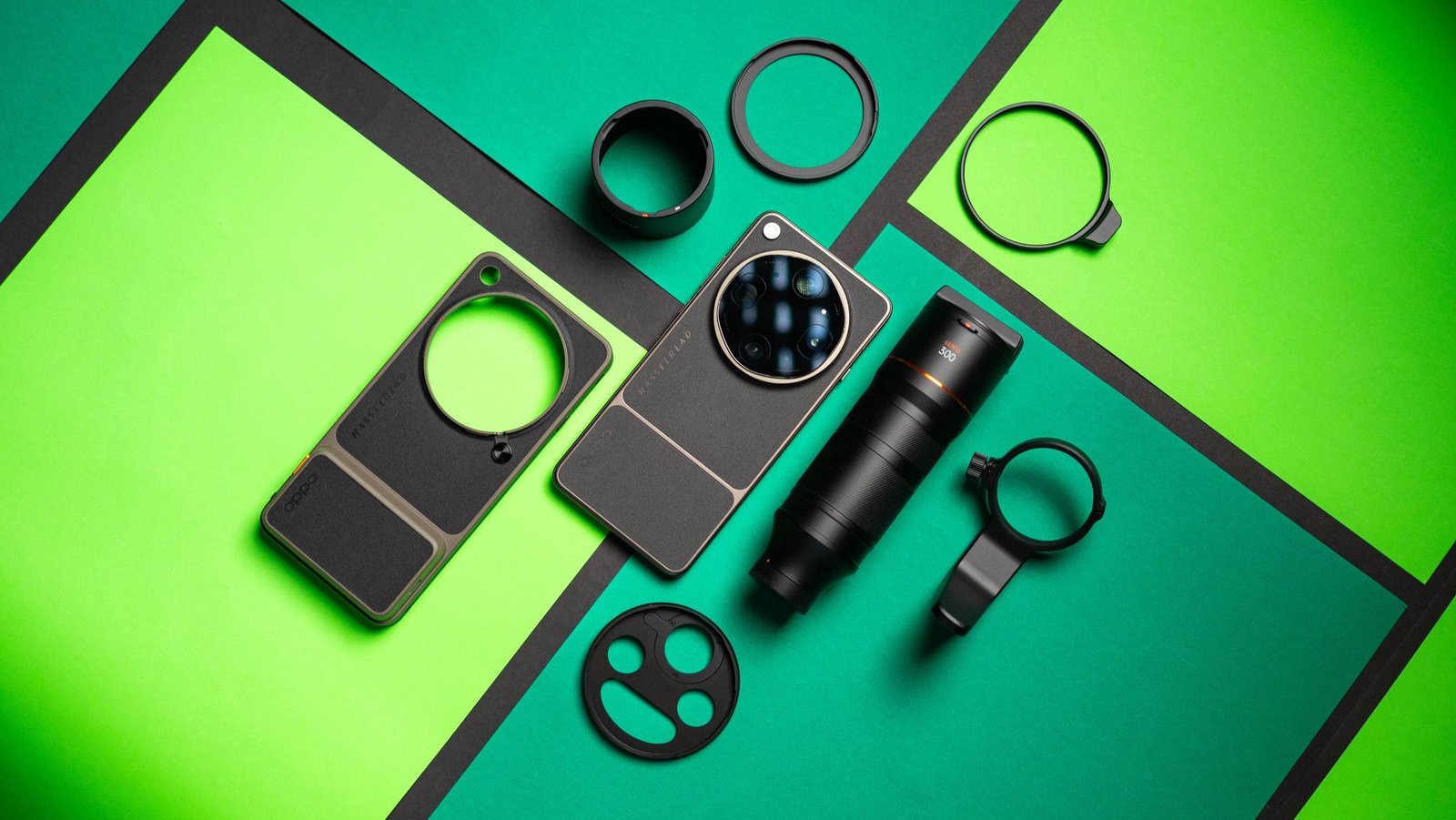
That’s not all either; just like Vivo, OPPO has camera accessories that let you make the most out of the Find X9 Ultra, and these include a teleconverter kit. The 300mm 13x Hasselblad external lens is about the biggest I’ve used yet, and it is an absolute unit. There’s a custom case that lets you attach the lens to the phone, and the entire kit is sold as an accessory bundle.
Even if you don’t buy the dedicated teleconverter kit, the Find X9 Ultra by itself does enough to stand above every other 2026 phone. The quality of the camera sensors combined with the tuning makes it the most versatile camera phone, and I don’t see how any other brand can come close to this.
The Find X9 Ultra is a battery powerhouse
(Image credit: Apoorva Bhardwaj / Android Central)
The Find X9 Ultra has truly amazing cameras, and thankfully, the rest of the phone is just as good. Battery life is excellent, thanks to a 7,050mAh silicon-carbon battery that’s designed to last two days between charges. I got a day and a half even with heavy use, and most of the time, there just wasn’t a need to charge the phone overnight.
Talking about charging tech, the phone uses OPPO’s 100W charging, and the best part is that you get 55W over any USB PD charger. This makes it highly convenient to charge the Find X9 Ultra with just about any charger, and there’s a dedicated battery management platform with a lot of features designed to prolong battery longevity.
On that note, the Find X9 Ultra will get the same 7,050mAh battery in all global regions, which is good to see. This was an issue last year on several Chinese phones, with the global models touting significantly smaller batteries, so I’m glad to see that not being the case in 2026.
It’s designed to stand out
(Image credit: Apoorva Bhardwaj / Android Central)
The design of the Find X9 Ultra stands out from every other phone, with OPPO leaning into the camera side of things. The Tundra Umber variant I’m using is styled to look like a high-end Hasselblad camera, and it has a vegan leather finish that’s great to hold and use.
The styling means the Find X9 Ultra is guaranteed to turn heads; I used it at a mall last week, and it got more attention than just about any other phone — only the tri-fold Huawei Mate XT stood out more. The leather finish contrasts really well with the aluminum mid-frame, and the bevels around the side ensure the phone is comfortable to hold.
Image 1 of 5
(Image credit: Apoorva Bhardwaj / Android Central)(Image credit: Apoorva Bhardwaj / Android Central)(Image credit: Apoorva Bhardwaj / Android Central)(Image credit: Apoorva Bhardwaj / Android Central)(Image credit: Apoorva Bhardwaj / Android Central)
Although it has a massive battery, that isn’t evident when using the phone; I had to confirm that my review unit has a 7,050mAh battery, because at 9.1mm and weighing 237g, it is only 11g heavier than its predecessor. That said, it doesn’t feel uncomfortable or unwieldy in the least, and that’s down to the weight distribution.
The camera island takes center stage (quite literally), and like the X300 Ultra, the Find X9 Ultra has a massive housing with a ring encircling it. Thankfully, there’s no wobble when using the phone on a table. You can also get the phone in a Canyon Orange hue, but that isn’t made out of leather, and as much as I like my orange iPhone 17 Pro, Tundra Umber is the better choice for this phone.
(Image credit: Apoorva Bhardwaj / Android Central)
The power and volume buttons are on the right, and there’s a dedicated camera control button this time as well; I like that it has an orange accent, but honestly, I don’t see the point of this button. It comes in the way of shooting photos, and I accidentally switched zoom levels when trying to take photos, or triggered the camera without meaning to. Thankfully, the button can be disabled, and I did just that after a few days of use.
You don’t miss out on any essentials; the Find X9 Ultra gets IP66, IP68, and IP69 dust and water resistance, and the ultrasonic fingerprint sensor is among the best around. There’s eSIM, NFC, Wi-Fi 7, Bluetooth 6.0, USB 3.2 Gen 1, and a vibration motor that delivers excellent feedback.
You get the best internals of any flagship
(Image credit: Apoorva Bhardwaj / Android Central)
Coming to the display, the 6.82-inch 144Hz LTPO AMOLED panel is identical to that of the X300 Ultra, and the 3168 × 1440 resolution is among the best in this category. You get ultra-thin 1.4mm bezels on all sides, and the panel is protected by Corning’s Gorilla Glass Victus 2, a decent addition. It has 2,160Hz PWM dimming when the panel goes below 70 nits, and DC dimming above that brightness.
Colors are detailed, and the phone handles HDR content without any issues. There’s decent customizability when it comes to changing the color balance or adjusting the font scaling, and the 144Hz refresh makes a slight difference over the usual 120Hz panels. What I like is that the phone goes down to 1nit, and this makes using it at night just that little bit more comfortable.
On the whole, there are no issues with the panel on the device, and it has good colors, great vibrancy, and holds up incredibly well while gaming.
Image 1 of 4
(Image credit: Apoorva Bhardwaj / Android Central)(Image credit: Apoorva Bhardwaj / Android Central)(Image credit: Apoorva Bhardwaj / Android Central)(Image credit: Apoorva Bhardwaj / Android Central)
Switching over to the internals, the phone gets the Snapdragon 8 Elite Gen 5 mobile platform with advanced thermal management. Although OPPO utilized MediaTek with the other Find X9 models, there’s no noticeable difference with the move to Qualcomm; I didn’t see any slowdowns, gaming was just as enjoyable, and crucially, there’s no overheating — which was an issue on other Qualcomm-based phones I tested this year.
My unit came with 12GB of LPDDR5X RAM and 512GB of storage, and there’s a 16GB/1TB model that’s debuting globally. The 512GB model should be adequate, but I used up 170GB of storage in just two weeks, and if you’re able to swing it, I’d suggest getting the 1TB variant.
The software has plenty to like
(Image credit: Apoorva Bhardwaj / Android Central)
The only issue I have with the software on the Find X9 Ultra is that it won’t get as many software updates as Google and Samsung phones. OPPO is obstinate about delivering just four Android OS updates, and while that’s good enough on most devices, the Find X9 Ultra deserves better.
I tested the global model of the Find X9 Ultra with the Android 16-based ColorOS 16.0.7, and as it was a preview build, the phone didn’t get Google Play certification. That meant I couldn’t use Google Pay, and wasn’t able to install a few banking utilities. Don’t get me wrong; the phone comes with the Play Store and other Google services pre-installed, and it’s just as easy to use as any other phone sold globally, including the Galaxy S26 Ultra and Pixel 10 Pro XL. The only issue is that as OPPO hasn’t certified the device, I wasn’t able to use Google Pay. OPPO says the final software will be rolled out as the device goes on sale, and these issues should be resolved then.
Other than that, ColorOS 16 is great to use; it has a modern design, plenty of useful features, and a lot of customizability. You can now easily minimize notifications on the lock screen into a capsule that sits at the bottom, live alerts do a good job with food delivery updates, and there’s plenty of AI-assisted features, including a new bill manager.
On the whole, ColorOS is one of the best Android interfaces around, and alongside OriginOS, it’s among my favorites. I like the design, the feature-set, and it’s optimized to take advantage of the internals, and is overall a joy to use.
The Find X9 Ultra is the camera upgrade you want
(Image credit: Apoorva Bhardwaj / Android Central)
In fact, the overarching takeaway with the Find X9 Ultra is that it doesn’t have many negatives; other than a few software quibbles, there isn’t anything to point out. The cameras aren’t among the best — they are the best you’ll find on any phone in 2026.
The battery life is also the best of any phone I used until now, the AMOLED panel is one of the brightest, and you get the latest internals. There really isn’t an area where the device falls short, and if you need a versatile camera phone, there’s no question that the Find X9 Ultra is the one to beat right now.
The Find X9 Ultra takes phone cameras to new heights, and it’s launching globally. If you’re using a Samsung or Google phone and want a true upgrade, this is without a doubt the phone to get.
