

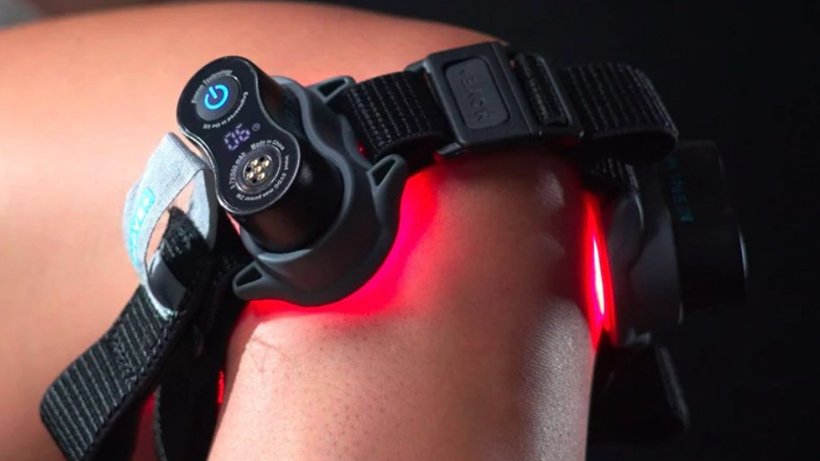
We’ve reviewed every major red light therapy device for knee pain—here are our top recommendations
Red light therapy (RLT) devices are increasingly used for supporting knee pain management at home. We understand why. Instead of trying an RLT at your nearby gym, you can just use these devices at home, whether after a workout or at the end of the day—it makes recovery easier to fit into your daily routine.
If specifically talking about knee pain, RLT devices might help support joint comfort, potentially reduce stiffness in certain cases, and aid general recovery.
However, they shouldn’t replace medical care, as they aren’t a quick fix. Results may build gradually with consistent use and professional care. If you’re experiencing knee pain, see a healthcare professional first for a proper diagnosis and treatment plan.
That said, they might be a useful addition if you want something practical and easy to stick with. That is why we tested the top RLT devices for supporting knee pain management to help you choose the right one for your needs, budget, and how likely you’re going to use it regularly.
How we tested red light therapy devices for knee pain
Ranking the top RLT devices is difficult because specifics on paper don’t always translate into real-world results. With this in mind, we focused on how these devices perform during our testing.
Our testing combined hands-on use with a close look at what matters the most for knee pain management. This includes how well each device fits and stays in place, how comfortable it is, and how easy it is to use. We also assessed build quality, coverage across the knee, and whether the power feels practical for real use. Most importantly, we looked at value for money and whether brand claims deliver on their promises.
Advertisement
This buyer’s guide builds on our in-depth reviews, where we test each device over several months to evaluate measurable results.
Quick picks: The best red light therapy for knee pain
Novaa Deep Healing Pad: Best overall choice for knee pain
- Wavelengths: 660nm red light + 850nm near-infrared
- Targeted treatment area designed specifically for joints like the knee
- Flexible wrap-style pad (can be strapped around body parts)
- Plug-in powered; typical sessions run around 20 min per use cycle
- Has built-in timer, a remote control, and a portable, lightweight design
- Price: $279.92
Novaa Deep Healing Pad is a specialized RLT device designed by NovaaLab for joint inflammation relief. Its comfort, ease of use, and our performance report make it a top choice for helping manage knee pain.
Advertisement
Instead of adjusting a panel or holding a handheld device, you simply wrap it on and start your session. In our testing, this is where it works best. You can sit back, relax, or read a book while the Novaa Pad does its job.
The only downside is that it must stay plugged in all the time. This limits your movement during the session, but it might be a good excuse to take a 20-minute break from a busy day.
Setup is simple too: no complicated controls, just a timer, and you’re ready to go. It delivers targeted coverage to your knee using a mix of red and near-infrared light, designed for deeper tissue penetration to potentially support pain management. That is why we think this product is designed specifically for knee joints.
The best part is that for only $279.92, you get a 1-year warranty with an option to pay extra to extend it to 3 years. This way, you don’t have to worry that your investment will go to waste in case something goes wrong.
If you want an RLT device that is simple and suitable for beginners, this is one of the best options in 2026.
ProsConsFSA/HSA-eligibleSmall coverage areaFDA-clearedHas to be plugged in all the timeComfortable fit for the knee60-day money-back guarantee
Advertisement
Novaa Light Pad XL: Best for full-leg coverage
- Wavelengths: 660nm red light + 850nm near-infrared light
- Large treatment area (19.7” x 23.6”) designed for full knee, leg, or back coverage
- Lay-on style use, not wearable like a wrap-on knee sleeve
- Typically 5–20 minutes per session (remote-controlled)
- Has a high-density LED layout, adjustable straps, and is portable
- Price: $479.92
If the Novaa Deep Healing Pad seems too small and you want an RLT device that may help with joint and muscle pain, consider the Novaa Light Pad XL. It stands out if you want flexibility beyond just knee support.
Instead of strapping it tightly like the smaller pad, you lay it over or under the area. It feels less restrictive and less ‘locked in’ than the Deep Healing Pad.
Though it has the same wavelengths, our testing found it offers a more immersive experience across a larger area. It feels more even and consistent over time, especially if you use it on both knees. In our opinion, that’s where the Light Pad XL justifies itself.
Advertisement
However, it’s bigger, takes up more space, isn’t as quick to strap on and go, and might be a splurge (starting at $479.92). While great for full-leg or multi-area treatments, it might be too bulky for knee pain alone.
ProsConsCertified and FDA-clearedPricey compared to other devices by NovaaFSA/HSA-eligibleMight be too large for some peopleCovers a large area
Kineon MOVE+ Pro: Best for targeted pain relief
- Wavelengths: 660nm red light + 808nm near-infrared laser diodes
- Highly targeted rather than large-area treatment
- Wearable strap system with 3 detachable light modules made for targeted joint therapy
- Up to 240 minutes total use per charge
- Has dual LED + laser technology, built-in timer sessions, a portable charging case, adjustable fit system
- Price: $420
The Kineon MOVE+ Pro falls into a different category from most RLT knee devices we have tested. Instead of a simple wrap or pad, you get a modular system that combines red light LEDs with near-infrared laser diodes designed to sit directly over your joint.
Advertisement
It stands out as more targeted and clinically inspired than other RLT devices for knees. We found it really easy to use—you click the modules into place, strap them around your knee, turn them on, and you’re ready to go.
This device is best for people who are always on the go and don’t have 20 minutes to spare for RLT. You can easily dust the shelves or make your dinner during the session.
Unlike Novaa Pads, Kineon MOVE+ Pro concentrates light directly on your knee. That makes it feel more intense, and in our testing, 10–15 minutes daily was enough to notice possible measurable results.
On the downside, it’s one of the more expensive options in this guide, and its battery life isn’t the greatest. You’ll be charging it often if you use it daily. However, if you’re looking for an RLT device best for targeted knee pain relief, we believe the Kineon MOVE+ Pro is the one to consider.
ProsConsFDA-cleared, CE, RoHS, and certificationsNeeds frequent chargingEasy to operate with no particular learning curveSome features require the appSpecifically made for joint pain managementFragile strap clip
Lifepro BioRecover™ Infrared Red Light Therapy Knee Brace: Best budget option
Advertisement
- Wavelengths: 660nm red light + 850nm near-infrared
- Targeted knee coverage with wrap-around
- Wearable neoprene knee brace with integrated LED therapy
- Adjustable sessions from 1–30 minutes, plug-in powered via remote
- Added optional vibration modes, has 3 light modes, and is portable
- Price: $103.99
Among all the RLT devices we tried for knee pain, the Lifepro Light Therapy Knee Brace is one of the most budget-friendly ones. Compared to Kineon or Novaa, it’s also much simpler.
That said, it’s why we recommend it if you don’t want to spend hundreds upfront. It focuses on core features without overcomplicating things. Like its premium competitors, it uses the same wavelengths intended for deeper tissue penetration, which might help reduce your knee inflammation and potentially relieve pain.
However, it has relatively high power, which doesn’t always mean better results, and if you use it longer than the recommended 30 minutes, it could irritate your skin. We don’t think it is as intense or precise as Kineon MOVE+ Pro, but it gets the job done as the best budget option.
What we really liked was the 5 vibration intensity levels and 3 light therapy modes. You can adjust those depending on your goals and needs, which we found convenient.
Overall, if you want an RLT device only for knee pain and are not interested in treating other areas, Lifepro Light Therapy Knee Brace provides the best value for money.
Advertisement
ProsConsGives a lifetime warrantyCan only be used for the kneeFDA-cleared, CE, RoHS, and MSDS certificationsHas to be plugged in during the sessionGreat features for the price
Nushape LipoWrap: Best versatile option
- Wavelengths: 635nm red light + 880nm near-infrared
- Provides wide-area coverage
- Wearable RLT belt (flexible wrap)
- Plug-in by default, typically 20 minutes per session
- Has an adjustable wrap, a large LED panel, and is portable
- Price: $549.99
The Nushape LipoWrap is the most versatile device we tested; however, it was designed to potentially aid weight loss, particularly in the abdominal area. Still, in our opinion, it earns a place here because it adapts easily to knee use while providing much wider coverage than most devices.
That is because it uses 635nm red light and 880nm NIR wavelengths, which may help with discomfort in various areas, including knee pain. Instead of a compact knee wrap like Kineon MOVE+ Pro, you have a large belt-style device you can easily wrap around your knee.
Advertisement
We recommend it if you want flexibility—you can use it on your legs, back, or other areas without buying multiple devices. That said, we noticed that Nushape LipoWrap is not suitable for people with a busy schedule who can’t spare 20 minutes for RLT. You can’t walk around with it as easily as with MOVE+ Pro.
If you prefer to focus only on knee pain, there are better options on this list. But if you want treatment for other body parts and are intrigued by the brand’s claims that the device could aid weight loss, you should be eyeing Nushape LipoWrap.
ProsConsLarge coverage areaTargeted at weight loss, not knee pain reliefYou can use it not only for your kneeCertifications are not available on the product pageOne-size-fits-allHigh price
Infrared therapy vs LED therapy
It’s easy to get confused by the terminology, but most at-home RLT devices use LED technology. If you see the word “infrared,” it doesn’t mean a different device; it refers to the wavelength of the light used.
As you may have noticed, these devices offer two main wavelength types. Red light (visible) is typically used for surface-level treatments and may help support skin and more superficial tissues. Near-infrared (invisible) light is suggested to penetrate deeper into the tissues, which may be more relevant for issues like knee pain or joint stiffness
Most modern RLT devices, including those on our list, combine both. We believe that’s the best combination for knee therapy, because you may be getting both surface-level and deeper treatment in one session.
Advertisement
You might also notice that some devices use LEDs, while others (like Kineon) include lasers. The difference is simple. Lasers are more focused, while LEDs spread light over a larger surface.
Even though knowing this information is really helpful when choosing the right device, first, we recommend consulting your doctor to see if RLT is safe for you and how RLT devices may support your treatment.
What you need to know before buying a red light therapy device for knee pain
Wavelenghts
This is one of the most important things to get right. Most often, devices use a combination of red light (around 630–660nm) and near-infrared light (around 810–850nm). Red light works closer to the surface, while near-infrared may reach deeper into the tissues. We recommend choosing a device that includes both.
Battery life
If it’s hard to keep the device charged, you’re less likely to use it. In our experience, shorter sessions with reliable battery life or plug-in devices are more practical than fully wireless devices that require constant charging.
Price
Our list spans a wide range of prices, from $100 to over $500. A higher price doesn’t always mean better results. You’re often paying for the device quality, portability, or more advanced tech (like lasers), not just effectiveness. You should always consider your needs before making a purchase.
Warranty
Warranty is a really important part that shouldn’t be missed when choosing an RLT device for knee pain. In our opinion, a solid 1-year warranty is a must; if you can extend it, even better. Some devices (like Lifepro Light Therapy Knee Brace) offer lifetime warranties, which is even better.
Advertisement
Ease of use
If a device is complicated, uncomfortable, or takes time to set up, you simply won’t use it enough. You should find the one you would feel comfortable wearing.
Think about how it would fit your daily routine. Would you rather use it while sitting on the sofa and relaxing, or do you want something you can strap on and move around the house with?
Safety considerations
It’s important to understand what’s causing your knee pain, but you shouldn’t diagnose yourself. Getting advice from a healthcare professional should always come first.
Red light therapy can be a helpful addition, but should not replace proper treatment or delay medical help. While there is some research on light therapy in general, there is less on specific devices.
This is why it is important to follow usage guidelines, session times, and your doctor’s advice. Choosing an FDA-cleared device can also be a good idea.
