

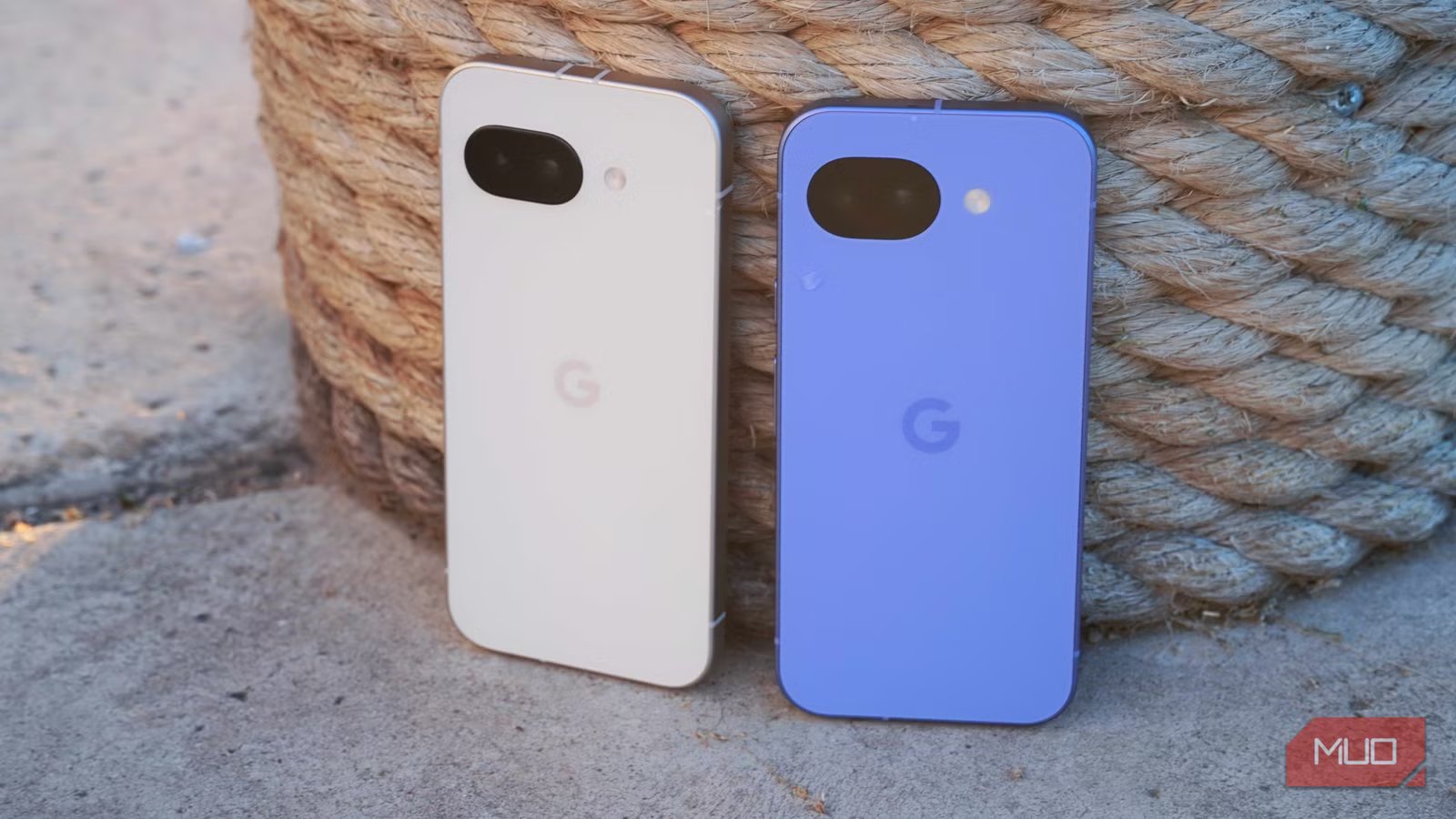
I test phones across all price points, and before using the $500 Google Pixel 10a, I had multiple thousand-dollar phones in my pocket on a daily basis. I spent my own cash on the iPhone Air and Samsung Galaxy S25 Edge, and tested review units of the Google Pixel 10 Pro, OnePlus 13, and Samsung Galaxy Z Fold 7. After the Pixel 10a launched, I reviewed the Galaxy S26 and Galaxy S26 Ultra. In other words, I’ve tested the best phones running both Android and iOS — and yet, I switched from these expensive flagships to the Pixel 10a without missing a beat.
If you know anything about the Google Pixel 10a, that might sound surprising. It’s true that the Pixel 10a doesn’t offer any major hardware upgrades over the Pixel 9a, reusing the same processor, camera system, and battery as its predecessor. The overall design is the same, too, outside of minor changes and a completely flat back with no camera bump. With that being said, Pixels have always made a name for themselves due to exclusive Google software features — not from offering the latest hardware. The same attractive price point and new software tools are enough to make the Pixel 10a compelling, even compared to flagship competitors.
Related
The Google Pixel 10a is basically last year’s phone — but it’s still worth the money
This is a Pixel 9.5a, not a 10a.
The specs don’t tell the whole story
Google’s affordable price point and compelling software stands out
Benchmarks and hardware specifications never tell the whole story of what it’s like to use a smartphone as your daily driver. That’s not to say that they don’t matter — in a smartphone market this mature, the minute differences in benchmark performance and specs could help you determine how your money is best spent. I’ll be the first to admit that Google needs to improve Pixel performance by making Tensor chips more competitive with the latest from Apple and Qualcomm. In this case, though, the Pixel 10a’s price point and software matter much more than a single specification or hardware component.
Rising prices are affecting the entire smartphone industry, with Samsung increasing Galaxy S26 and Galaxy S26 Plus prices and Motorola hiking Razr 2026 series prices. In that context, the best Pixel 10a feature is its $500 retail price, which is about half the cost of a typical flagship. The bar is naturally lower for performance, feature set, and hardware as a result. If you can live with not having the latest on-device AI features and slightly slower speeds, the Pixel 10a is more than enough to handle daily smartphone tasks.
To prove it, I took the Pixel 10a on an international trip to Spain to cover Mobile World Congress in March. It handled mobile boarding passes, ordered rideshares, navigated me in an unfamiliar city, took photos, and recorded interviews. If there’s a single week of the year demanding enough to warrant using a flagship Android phone, it would’ve been that one. Instead, the Pixel 10a did everything I asked of it. I didn’t miss my iPhone Air, Galaxy S25 Edge, or Pixel 10 Pro.
Related
I used the Pixel 10a and 9a side-by-side and the camera bar isn’t the only change
Google changed more about the Pixel 10a than you probably think, but there’s still way too much in common with the Pixel 9a.
The Pixel 10a is loaded with camera features
Use the same software tools you get on the flagships
A close up of the Pixel 9a camera bump (top) and the Pixel 10a camera cover (bottom).Credit: Brady Snyder / MakeUseOf
There’s one thing that makes the Pixel 10a feel just like a flagship, and it’s the phone’s software. Google equipped this midrange phone with the same Android 16 operating system as all its other higher-priced models. That includes the same Material 3 Expressive design flair, Google AI features, and camera tricks. The Pixel 10a unfortunately misses out on a few AI-powered tools, such as AI notification summaries and Pixel Screenshots, due to its mere 8GB of onboard memory. Aside from that shortcoming — which will only loom larger as the Pixel 10a ages — it’s as fully featured as a budget Android phone gets.
There’s no better example of that than the phone’s camera system. It’s powered by a 48MP main camera and a 13MP ultrawide lens, both supporting optical image stabilization. From a hardware perspective, the most exciting thing about the Pixel 10a camera is that it lacks a camera bump. The entire rear case of the device is flat, with a slightly recessed glass cover to protect the two cameras on the back. The camera software, though, is arguably more exciting.
Since the Pixel 10a doesn’t have the newer Tensor G5 platform, it misses out on the latest image-signal processing improvements that come with the newer chip. That isn’t a bad thing, though, because the Pixel 10a might be the most color-accurate camera phone in Google’s current lineup. I tested the flagship Pixel 10 Pro’s camera against the Galaxy S26 Ultra’s camera, and the latter consistently produced bright, color-accurate images with great dynamic range. The Pixel 10a, by comparison, tends to produce lifelike photos — and the 48MP primary sensor is more than enough.
Google also gave the Pixel 10 series’ best camera feature to the budget Pixel 10a: Camera Coach. It’s a software tool that uses custom Gemini models to provide photography tips in real time that help you take better photos. Rather than using generative AI to edit your photos, Camera Coach is an instructional feature that scans the scene and makes suggestions. It’s up to you to actually use those tips to capture your Pixel 10a photos, so you’re learning photography skills in the process, without using AI as an editing shortcut.
Auto Best Take also comes to the A-series Pixel for the first time. This camera trick takes a bunch of photos in quick succession during group shots and blends them together automatically. It’s designed to help everyone look their best. If there’s one photo where someone is blinking and another where someone else is looking away, it can merge those together to produce the perfect capture. This tool joins Add Me and Macro Focus to provide a robust software suite for the Pixel 10a’s camera system that can hang with flagships.
Related
I own three cameras and my Pixel replaces all of them
I own three cameras, but my Pixel does all the work
Budget price, flagship software support
The Pixel 10a launches with Android 16 and seven years of upgrades
Credit: Brady Snyder / MakeUseOf
Beyond the camera features, the Pixel 10a comes with the usual crop of Gemini and Google AI software tools, such as Gemini Live and Circle to Search. Thanks to quarterly feature drops, the Pixel 10a gets better over time. It starts with Android 16 and will get seven years of complete Android OS upgrades. That’ll cover users through March 2033, and extend the Pixel 10a to Android 23. This is the kind of software support we’ve come to expect from flagship phones, but it’s an incredible perk for a $500 phone that certainly helps it stand out.
A few times each year, I switch from a flagship phone to a midrange or budget one. Every time, I’m impressed by how capable these phones are, despite costing a fraction of the price of a flagship. The truth is, very few of us need the latest and greatest, and the Pixel 10a is proof of that. I used the Pixel 10a for weeks as my only smartphone, and after my review period was up, I wasn’t itching to switch back to higher-priced phones. It handled all my needs, and it’ll likely handle yours, too.
SoC
Google Tensor G4
Display
6.3-inch Actua pOLED display, 1080 x 2424 resolution, 60-120Hz, 3000 nits peak brightness
RAM
8GB
Storage
128GB, 256GB
Battery
5,100 mAh
Ports
USB-C
The Google Pixel 10a is a budget-oriented smartphone with a flat back and long battery life. It’s powered by the same Tensor G4 chip as its predecessor, and many key specs are identical to the Pixel 9a. However, you do get a brighter screen, better modem, new software features, and Android 16 with seven years of software support.
