

The guy who sued 27 women, one man, and several platforms after users in a Facebook group called him “clingy” and “psycho” had his case against Meta dismissed after a judge suggested that his attorney filed AI-generated errors and non-existent citations.
In Nikko D’Ambrosio’s complaint, he claimed Facebook profited off of disparaging posts about him in a Chicago-based Are We Dating the Same Guy (AWDTSG) group. Judge David Hamilton wrote: “The brief included no citation to any legislative findings, let alone any including the statute’s targets as the brief asserted… These mistakes and fictitious quotations bear the hallmarks of the misuse of generative artificial intelligence.”
The detail was spotted by attorney Rob Freund on X:
The Chicago man who brought a defamation case over FB comments in “Are We Dating the Same Guy?” group appealed the dismissal of his case.
He loses again, and this time the court calls out his lawyers’ AI misuse, noting some irony around it.
The appellate brief included several… https://t.co/vjT8FYcmvf pic.twitter.com/bbFeOwrFD4
— Rob Freund (@RobertFreundLaw) May 18, 2026
According to D’Ambrosio’s complaint, a woman posted in the group that she’d blocked his number. “Very clingy [and] very fast,” she wrote in the Facebook group. “Flaunted money very awkwardly and kept talking about how I don’t want to see his bad side.“ She blocked his number and he texted her from another one, she wrote. His response, included as an exhibit in the case—which he didn’t dispute until very late in the trial—was as follows, with redactions by the court: “Speak for yourself you ugly vial [sic] fake whore. Your ego matches that fake f****** face where you can’t even smile in pictures because your teeth are so f*****. The truth hurts b**** and my message will stay with you forever c***.”
D’Ambrosio’s initial attempts at suing the moderators of the groups, specific women who posted in the group about allegedly being harassed by him, and GoFundMe and Meta floundered under multiple revised complaints and finally, a dismissal in May 2025. He and his attorneys appealed two months later.
In 2024, in the middle of these case proceedings, including a failed class-action lawsuit that attempted to bring together men who felt wronged by Are We Dating the Same Guy groups, D’Ambrosio was sentenced to a year in prison for tax fraud. D’Ambrosio’s attorney at the time insinuated to the jury his client was too dumb to do his own taxes and therefore was innocent: “I don’t mean this to disparage Nikko in any way, but as you can see from his educational records, he is not the most sophisticated human being,” attorney Christopher Grohman said. “Somebody with his skill set is not doing his own taxes, and nor should he be, frankly. You go to a professional. And the professional he relied upon was his cousin.”
Are We Dating the Same Guy groups allow members to crowdsource “red flags or tea” about men they’re dating.
D’Ambrosio didn’t argue his “reportedly obnoxious behavior on dates and after a breakup” as listed in the AWDTSG group, the judge wrote, until it came time for oral arguments to appeal a dismissal of the case, “meaning any potential claim based on that statement was doomed as well.”
Judge Hamilton lists many reasons why D’Ambrosio doesn’t have a case strong enough to maintain that Meta violated any right-to-publicity laws or profited off his likeness through the AWDTSG group. Among them: his attorney Aaron Walner’s “sloppy” use of AI.
“We see such sloppy work in briefs fairly often, and almost always let it pass without comment as we try to focus on the merits of appeals,” Hamilton wrote. “But the next sentence in attorney Walner’s opening brief for D’Ambrosio said. Not only did Walner cite cases that didn’t support his argument, the only place judges could find one of the citations was in a decision that supported the opposite of the point he was apparently trying to make.
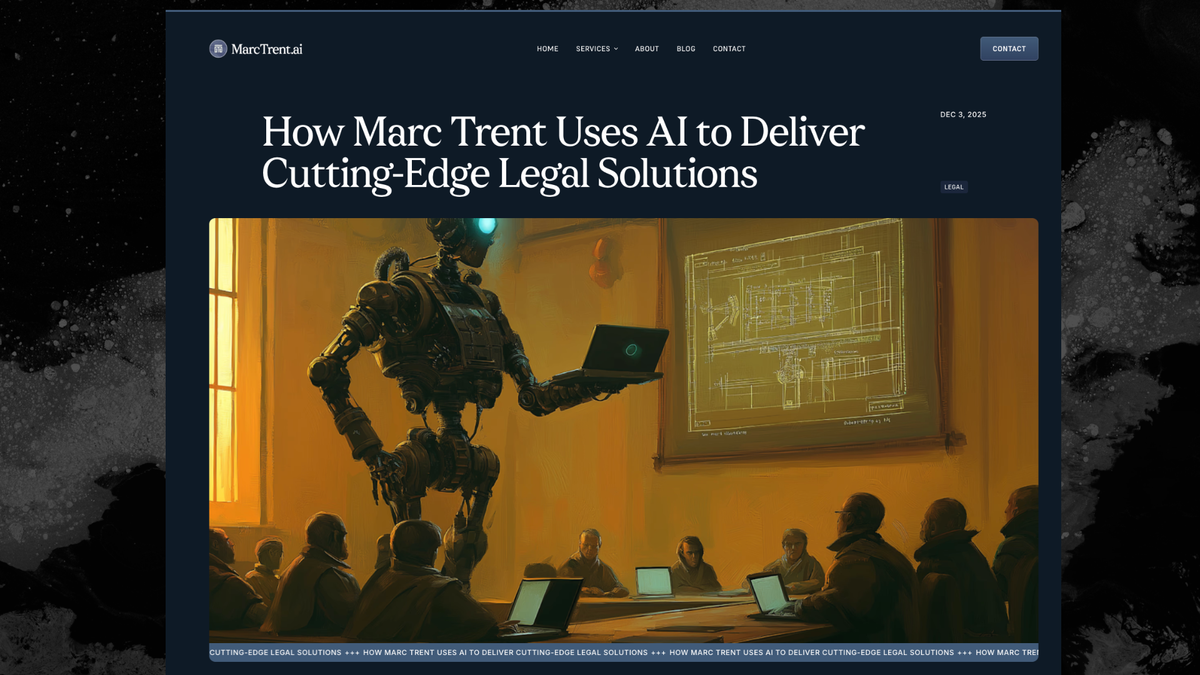
Aaron Walner is an attorney at Marc Trent’s law firm. Trent’s website, as the judge points out, brags extensively about Trent’s use of AI. In a blog post titled “How Marc Trent Uses AI to Deliver Cutting-Edge Legal Solutions,” he lists “AI-Powered Case Management” and “Smarter Legal Strategies” as ways he practices law using LLMs: “Gone are the days of sifting through mountains of paperwork. Our AI tools automate document review, flagging key information and identifying relevant case law in seconds,” the site says.
The court demanded Walner, Trent and D’Ambrosio answer for their AI-generated filings or face sanctions. Lawyers getting caught and sanctioned for using AI and wasting the court’s time and clients’ resources happens so often now it barely makes the news anymore. This phenomenon started in the last year, and has since exploded into a legal-world epidemic, with judges’ patiences wearing thin and more people choosing to represent themselves in court, with the “help” of an LLM like ChatGPT. Lawyers, meanwhile, blame everything from family emergencies to technical difficulties when they get caught, and often throw their own paralegals under the bus.
Trent Law Firm did not respond to a request for comment.
“We don’t just use AI for the sake of it. Every tool and strategy is aimed at one thing: winning your case,” Trent’s site says. In D’Ambrosio’s case, it helped lose it.
About the author
Sam Cole is writing from the far reaches of the internet, about sexuality, the adult industry, online culture, and AI. She’s the author of How Sex Changed the Internet and the Internet Changed Sex.
