

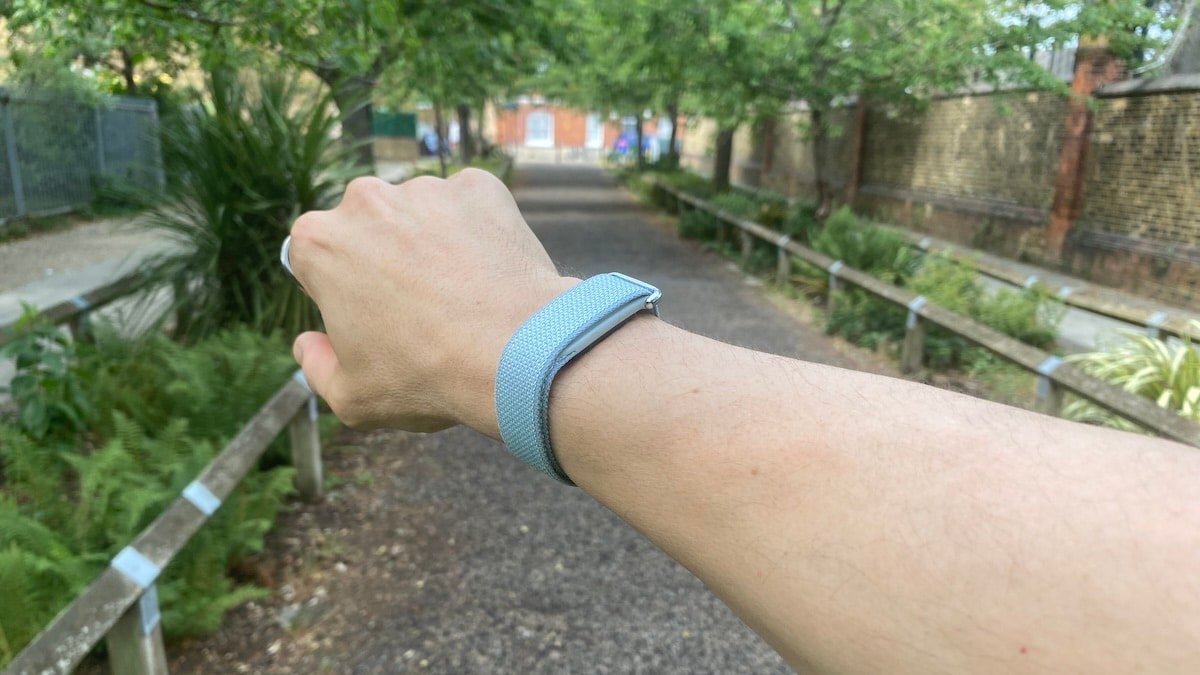
Google has published accessory design guidelines for Fitbit Air, giving third-party brands and creators the details they need to build custom bands around the tiny screenless tracker. That could make the device more interesting, because Fitbit Air’s real strength may be how and where it can be worn.
The document covers 2D CAD drawings with dimensions, tolerances and the basic physical requirements for custom bands. It also points interested brands toward the Made for Google programme, which could allow certified accessories to carry official approval.
This is not Google opening up the hardware or software side of Fitbit Air. Accessory makers are not getting access to raw health data or sensor controls. What Google is doing, it is giving them the physical rules for building holders that should fit properly and avoid obvious design mistakes.
Why this suits Fitbit Air
A screenless tracker has more freedom than a watch. It does not need to sit on the wrist so a user can glance at it. It only needs stable skin contact, decent comfort and enough security to stay in place during the day.
That is why accessories could make a real difference here. Google’s guidance stresses things like sensor clearance, secure retention and correct contact with the skin. Those details sound dull, but they are exactly what will decide whether a third-party band works properly or just looks good in photos.
The tracker’s optical sensors need to remain clear and close to the body. If a band shifts around during a workout, presses unevenly, or blocks part of the sensor area, accuracy may suffer. Fitbit Air is small enough to invite experimentation, but it still has the same basic wearable problem as every optical tracker. Placement counts.
The bicep band idea is the obvious one
The most obvious accessory is a bicep band. Users are already talking about it, and it makes sense. Many people already wear a smartwatch, mechanical watch, or running watch on the wrist. A second wrist device can feel awkward, especially if it has no display.
A bicep band would let Fitbit Air act more like a discreet sensor module. That puts it closer to the WHOOP-style use case, where the tracker does not have to compete with a watch. It could also appeal during strength training, cycling and other activities where wrist placement can be messy.
Other ideas are floating around too, including ankle bands, shoe clips and 3D-printed holders. Some of those will make more sense than others. A shoe clip might help with step tracking in a limited use case, but it would not work for heart rate. An ankle band could be interesting for sleep or movement tracking.
This could help Fitbit Air find its lane
The Air still has to prove where it fits. It is more discreet than a normal Fitbit tracker, but users still need a reason to choose it over a watch or band with a screen.
Accessories could help answer that. A good bicep band, sleep band, clip or sports holder would make the device feel less like a stripped-down Fitbit and more like a small health sensor with different wearing options.
That does not turn this into a massive announcement. It does, however, give the product a better post-launch story. Google is not just selling one set of straps and leaving third-party makers to guess the measurements. It has put out a template for others to build around.
