

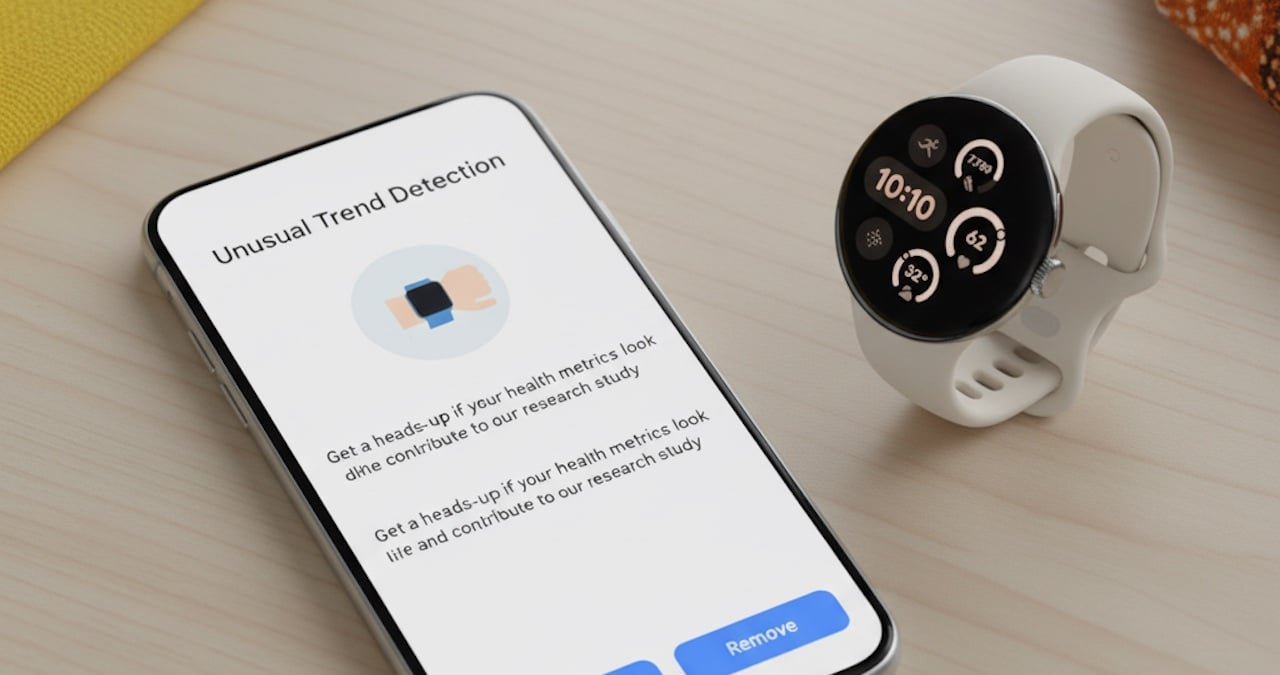
Fitbit has introduced a new experiment inside Fitbit Labs called Unusual Trend Detection. It follows your vitals stats and tells you if something is amiss.
This isn’t a diagnostic tool or medical-grade alert system. Fitbit makes that clear from the start. What it does do is run a research algorithm in the background, looking at your heart rate variability, your sleeping heart rate (non-REM), and respiration rate during sleep. If those start to shift significantly from your baseline, the app sends you a prompt.
You’ll then be asked to log how you’re feeling, what might have caused the change, and whether you’ve experienced any symptoms. Once things stabilise and return to normal, you’ll get another notification confirming that. Fitbit also adds recovery advice, though it’s fairly generic at this stage.
Essential reading: Top fitness trackers and health gadgets
The goal is to build awareness of how things like stress, illness or poor recovery might show up in your metrics before you even notice a problem. That said, it’s clearly a research study and not something Fitbit is claiming to be reliable enough for health decisions.
Who can access Unusual trends
There are a few hoops to jump through if you want to try this out. First, it’s only available through Fitbit Labs, so you’ll need to be offered the feature within the app. That offer shows up under the “You” tab if you’re eligible.
It’s currently limited to users in the US who are over 22, using the Fitbit app in English, signed in via a Google Account, and on Android. Once you opt in, you’ll be prompted to review a research consent form before anything starts. Even if no trends are detected, you’ll still get a weekly check-in message to make sure nothing was missed.
The approach feels a bit like what other wearables have already done such as Whoop, recently Garmin and a few smart ring makers. Fitbit wants your feedback to train the algorithm, so it’s as much about building the system as it is about using it.
Privacy and how the data is handled
Fitbit says it strips out any personally identifiable information before data is stored or analysed. Each participant is assigned a unique ID, and only authorised personnel have access to the backend systems.
Your data includes more than just heart rate or breathing rate. It pulls in SpO2, skin temperature, sleep data, and responses to the surveys you fill out. Activity and stress scores may also be analysed to give additional context. All of this is part of the broader research push to improve how these systems can flag potential health issues earlier, ideally before symptoms become obvious.
Whether this becomes a proper product feature remains to be seen. But the fact that Fitbit is openly testing it with user feedback suggests it’s at least part of their longer-term roadmap.
Subscribe to our monthly newsletter! Check out our YouTube channel.
And of course, you can follow Gadgets & Wearables on Google News and add us as a preferred source to get our expert news, reviews, and opinion in your feeds.
