

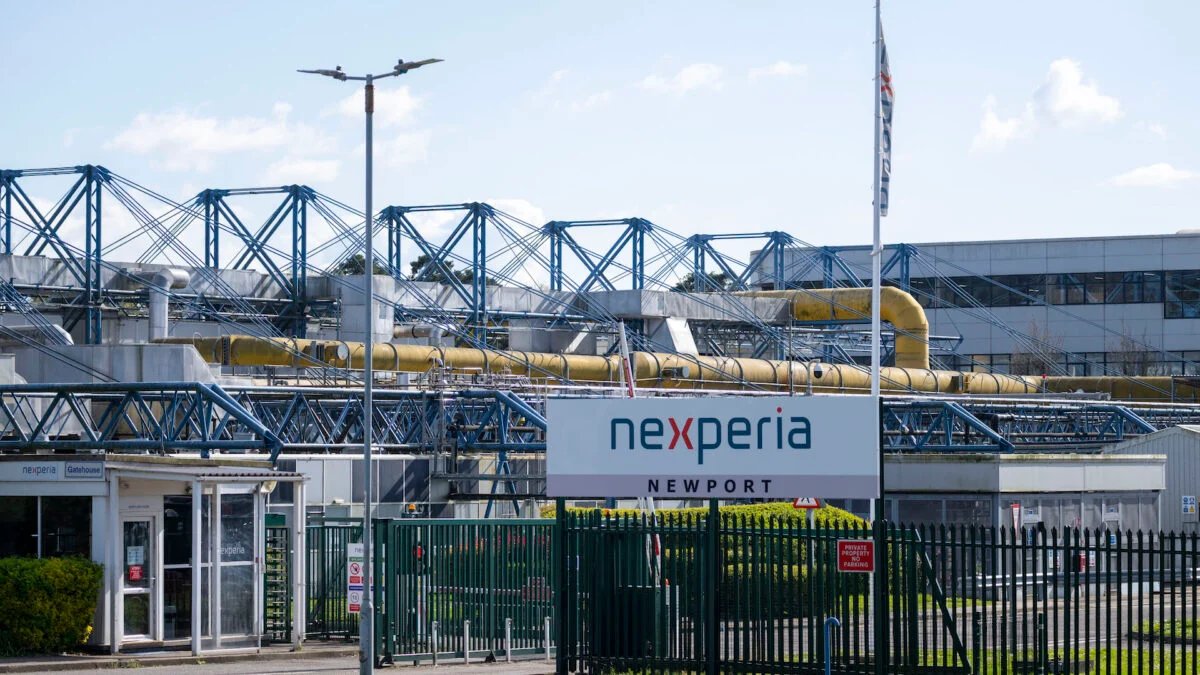
What happens when a company based in one country, and its parent company based in another country hate each other? Sounds like a hilarious HBO show, I know, but what if one of the companies is based in China, and what if the products this chaotic corporate entity makes are crucial to the global economy?
The activities of the Netherlands-based part of the semiconductor company Nexperia represent, according to a Saturday statement from the Chinese Ministry of Commerce, a disruption in operations that could trigger a global semiconductor shortage. If that happens, the ministry said on Saturday, “the Netherlands must bear full responsibility.”
It’s hard to get situated in a mess like this because strained computer chip supply chains are so common. So to be clear, this would be a different type of looming semiconductor crisis from the one threatening car infotainment systems because of AI. Instead, this would be a throwback to the Covid-era, when car production slowed down due to a global shortage of the more basic and boring, but essential, chips used in cars—a shortage that had a very brief sequel late last year because of earlier issues with this same company, and its bizarre, international semi-civil war.
The bewildering international corporate intrigue at the heart of this story also feels like an essential artifact for understanding the global Trump 2.0 era.
Nexperia is deeply European—a Dutch company whose own website traces its history back to British and German electronics companies from over 100 years ago, which were later acquired by Amsterdam-based Philips and turned into a cornerstone of the microprocessor industry. But Nexperia is also deeply Chinese, for the simple reason that a Chinese electronics firm called Wingtech bought it in 2018. This occurred months after Nexperia had opened en enormous business complex and assembly plant in China’s Guangdong Province.
Wingtech is 30% owned by interests tied to the Chinese government, according to CNBC.
So follow along: we’re talking about a Netherlands-based company with a rich tradition of European electronics leadership, with a huge presence in China, which happens to also have a Chinese parent company. And all this scene-setting took place during a time of rising economic rivalry between China, and the U.S. and its sphere of influence, including the European Union.
Last June, amid Donald Trump’s high-profile trade war with China, the Guardian says the U.S. complained to officials in the Netherlands that an already suspended Chinese company leader at Nexperia, Zhang Xuezheng, had to be removed if Nexperia wanted to keep selling chips to the U.S.
Then in late September of last year, the Dutch government invoked a long-forgotten Cold War-era law to seize control of Nexperia due to concerns that Nexperia’s secret recipes were being handed over to Wingtech—its own parent company. China then suspended Nexperia’s exports of basic automotive microprocessors from that aforementioned giant plant in Guangdong Province—sparking a minor crisis.
U.S. fears about some kind of Chinese-controlled technological chokepoint being used as a bargaining chip were further realized in October when China responded to Donald Trump’s tariffs by putting export controls on rare earths.
Then in November, the Netherlands relented, and effectively gave the company back to its legal owner, apparently because the Netherlands felt reassured that global access to automotive chips was secure. Vincent Karremans, the Dutch Minister of the Economy said, “We are positive about the measures already taken by the Chinese authorities to ensure the supply of chips to Europe and the rest of the world.”
The issue now is that, whether or not international diplomacy has theoretically smoothed this all over, the warring international divisions within Nexperia have not worked out their differences, and the latest episode in this saga is perhaps the wackiest. On Tuesday, amid courtroom battles over control, and a threat of litigation as the Chinese owners struggle to bring their possession to heel, the Dutch headquarters blocked Chinese employees from using their SaaS accounts— as in: they could no longer open applications like Microsoft Word on their work computers, effectively shutting down office work at Nexperia’s offices in China.
According to Reuters, Nexperia’s Dutch operation confirmed the software block on Friday, but downplayed the idea that the incident had an impact on output at the affected facility. That same day, most operations in China were reportedly back online.
That must be a relief for automakers, but the constant close calls within Nexperia can’t be good for executive’s hearts. “The chips manufactured by the affected manufacturers are important parts used in electronic control units, etc., and we recognize that this incident will have a serious impact on the global production of our member companies,” the Japan Automobile Manufacturers Association (JAMA) wrote in a statement last year during the Netherlands’ seizure of Nexperia. “We hope that the countries involved will come to a prompt and practical solution,” JAMA added.
But instead of taking prompt and pragmatic steps toward a solution, the food fight inside this crucial global company only seems to be getting pettier and more acrimonious.
Gizmodo reached out to Nexperia for a statement, and information about whether its Chinese division does in fact have restored access to the corporate software that was previously cut off. We will update this story if we hear back in a timely fashion.
