

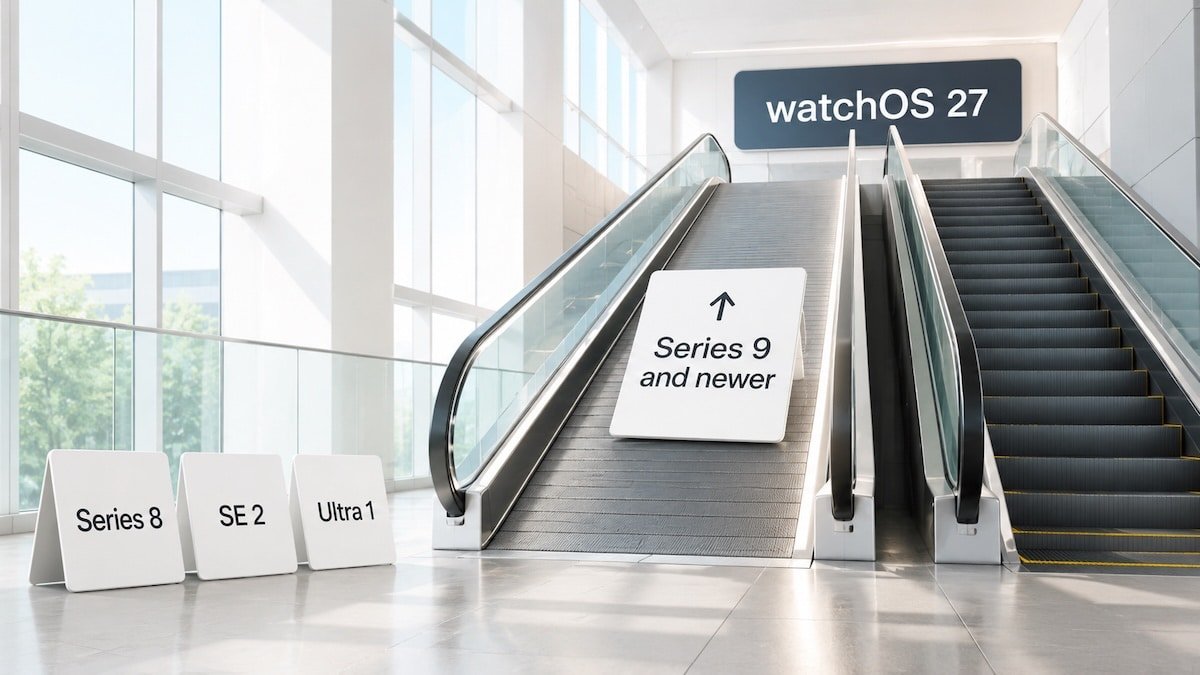
Apple’s watchOS 27 compatibility list has landed badly with some Apple Watch owners. Series 6, Series 7, Series 8, Apple Watch SE 2 and the first Apple Watch Ultra are all outside the update path, despite many of them still feeling perfectly usable.
The reaction is not hard to understand. These are watches many people still use every day, and some of them do not feel old enough to be cut loose from Apple’s next major software update.
Owners are annoyed for a simple reason
The frustration is not really about watchOS 27 itself. Most users are not desperate for every new feature, and many will barely notice the missing software tricks on day one.
The annoyance comes from the feeling that Apple has moved the line too soon. Series 8 and Apple Watch Ultra both arrived in 2022, which makes the cutoff feel sharper than a normal ageing-out process. These are not forgotten models sitting in drawers. Plenty of people still use them for workouts, sleep tracking, Apple Pay, notifications and health data.
That is why the reaction has been stronger than Apple may have expected. Owners are looking at watches that still run well and wondering why they are already outside the main update path. The answer may sit inside Apple’s hardware requirements, but the customer-facing message is much simpler. Their watch still feels fine, yet Apple has decided it is done with major watchOS releases.
Series 8 and SE 2 owners have a point
The original Apple Watch Ultra will get much of the attention because it was the expensive model. But Series 8 and SE 2 owners have just as much reason to be irritated.
Series 8 was not a minor product. It brought temperature sensing and crash detection, and its health and fitness package still covers most of what ordinary Apple Watch users rely on. For someone who bought it late in its retail cycle, missing watchOS 27 will feel abrupt.
The SE 2 cut is also awkward. Apple sells the SE line as the more affordable way into the Apple Watch ecosystem. That pitch works only if buyers feel they still get a decent support window. Once a value model loses major updates quickly, the value argument starts to look weaker.
This does not make the watches useless
Of course, Apple has not switched these watches off. They still work just fine.
The issue is what happens next. App support can narrow over time. New iPhone features may not connect as neatly with older watchOS versions. Some fixes and refinements may skip unsupported models.
That is the part owners are pushing back against. They are not saying their watches are broken. They are saying Apple has shortened the road ahead while the hardware still feels capable.
This also changes how discounted Apple Watches should be viewed. A cheaper older model may look tempting, but the remaining software window now needs to be part of the calculation. Saving money upfront is less attractive if the watch is close to dropping off major updates.
This changes the value calculation
Owners do not need to rush out and replace a working watch. If a Series 8, SE 2 or Ultra 1 still tracks your workouts, handles notifications and gets through the day, it still has a job to do.
The problem is what this says about buying an Apple Watch now. A discounted older model may look like a good deal, but the remaining software window has to be part of the price. Saving money upfront looks less attractive if the watch is already close to missing major updates.
That is where watchOS 27 leaves a mark. Apple has not made these older watches useless, but it has made them less attractive as long-term buys.
