
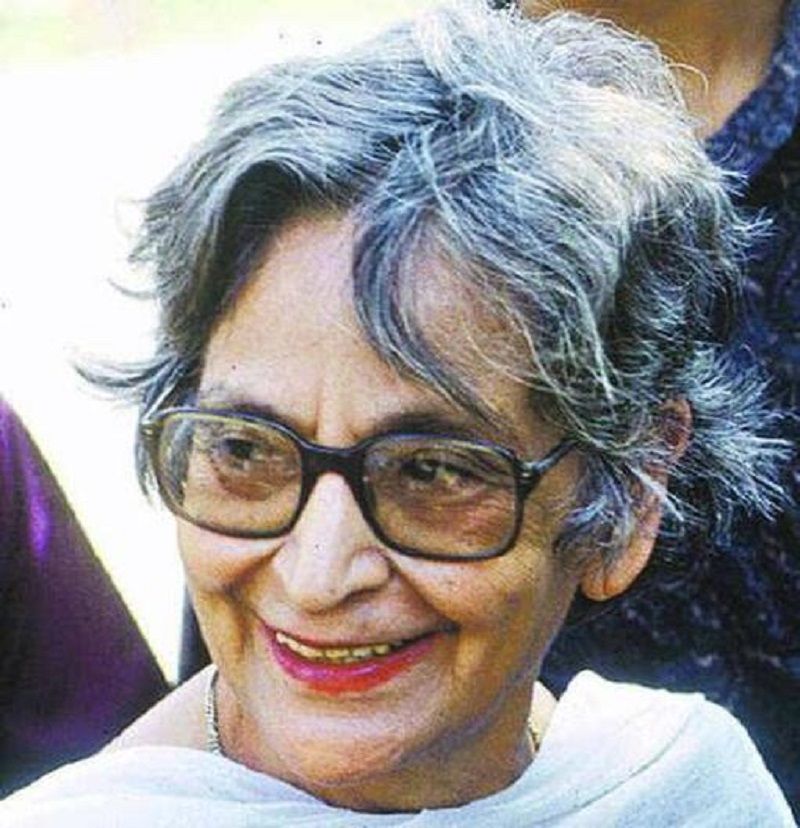
 Featured Biography
Image source: StarsUnfolded
Celebrities
Amrita Pritam Biography: Age, Career, Family and More
Quick Info
Date of birth31 August 1919
Age86 (at time of death)
BirthplaceGujranwala, Punjab, British India
ProfessionNovelist, Poet
NationalityIndian
Marital statusDivorced
SpousePritam Singh (ex-husband)
FamilyFather: Kartar Singh Hitkari; Mother: Raj Bibi; Children: Son - Navraj Kwatra (deceased), Daughter - Kandla
Amrita Pritam Biography
Amrita Pritam (born Amrit Kaur) was a pioneering Punjabi and Hindi poet, novelist and essayist whose work addressed love, feminism, social injustice andthe
Early life and backgroundAmrita Pritam was born Amrit Kaur on 31 August 1919 in Gujranwala, then part of Punjab in British India. Her father Kartar Singh Hitkari was involved in literary and religious life and her mother, Raj Bibi, worked as a schoolteacher. Amrita lost her mother when she was eleven, an event she later described as formative for her outlook and for her turn toward writing. She published her first poem at sixteen and married Pritam Singh the same year, after which she adopted the name Amrita.
Career
Pritam began her literary life writing romantic verse but soon expanded into more socially engaged and progressive themes. She produced work across genres: poetry, novels, essays, biographies, collections of folk songs and multiple autobiographical volumes. Over the course of her career she published more than one hundred books. Her writing often examined the effects of political and social upheaval — notably the partition of India in 1947 — as well as questions of gender, identity and economic hardship.
Her 1950 novel Pinjar, which centers on the character Puro and addresses violence against women, became one of her best-known works and was later adapted into a feature film released in 2003. Pritam’s output also included pieces that recorded suffering during events such as the Bengal famine of 1943. Several of her works were translated into a range of languages including English, French, Danish, Japanese and Mandarin, and a number of her stories were adapted for film in the 1960s and 1970s.
Pritam worked in broadcasting before and after partition; she was on the Lahore radio staff prior to 1947 and later worked with the Punjabi service of All India Radio in Delhi until 1961. She and Inderjeet Imroz edited the Punjabi monthly Nagmani, and Imroz designed many of her book covers and painted her portrait on multiple occasions.
Awards and honours
Her literary achievements were recognised with numerous major honours. She won the Sahitya Akademi Award in 1956 for work in Punjabi, became the first Punjabi woman to receive the Jnanpith Award in 1981, and was later awarded the Padma Vibhushan in 2004. Other recognitions include the Padma Shri (1969), international awards and multiple honorary doctorates conferred by Indian universities. In 1986 she was nominated to the Rajya Sabha, the upper house of India’s parliament.
Personal life
Pritam’s personal life informed much of her work. Married young, she divorced Pritam Singh in 1960 and thereafter produced a body of writing marked by increased feminist concern and candid reflections on marriage and autonomy. She had two children. After her divorce she developed close personal relationships with fellow poets; she wrote openly about those relationships in her autobiographical writing. For several decades she lived with writer and artist Inderjeet Imroz; the couple shared a long personal and creative partnership in Delhi.
Public profile
Pritam’s work frequently provoked strong responses. Her frank exploration of women’s experiences, partition and other sensitive subjects placed her at the center of public debate at times. She remained a prominent cultural figure in both India and Pakistan through decades of publishing, public readings and broadcasts. Her autobiography The Revenue Stamp drew controversy and at one point faced a ban by Punjabi University, Patiala.
Later life and death
Amrita Pritam continued to write into her later years, producing spiritual works alongside poetry and prose. She died in New Delhi on 31 October 2005 after a long illness; she was 86 years old. Posthumously, her legacy has been honoured in multiple ways, including a 2019 Google Doodle on the centenary of her birth.
Latest updates
Her novel Pinjar remains a significant part of her public legacy because of its continued readership and the 2003 film adaptation. Collections of her work and translations continue to circulate, and writers and artists have paid tribute to her life and writings in performances and recordings produced after her death.
Recent Work
Novel Pinjar later adapted into a film released in 2003
2003Career Highlights
- Published first poem at age 16 and went on to publish over 100 books across genres
- 1956: Sahitya Akademi Award (Punjabi)
- 1981: Bharatiya Jnanpith Award
- 1969: Padma Shri; 2004: Padma Vibhushan
- Nominated to the Rajya Sabha in 1986
Frequently Asked Questions
When was Amrita Pritam born?
31 August 1919
What is Amrita Pritam known for?
Novelist, Poet
What is Amrita Pritam’s marital status?
Divorced
Who is Amrita Pritam married to?
Pritam Singh (ex-husband)
Related Biographies
View all →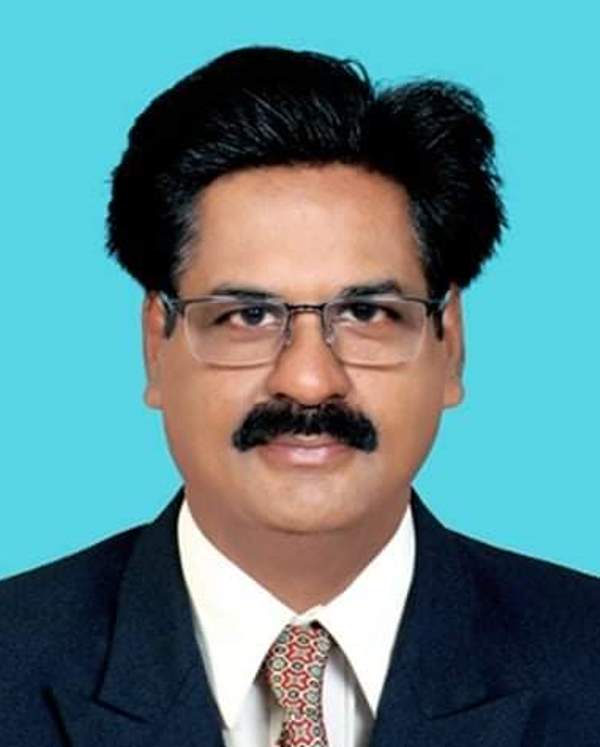 Celebrities
A Rajarajan
A Rajarajan is an Indian scientist and director of the Satish Dhawan Space Centre (SDSC SHAR) at Sriharikota. A composites specialist with a BE in机械工程, he
Updated 2026-09-15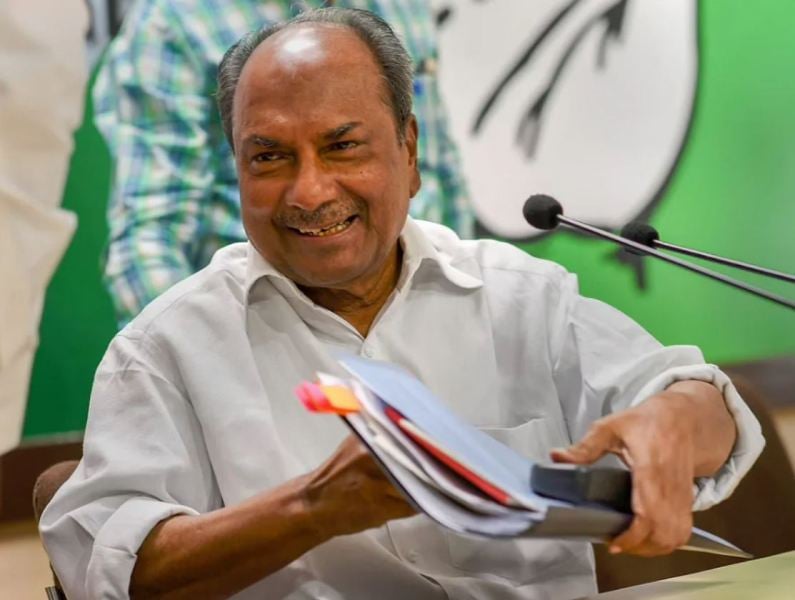 Celebrities
A. K. Antony
A. K. Antony is a veteran Indian politician from Kerala who served three times as Chief Minister of the state and for eight continuous years as India’s the
Updated 2026-09-04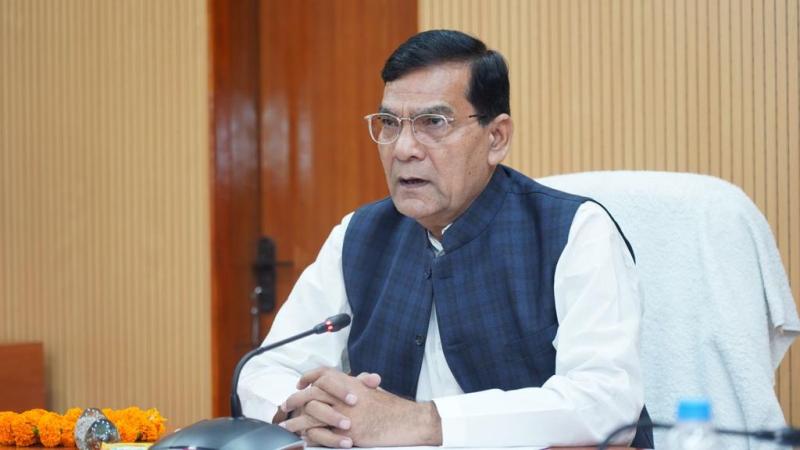 Celebrities
A. K. Sharma
Arvind Kumar (A. K.) Sharma is an Indian politician and former Indian Administrative Service (IAS) officer. Born in Mau, Uttar Pradesh, Sharma built a long
Updated 2026-09-15 Celebrities
A. M. Turaz
A. M. Turaz is an Indian poet and multi‑disciplinary writer whose work for film, television and live poetry events has earned national awards and wide-rec
Updated 2026-09-15