
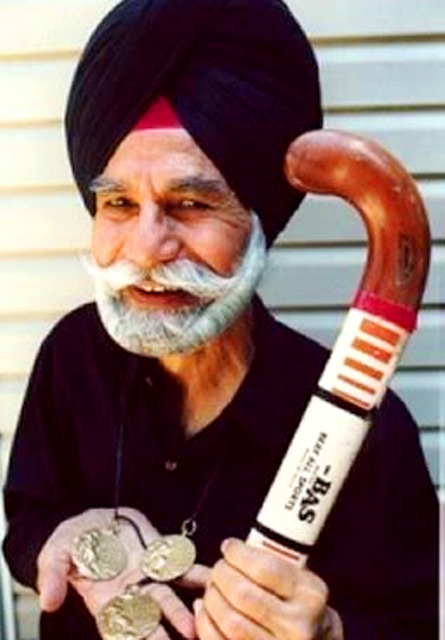
 Featured Biography
Image source: StarsUnfolded
Quick Info
Date of birth10 October 1924
Age102 years
BirthplaceHaripur Khalsa, Punjab
ProfessionIndian Hockey Player
NationalityIndian
Marital statusMarried
SpouseSushil
FamilyDaughter: Sushbir; Sons: Kanwalbir, Karanbir, Gurbir
Balbir Singh Sr. Biography
Balbir Singh Dosanjh was born on 10 October 1924 in Haripur Khalsa in the Jalandhar district of Punjab. His father, Dalip Singh Dosanjh, was a freedom fighter.
Early life and backgroundBalbir Singh Dosanjh was born on 10 October 1924 in Haripur Khalsa in the Jalandhar district of Punjab. His father, Dalip Singh Dosanjh, was a freedom fighter. Balbir attended Dev Samaj High School in Moga and continued his studies at DM College, Moga, Sikh National College in Lahore, and Khalsa College in Amritsar. It was at Khalsa College, under coach Harbail Singh, that his talent for hockey was first fully recognised and developed.
While still a student, Balbir rose quickly through the university ranks. He captained Punjab University to three consecutive All India Inter-University titles in 1943, 1944 and 1945. He also played for the last undivided Punjab team that won the national championship in 1947. After the partition of India, he moved with his family to Ludhiana and accepted a posting with the Punjab Police, later captaining the Punjab Police hockey team for two decades.
Career
Balbir Singh made his international debut for India at the 1948 London Olympics. Playing at centre-forward and wearing the no. 13 jersey, he announced himself on the global stage by scoring six goals in his first international match against Argentina, including a hat-trick. That performance marked a turning point in his career and helped India reclaim Olympic hockey gold.
He continued to be a central figure in Indian hockey through the 1950s. At the 1952 Helsinki Olympics he served as vice-captain and was India’s flag bearer at the opening ceremony. In Helsinki he produced another match-defining performance in the semi-final against Great Britain and then set an Olympic final record by scoring five goals in the gold-medal match versus the Netherlands. His 13 goals in that tournament accounted for more than two-thirds of India’s total scoring.
Balbir captained the Indian side at the 1956 Melbourne Olympics. He began the tournament strongly, but an injury in the opening match curtailed his on-field participation and other teammates took on captaincy duties for the remaining group matches. Over his international career he helped India win Olympic gold in 1948, 1952 and 1956, and later contributed to Asian Games silver-medal teams in 1958 and 1962.
Beyond his playing days, Balbir remained deeply involved in the sport. He coached the Indian team at the 1971 World Cup and was manager of the Indian side that won the 1975 World Cup in Kuala Lumpur. He also served as Chief of the Directorate of Sports in Punjab and was honoured repeatedly for his contributions to hockey, receiving the Padma Shri in 1957 and later lifetime and commemorative awards.
Public profile
Balbir Singh was widely celebrated for his scoring prowess and leadership. He held the Olympic record for most goals by an individual in a men's final and was the only Indian included among 16 Olympic legends chosen by the International Olympic Committee across modern Olympic history. In 1982 he lit the sacred flame at the New Delhi Asian Games and that year a national newspaper named him the Indian Sportsperson of the Century. He was also commemorated on a postal stamp issued by the Dominican Republic and received recognition from Hockey India with a Major Dhyan Chand Lifetime Achievement Award in 2015.
He authored two books reflecting on his career and the sport: his autobiography The Golden Hat Trick (1977) and The Golden Yardstick: In Quest of Hockey Excellence (2008).
Personal life
Balbir Singh married Sushil in 1946. The couple had four children: a daughter, Sushbir, and three sons, Kanwalbir, Karanbir and Gurbir. He practised Sikhism and later maintained residences in Chandigarh, India, and Burnaby, Canada. Physical descriptions noted him at approximately 173 cm (about 5 ft 8 in) tall with dark brown eyes. Off the field he enjoyed reading and listening to music.
Latest updates
Balbir Singh died on 25 May 2020 at Fortis Hospital in Mohali at the age of 95 after a period of illness. His passing marked the end of a life closely intertwined with the golden era of Indian hockey, remembered for prolific goal-scoring, leadership, and long-term service to the sport.
Editorial Review and Sources
This F4U profile is prepared from the public references listed below and reviewed for clarity. If you spot an outdated detail about Balbir Singh Sr., send the page URL and a reliable correction source to f4udotin@gmail.com.
Accuracy
Request a Correction
Tell us what needs to be updated and share a reliable source so the editorial team can review it.
Ownership
Claim This Profile
If this profile is about you or your client, send your contact details and verification context.
Recent Work
A book written by Balbir Singh reflecting on hockey and excellence, published in 2008.
2008Autobiography of Balbir Singh recounting his life and hockey career.
1977Career Highlights
- Three-time Olympic gold medallist (1948, 1952, 1956)
- Set the Olympic record for most goals by an individual in a men's final
- Flag bearer for India at the 1952 Helsinki Olympics
- Padma Shri recipient (1957)
- Manager of the 1975 World Cup–winning Indian hockey team
- Major Dhyan Chand Lifetime Achievement Award from Hockey India (2015)
People Also Search For
Frequently Asked Questions
When was Balbir Singh Sr. born?
Balbir Singh Sr. was born on 10 October 1924.
What is Balbir Singh Sr. known for?
Balbir Singh Sr. is known for indian Hockey Player.
What is Balbir Singh Sr.’s marital status?
Balbir Singh Sr.'s marital status is listed as Married.
Who is Balbir Singh Sr. married to?
Balbir Singh Sr. is publicly listed as married to Sushil.
Related Biographies
View all →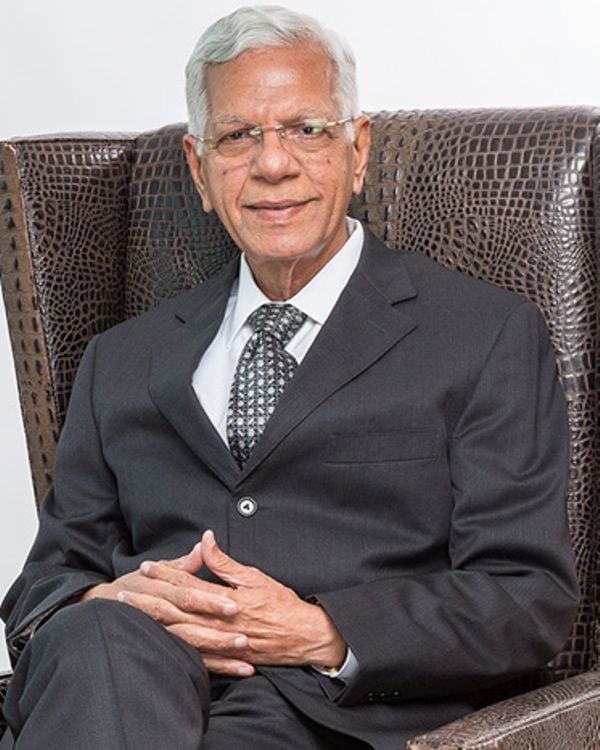 Celebrities
Chandru Raheja
Veteran Indian businessman Chandru Raheja is the chairman of K. Raheja Corporation and a noted real-estate and retail leader.
Updated 2026-10-23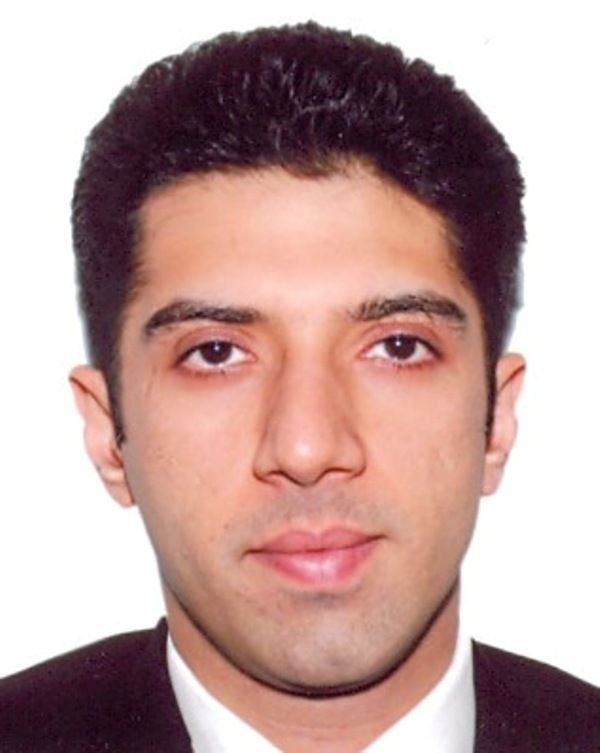 Celebrities
Neel Raheja
Neel Chandru Raheja was born on 27 June 1974 in Mumbai, Maharashtra. Raised in a family with deep roots in Indian real estate, he is the son of Chandru Raheja and Jyoti C. Raheja and a grandson of Lachmandas Raheja, the founder of the K. Raheja Group.
Updated 2026-10-04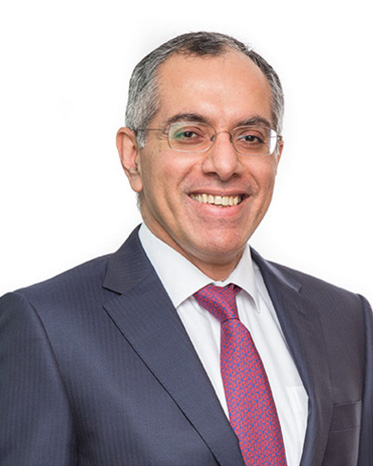 Celebrities
Ravi Raheja
Business leader Ravi Chandru Raheja is Group President at K. Raheja Corporation with a background in commerce and an MBA from London Business School.
Updated 2026-10-23 Celebrities
1eye43
Indian rapper 1eye43, born Vivek in Chandigarh, rose from hardship to build a following with viral 2024 tracks.
Updated 2026-10-23