
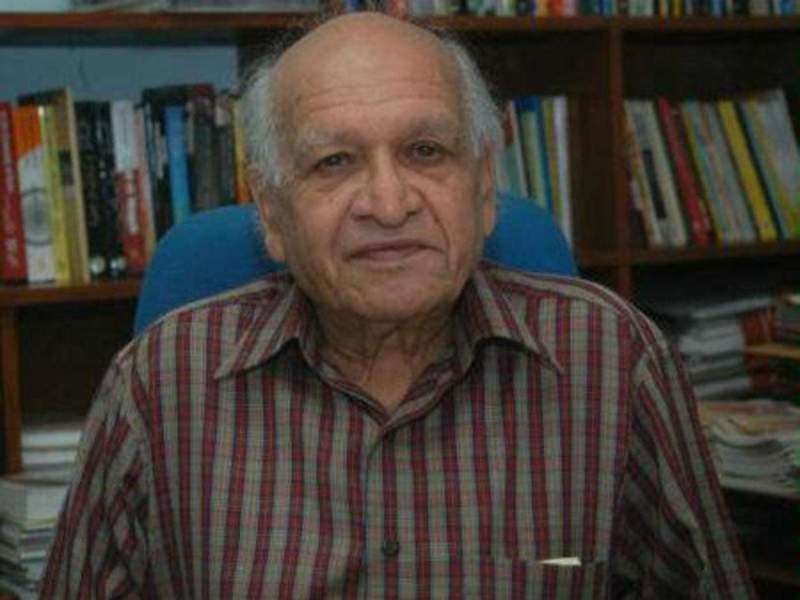
 Featured Biography
Image source: StarsUnfolded
Quick Info
Date of birth24 May 1928
Age98 years
BirthplaceKangra, Punjab, British India (now Himachal Pradesh, India)
ProfessionAuthor, Historian, Professor
NationalityIndian
Marital statusWidower (at time of death)
SpouseUsha Chandra
FamilyTwo children
Bipan Chandra Biography
Bipan Chandra was born on 24 May 1928 in Kangra, then part of Punjab in British India (now in Himachal Pradesh). He completed his undergraduate studies at Forman Christian College, Lahore, graduating in 1946. The upheaval of Partition forced him to leave Lahore; his interests shifted from engineering toward economics and history in the years that followed.
Early life and backgroundBipan Chandra was born on 24 May 1928 in Kangra, then part of Punjab in British India (now in Himachal Pradesh). He completed his undergraduate studies at Forman Christian College, Lahore, graduating in 1946. The upheaval of Partition forced him to leave Lahore; his interests shifted from engineering toward economics and history in the years that followed.
Chandra pursued further study at Stanford University in California, where he earned a master’s degree in history in 1948–49. He later returned to India and completed a Ph.D. at the University of Delhi in 1963. His doctoral dissertation was developed into his first major published work, The Rise and Growth of Economic Nationalism in India: Economic Policies of Indian National Leadership, 1880–1905, which appeared in 1966.
Career
Bipan Chandra built a long career as a teacher, scholar, and public intellectual focused on modern Indian history. He taught at Hindu College in the 1950s while working on his doctorate, and later joined the University of Delhi and Jawaharlal Nehru University. He taught history for decades and was especially known for the reach and influence of his lectures; he continued at JNU until retirement and was named Professor Emeritus in 2007.
Chandra’s scholarship addressed political, economic, and social dimensions of India’s past. His early work restored attention to figures of economic nationalism from the late nineteenth and early twentieth centuries. Over time he produced analytical studies on communalism, the dynamics of the national movement, and the relationship between colonialism and economic change. Notable titles cited as part of his published output include The Rise and Growth of Economic Nationalism in India (1966), Communalism in Modern India (1984), India After Independence (1999), The Making of Modern India: From Marx to Gandhi (2000), and the influential textbook India’s Struggle for Independence (published in 1987).
Beyond books, Chandra contributed to curricular development for secondary education in India, especially Modern Indian History textbooks for NCERT. His writings and textbooks became widely used by students preparing for competitive examinations across the country.
Public profile
Chandra occupied prominent institutional and public roles. He served as chairman of the National Book Trust from 2004 to 2012 and held the position of National Professor, an honor conferred by the University Grants Commission. In 1985 he was elected general president of the Indian History Congress. The Government of India awarded him the Padma Bhushan in 2010 in recognition of his contributions to literature and education.
His work engaged with major debates in historiography. He examined Marxist approaches to colonialism and contributed critiques of prevailing models that, in his view, overlooked central features of colonial India. Chandra linked past events to contemporary issues in essays and monographs, including analyses of the Emergency and the JP movement. His research on communalism, especially, has been described as a foundational resource for understanding how communal tensions emerged and grew in modern India.
He was also active in editorial work, initiating the journal Enquiry in the early 1950s and serving on its editorial board; the journal attracted contributions from leading scholars, including Amartya Sen.
Personal life
Bipan Chandra was married to Usha Chandra and had two children. He lived into his mid-eighties and died on 30 August 2014 in Gurgaon, Haryana, after a prolonged illness. At the time of his death he was 86 years old.
Legacy
Across several decades, Chandra’s writing influenced students, scholars, and the broader study of India’s modern past. His textbooks and monographs have been used in university courses and school curricula, and his analytical frameworks on nationalism, communalism, and colonial economic impact shaped subsequent research. Scholars who trained under his influence have carried elements of his approaches into their own work.
Latest updates
At the time of his death in 2014, Chandra had been recognized with national honors and institutional appointments; his books, lecture legacy, and contributions to educational curricula remain part of the public record.
Editorial Review and Sources
This F4U profile is prepared from the public references listed below and reviewed for clarity. If you spot an outdated detail about Bipan Chandra, send the page URL and a reliable correction source to f4udotin@gmail.com.
Accuracy
Request a Correction
Tell us what needs to be updated and share a reliable source so the editorial team can review it.
Ownership
Claim This Profile
If this profile is about you or your client, send your contact details and verification context.
Recent Work
A survey of intellectual and political currents shaping modern India
2000Career Highlights
- Emeritus professor of modern history at Jawaharlal Nehru University
- Author of India's Struggle for Independence
- Chairman of the National Book Trust (2004–2012)
- General President of the Indian History Congress (1985)
- Awarded the Padma Bhushan (2010)
People Also Search For
Frequently Asked Questions
When was Bipan Chandra born?
Bipan Chandra was born on 24 May 1928.
What is Bipan Chandra known for?
Bipan Chandra is known for author, Historian, Professor.
What is Bipan Chandra’s marital status?
Bipan Chandra's marital status is listed as Widower (at time of death).
Who is Bipan Chandra married to?
Bipan Chandra is publicly listed as married to Usha Chandra.
Related Biographies
View all →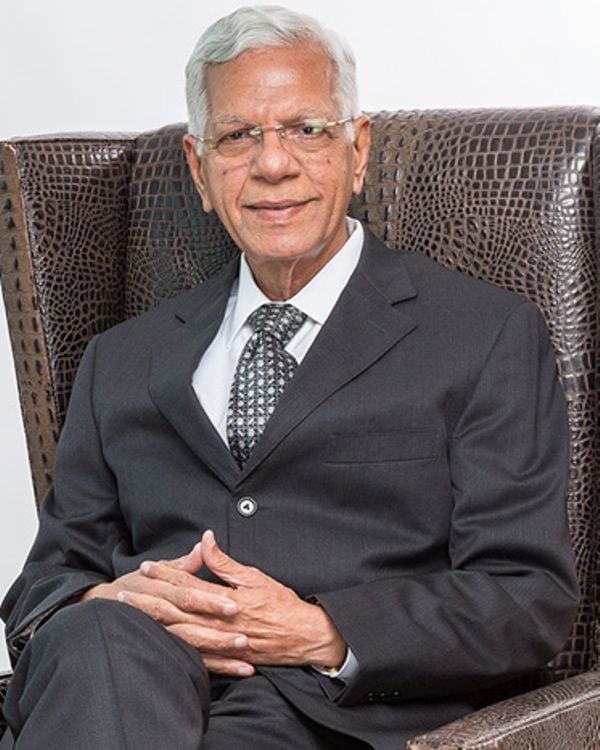 Celebrities
Chandru Raheja
Veteran Indian businessman Chandru Raheja is the chairman of K. Raheja Corporation and a noted real-estate and retail leader.
Updated 2026-10-23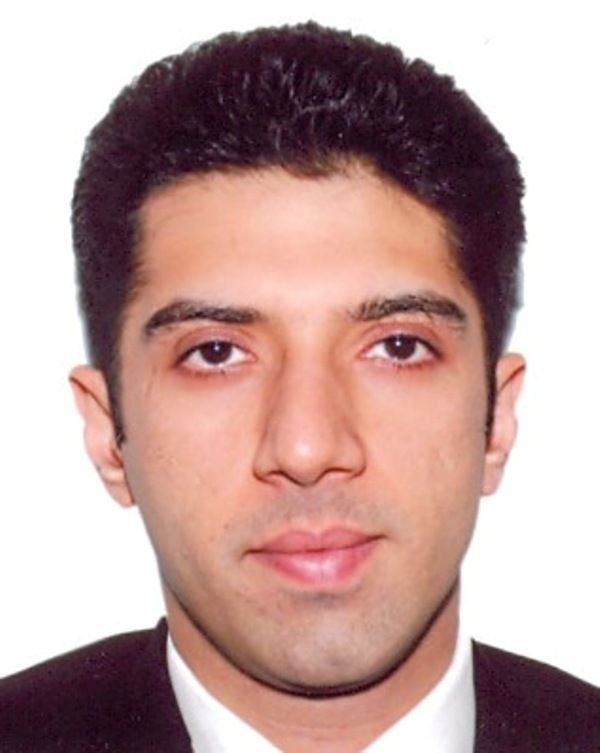 Celebrities
Neel Raheja
Neel Chandru Raheja was born on 27 June 1974 in Mumbai, Maharashtra. Raised in a family with deep roots in Indian real estate, he is the son of Chandru Raheja and Jyoti C. Raheja and a grandson of Lachmandas Raheja, the founder of the K. Raheja Group.
Updated 2026-10-04 Celebrities
Ravi Raheja
Business leader Ravi Chandru Raheja is Group President at K. Raheja Corporation with a background in commerce and an MBA from London Business School.
Updated 2026-10-23 Celebrities
1eye43
Indian rapper 1eye43, born Vivek in Chandigarh, rose from hardship to build a following with viral 2024 tracks.
Updated 2026-10-23