
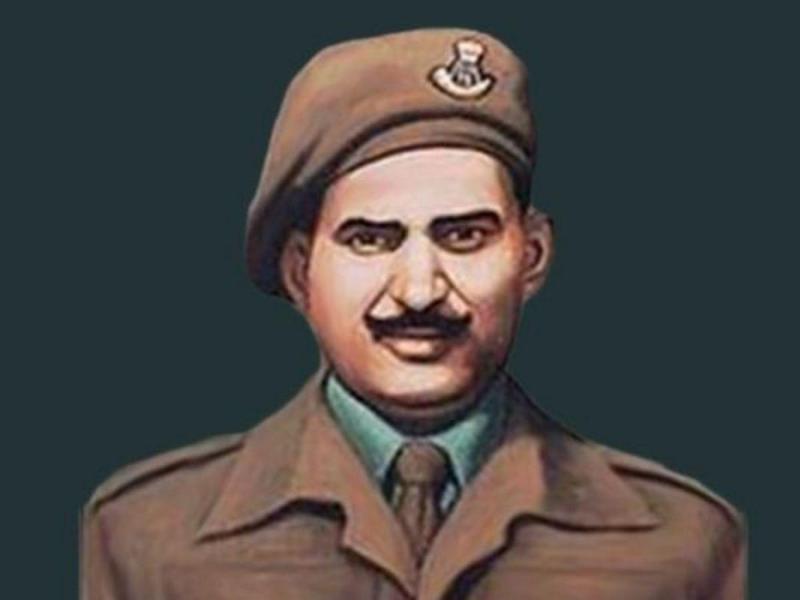
 Featured Biography
Image source: StarsUnfolded
Celebrities
Company Havildar Major Piru Singh Shekhawat Biography: Age, Career, T
Quick Info
Date of birth20 May 1918
Age30 Years (at the time of death)
BirthplaceRampura Beri, Rajputana, Rajputana, British India (now Jhunjhunu district, Rajasthan, India)
ProfessionArmy Personnel
NationalityIndian
Marital statusUnmarried
FamilyFather: Bhana Singh Shekhawat; Mother: Tarawati Kanwar (Jarav Devi)
Company Havildar Major Piru Singh Shekhawat Biography
Company Havildar Major Piru Singh Shekhawat was an Indian Army soldier who received the Param Vir Chakra for extraordinary bravery during the 1947–48 India
Early life and backgroundPiru Singh Shekhawat was born on 20 May 1918 in Rampura Beri in the then Rajputana region of British India, now part of Jhunjhunu district, Rajasthan. He grew up helping with household and farm work and showed an early passion for outdoor pursuits and sport. Education did not appeal to him; after a severe reprimand from a teacher following an argument with a classmate, he left school and did not return.
Piru Singh came from a family with a military tradition. His father, Bhana Singh Shekhawat, had served in the British Indian Army and retired with the rank of Subedar. That background influenced Piru Singh’s decision to seek a soldier’s life.
Career
Piru Singh enlisted in the Indian Army in May 1936. Early postings placed him with battalions of the 1st Punjab Regiment before he later served with the Rajputana Rifles. He rose through the non-commissioned ranks over more than a decade of service: promoted to Lance Naik in August 1940, to Naik in March 1941, and to Company Havildar Major in May 1945. His service number was 2831592.
During the Second World War era he served overseas as part of the allied occupational forces in Japan, returning to India in 1947. He was also assigned as an instructor at the Punjab Regimental Centre in Jhelum at one stage in his career.
Battle of Tithwal and Param Vir Chakra
In 1947–48, India and Pakistan were engaged in conflict in Jammu and Kashmir. Piru Singh was serving with the 6th Battalion of the Rajputana Rifles when his unit was tasked with taking the southern approaches of Tithwal, a position seen as vital for control in the Noushera sector.
On 18 July 1948 his company came under intense machine-gun and mortar fire from well-positioned enemy bunkers along a ridge. Despite heavy fire and grenade attacks, Piru Singh climbed the steep slope and assaulted the bunkers. After exhausting his ammunition, he engaged enemy positions with his bayonet and remaining grenades, neutralizing the first two bunkers even after sustaining severe wounds.
By the time he reached the ridge, most of his company were dead or badly wounded. Piru Singh forced his way on to a third bunker and, while moving toward it, was struck by a bullet. Before collapsing he managed to throw a grenade into the stronghold, eliminating it and ensuring the capture of the position. He succumbed to his injuries on 18 July 1948.
For that single-handed display of courage and sacrifice he was posthumously awarded the Param Vir Chakra, India’s highest military decoration for valour. His actions are commemorated annually on Tithwal Day, observed on 23 May, and his regiment honoured him by naming a company at the Rajputana Rifles regimental centre after him.
Public profile
Piru Singh’s bravery drew national attention. Prime Minister Jawaharlal Nehru wrote to his family to recognize the extraordinary nature of his sacrifice and to offer condolences. Over the years his memory has been marked through several tributes: the Army Postal Service Corps issued an honour cover, a roundabout in Jhunjhunu was dedicated in his name, and an oil tanker was named after him. His war-cry during the assault—"Bolo Raja Ram Chandra Ki Jai"—is part of the narratives that describe the morale and fighting spirit he displayed.
Latest updates
The Rajputana Rifles continues to remember Piru Singh’s legacy. A company at the regimental centre bears his name as Piru Company, ensuring that new generations of soldiers are made aware of the example he set. Annual commemorations and regimental remembrances keep his story alive within military and local communities.
Personal
Piru Singh was unmarried at the time of his death. He was 30 years old when he died in action. He is remembered as a soldier who sought to live up to his family’s martial tradition and who laid down his life during one of the early conflicts of independent India.
Recent Work
Led an assault on enemy bunkers on 18 July 1948, clearing multiple positions before succumbing to wounds; posthumously awarded the Param Vir Chakra.
1948Career Highlights
- Awarded the Param Vir Chakra posthumously for actions at Tithwal in 1948
- Served with the 6th Battalion, Rajputana Rifles
- Progressed from recruit to Company Havildar Major (CHM)
- Served with allied occupational forces in Japan after World War II
Frequently Asked Questions
When was Company Havildar Major Piru Singh Shekhawat born?
20 May 1918
What is Company Havildar Major Piru Singh Shekhawat known for?
Army Personnel
What is Company Havildar Major Piru Singh Shekhawat’s marital status?
Unmarried
Related Biographies
View all →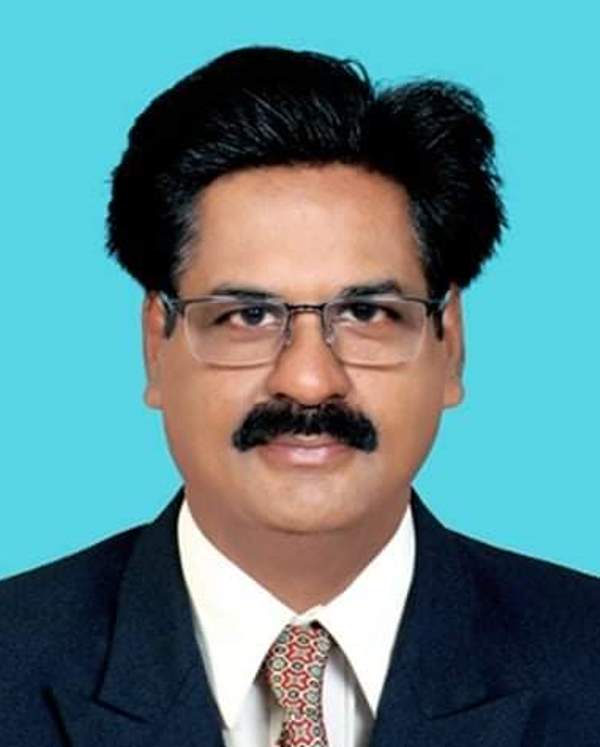 Celebrities
A Rajarajan
A Rajarajan is an Indian scientist and director of the Satish Dhawan Space Centre (SDSC SHAR) at Sriharikota. A composites specialist with a BE in机械工程, he
Updated 2026-09-15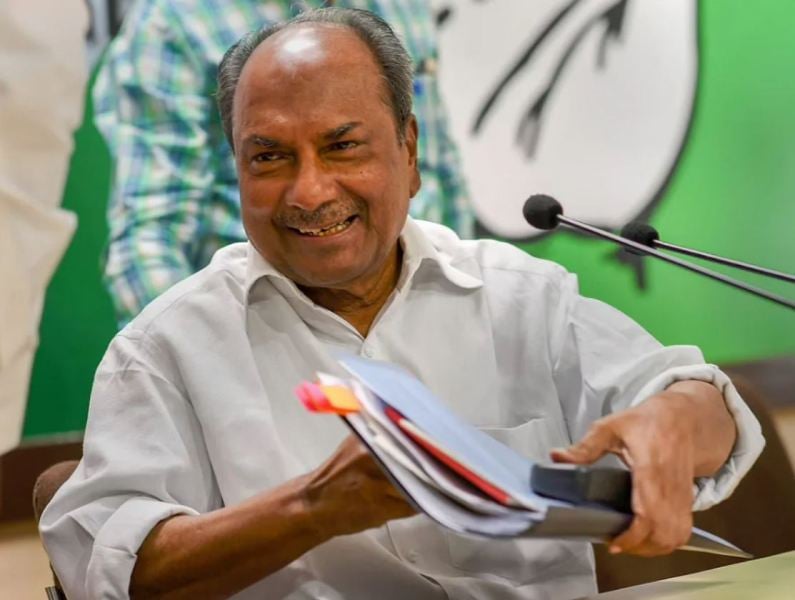 Celebrities
A. K. Antony
A. K. Antony is a veteran Indian politician from Kerala who served three times as Chief Minister of the state and for eight continuous years as India’s the
Updated 2026-09-04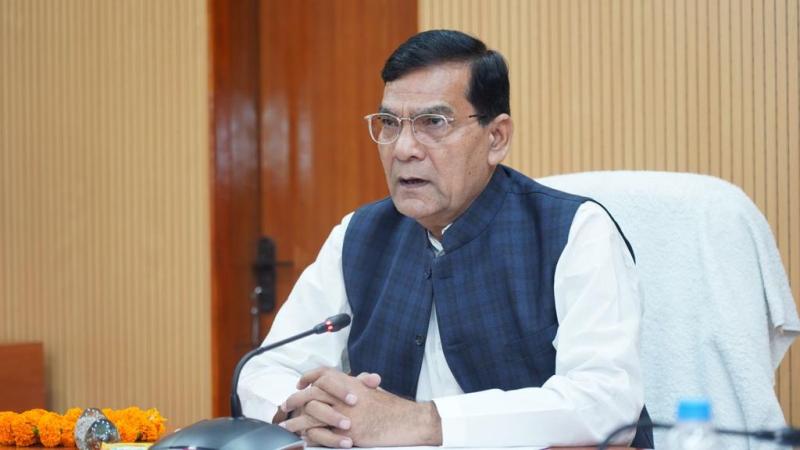 Celebrities
A. K. Sharma
Arvind Kumar (A. K.) Sharma is an Indian politician and former Indian Administrative Service (IAS) officer. Born in Mau, Uttar Pradesh, Sharma built a long
Updated 2026-09-15 Celebrities
A. M. Turaz
A. M. Turaz is an Indian poet and multi‑disciplinary writer whose work for film, television and live poetry events has earned national awards and wide-rec
Updated 2026-09-15