
 Featured Biography
Image source: StarsUnfolded
Celebrities
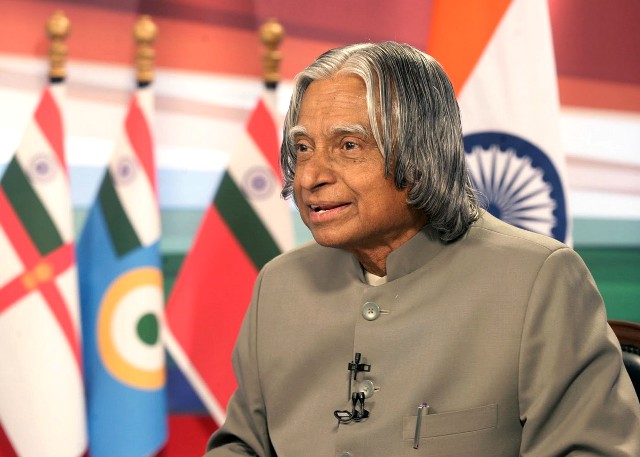
Dr. APJ Abdul Kalam Biography: Age, Career, Family and More
Quick Info
Date of birth15 October 1931
Age95 years
BirthplaceRameswaram, Ramnad District, Madras Presidency, British India
ProfessionProfessor, Author, Aerospace Scientist
NationalityIndian
Marital statusUnmarried
FamilyFather - Jainulabiddin Marakayar; Mother - Ashiamma Jainulabiddin; Brothers - Kasim Mohammed, Mustafa Kamal, Mohammed Muthu Meera Lebbai Maraikayar; Sister - Asim Zohra
Dr. APJ Abdul Kalam Biography
Early life and background Avul Pakir Jainulabdeen Abdul Kalam was born on 15 October 1931 in Rameswaram, in what was then the Madras Presidency of British India.
Early life and backgroundAvul Pakir Jainulabdeen Abdul Kalam was born on 15 October 1931 in Rameswaram, in what was then the Madras Presidency of British India. He grew up in a Tamil Muslim family; his father worked as a boat owner and imam, ferrying pilgrims between Rameswaram and neighboring islands. The family once had greater prosperity tied to maritime trade, but by Kalam’s childhood their fortunes had declined and he took on small jobs such as distributing newspapers to help the household.
Kalam attended Schwartz Higher Secondary School in Ramanathapuram and went on to study physics at St. Joseph’s College, Tiruchirappalli, earning a bachelor’s degree in 1954 from the University of Madras. He then completed a degree in aerospace engineering from the Madras Institute of Technology in 1960. As a student he was known for hard work and a steady commitment to learning, even when teachers described him as an average performer in class.
Career
After finishing at MIT, Kalam joined the Aeronautical Development Establishment of the Defence Research and Development Organisation (DRDO), beginning his career by designing a small hovercraft. He later became involved with India’s early space efforts, working with INCOSPAR under Vikram Sarabhai and visiting several NASA centres in the United States in 1963.
In 1969 Kalam was transferred to the Indian Space Research Organization (ISRO). There he served as Project Director for India’s first Satellite Launch Vehicle, SLV-III, which successfully placed the Rohini satellite into near-earth orbit in July 1980. Over the following decades he played a central role in the development of launch vehicle and missile technologies, contributing to projects such as the Polar Satellite Launch Vehicle (PSLV) and directing efforts that evolved into India’s missile programmes, including Agni and Prithvi.
In the 1970s Kalam led early initiatives to convert satellite-launch technology into missile applications through projects sometimes conducted with limited public funding. His leadership in missile development led to his later appointment as Chief Executive of the Integrated Guided Missile Development Programme (IGMDP), a government mission that consolidated resources for indigenous missile work.
From July 1992 to December 1999 Kalam served as Chief Scientific Adviser to the Prime Minister and Secretary of the DRDO. He was closely involved in India’s strategic technological programmes during this period, including the nuclear tests at Pokhran in 1998.
Kalam’s scientific reputation and public visibility in the late 1990s earned him the popular sobriquet “Missile Man.” He also worked on medical and rural-technology initiatives, collaborating with cardiologist Soma Raju to develop a low-cost coronary stent known as the Kalam–Raju Stent, and later contributing to the design of a rugged tablet computer for rural healthcare.
Public office and public life
In 2002 Kalam succeeded K. R. Narayanan to become the 11th President of India. He was notable as the first scientist and the first bachelor to hold the office of the President. Prior to his presidency he had already been awarded India’s highest civilian honour, the Bharat Ratna.
Kalam maintained a modest personal style while at Rashtrapati Bhavan, preferring not to make special arrangements for visitors and declining use of many of the residence’s facilities. He continued to be closely associated with education, writing and public talks; his recreational interests included reading and music.
Awards, writings and honours
Kalam received several national and international awards over his career, including the Padma Bhushan in 1981, the Padma Vibhushan in 1990 and the Bharat Ratna in 1997. He was later honoured with awards such as the King Charles II Medal from the Royal Society and the Hoover Medal.
He authored several well-known books, among them Wings of Fire (1999), India 2020 (1998), Ignited Minds (2002), Indomitable Spirit (2006) and Turning Points (2012). His writing and speeches emphasized education, innovation and nation-building, and many of his lines became widely quoted.
Personal life and death
Kalam remained unmarried and had no children. He lived a spartan personal life centered on books, teaching and public engagement. He died on 27 July 2015 in Shillong, Meghalaya, at the age of 83 due to cardiac arrest related to a stroke. His body was laid to rest in Pei Karumbu, Rameswaram, Tamil Nadu.
Public profile
Kalam is remembered both for his scientific leadership and for his commitment to education and public outreach. Numerous institutions, facilities and projects have been renamed in his honour in the years following his death, reflecting his lasting impact on India’s scientific and civic life.
Latest updates
Posthumous recognitions and commemorations have continued, including the renaming of universities, research sites and a new bacterium discovered on the International Space Station being named in his honour by NASA researchers.
Editorial Review and Sources
This F4U profile is prepared from the public references listed below and reviewed for clarity. If you spot an outdated detail about Dr. APJ Abdul Kalam, send the page URL and a reliable correction source to f4udotin@gmail.com.
Accuracy
Request a Correction
Tell us what needs to be updated and share a reliable source so the editorial team can review it.
Ownership
Claim This Profile
If this profile is about you or your client, send your contact details and verification context.
Recent Work
A rugged tablet computer designed for rural healthcare, developed in collaboration with cardiologist Soma Raju (2012).
2012A low-cost coronary stent developed with cardiologist Soma Raju (1998).
1998Career Highlights
- Project Director of SLV-III that placed Rohini satellite into orbit (1980)
- Chief Executive of the Integrated Guided Missile Development Programme (IGMD)
- Chief Scientific Adviser to the Prime Minister and Secretary of DRDO (1992–1999)
- 11th President of India (2002–2007)
- Recipient of Padma Bhushan (1981), Padma Vibhushan (1990) and Bharat Ratna (1997)
People Also Search For
Frequently Asked Questions
When was Dr. APJ Abdul Kalam born?
Dr. APJ Abdul Kalam was born on 15 October 1931.
What is Dr. APJ Abdul Kalam known for?
Dr. APJ Abdul Kalam is known for professor, Author, Aerospace Scientist.
What is Dr. APJ Abdul Kalam’s marital status?
Dr. APJ Abdul Kalam's marital status is listed as Unmarried.
Related Biographies
View all →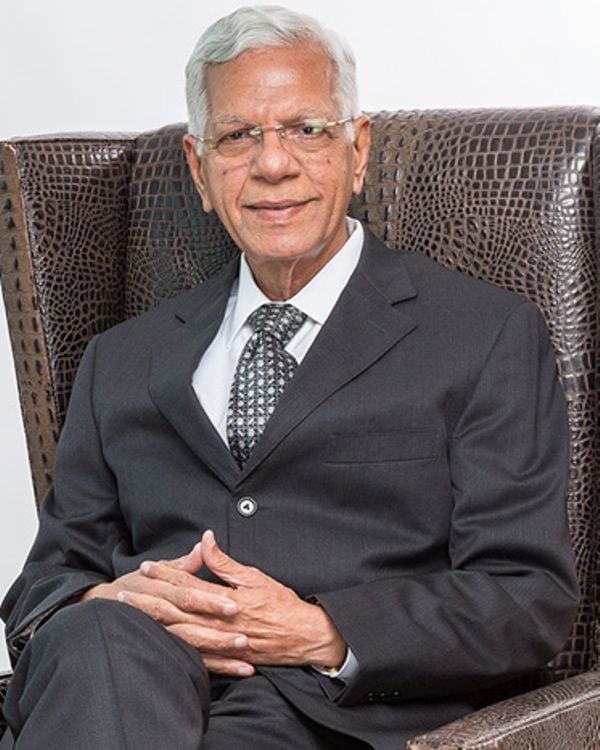 Celebrities
Chandru Raheja
Veteran Indian businessman Chandru Raheja is the chairman of K. Raheja Corporation and a noted real-estate and retail leader.
Updated 2026-10-23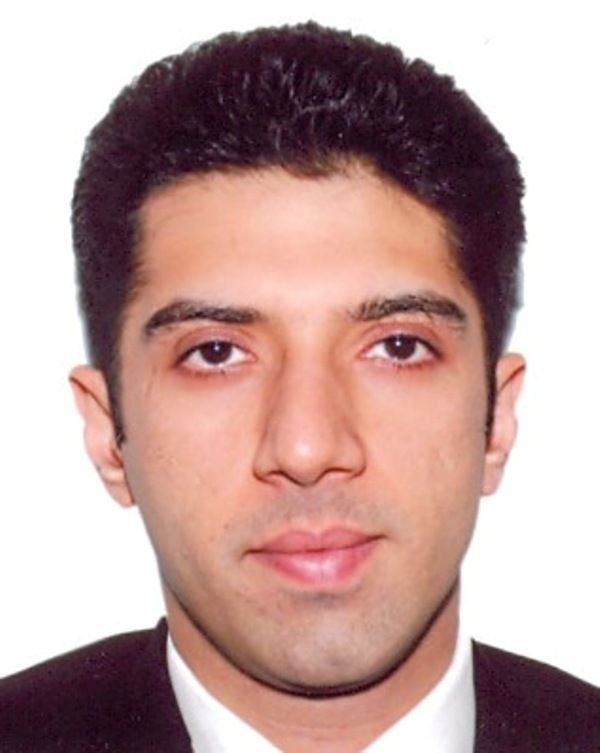 Celebrities
Neel Raheja
Neel Chandru Raheja was born on 27 June 1974 in Mumbai, Maharashtra. Raised in a family with deep roots in Indian real estate, he is the son of Chandru Raheja and Jyoti C. Raheja and a grandson of Lachmandas Raheja, the founder of the K. Raheja Group.
Updated 2026-10-04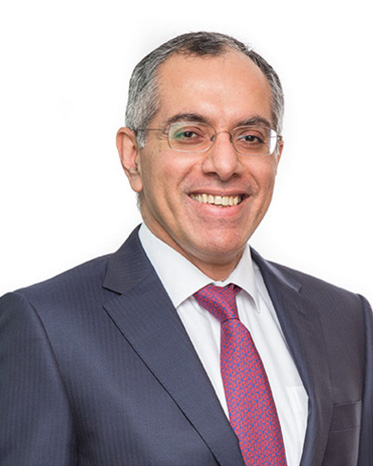 Celebrities
Ravi Raheja
Business leader Ravi Chandru Raheja is Group President at K. Raheja Corporation with a background in commerce and an MBA from London Business School.
Updated 2026-10-23 Celebrities
1eye43
Indian rapper 1eye43, born Vivek in Chandigarh, rose from hardship to build a following with viral 2024 tracks.
Updated 2026-10-23