
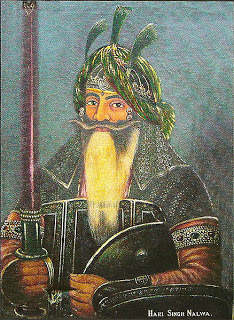
 Featured Biography
Image source: StarsUnfolded
Quick Info
Date of birth29 April 1791
Age46 (at time of death)
BirthplaceGujranwala, Sukerchakia Misl, Majha region, Punjab
ProfessionCommander-in-chief of the Sikh Khalsa Fauj
NationalityIndian
Marital statusMarried
SpouseRaj Kaur; Desan Kaur
FamilyFather: Gurdial Singh Uppal; Mother: Dharam Kaur; four sons and two daughters
Hari Singh Nalwa Biography
Hari Singh Nalwa (29 April 1791 – 30 April 1837) was a prominent Sikh military leader who served as a commander of the Sikh Khalsa Fauj under Maharaja Ranj
Early life and backgroundHari Singh Nalwa was born on 29 April 1791 in Gujranwala, in the Sukerchakia Misl of the Majha region of Punjab. He came from a Khatri family of the Uppal clan, with roots near Majitha town by Amritsar. His parents were Gurdial Singh Uppal and Dharam Kaur. His father died when Hari Singh was seven, and he was raised by his mother. By the age of ten he had taken Amrit Sanchar, and at twelve he began managing his father’s estate and learned to ride horses.
His family had a martial tradition: his father and grandfather were known as warriors who had fought in earlier conflicts. At fourteen, a property dispute brought him to the court of Ranjit Singh; there he demonstrated skill as a horseman and musketeer and entered the Maharaja’s service as a personal attendant, setting the stage for his military career.
Career
Hari Singh Nalwa rose through the ranks of the Sikh military and by around 1804 was commissioned as a sardar commanding a force of 800 horse and foot. Early in his service he earned a fierce reputation after an incident on a hunt that reportedly left him with the sobriquet Baghmar, or Tiger-killer.
He took part in many of the major campaigns of Maharaja Ranjit Singh’s expansion. In 1807 he commanded an independent contingent during the fourth and successful capture of Kasur, receiving a jagir in recognition of his role. He participated in repeated operations against Multan, including sieges in which he was wounded while assaulting fortifications. He led the capture of Sialkot as a young commander and then moved on to capture Jammu with the support of local allies.
Nalwa was actively involved in operations that secured key strategic points for the Sikh Empire. He fought in the Battle of Attock in 1813, an action that opened control of regions on the Indus River and led to Sikh dominance of neighbouring districts. He also took part in campaigns aimed at bringing Kashmir under Sikh control; during the 1819 expedition he advanced through Bhimber and Rajauri and played a role in the entry into Srinagar.
In the western frontier and trans-Indus theatres, Hari Singh was instrumental in extending Sikh authority. After the Sikhs’ crossing of the Indus in 1818, he was posted to Peshawar to consolidate Sikh rule there. He served as governor in several important provinces of the empire, including Kashmir, Peshawar, and Hazara, carrying responsibilities that ranged from military command to revenue measures such as establishing a mint for the administration.
Nalwa led forces in engagements across a wide area — from engagements at Mankera, Muzzaffargarh, and Khangarh to larger sieges at Multan where his actions contributed materially to the eventual capture of the city. In operations around the Sindh Sagar Doab and Mitha Tiwana he secured territory, won sieges, and was rewarded with jagirs for his service.
His campaigns sometimes required confronting much larger tribal and Afghan forces. On one march through the Khyber Pakhtunkhwa region he advanced with a force of roughly 7,000 and defeated a reported tribal contingent of 25,000–30,000 led by local chiefs. These actions helped to extend Sikh influence to the western approaches of the subcontinent, reaching the Indus and the entrance to the Khyber Pass.
Public profile
Hari Singh Nalwa is remembered as one of Maharaja Ranjit Singh’s most effective military commanders during the early 19th century. His career encompassed front-line command, administrative governorships, and efforts to secure revenue and order in newly conquered territories. He was married (his spouses included Raj Kaur of Rawalpindi and Desan Kaur) and had four sons and two daughters.
Death and legacy
Hari Singh Nalwa was grievously wounded during the Battle of Jamrud and died on 30 April 1837 at Jamrud. He was 46 years old at the time of his death. His period of service and the territories in which he operated contributed to the expansion and consolidation of the Sikh Empire from the Indus to the approaches of the Khyber Pass, and he left a legacy as a central military figure of that era.
Latest updates
The licensed profile records his life span as 1791–1837 and notes his major roles and postings within the Sikh Empire, including his governorships and key victories that marked Sikh advances in the northwest.
Editorial Review and Sources
This F4U profile is written from publicly available career and profile information, then reviewed for clarity before publication. If you spot an outdated detail about Hari Singh Nalwa, send the page URL and a reliable correction source to f4udotin@gmail.com.
Reference context: StarsUnfoldedAccuracy
Request a Correction
Tell us what needs to be updated and share a reliable source so the editorial team can review it.
Ownership
Claim This Profile
If this profile is about you or your client, send your contact details and verification context.
Recent Work
Served as a senior military commander leading campaigns and governing frontier provinces for the Sikh Empire.
1804–1837Oversaw administration, revenue collection and military control in these provinces; established a mint to simplify revenue collection.
Date range during serviceCareer Highlights
- Trusted commander under Maharaja Ranjit Singh who led independent contingents and sieges
- Played key roles in captures of Sialkot, Kasur, Multan, Attock, and the entrance to the Khyber Pass
- Served as governor of Kashmir, Peshawar, and Hazara and established a mint for revenue purposes
- Rewarded with jagirs for successful military campaigns
Frequently Asked Questions
When was Hari Singh Nalwa born?
Hari Singh Nalwa was born on 29 April 1791.
What is Hari Singh Nalwa known for?
Hari Singh Nalwa is known for commander-in-chief of the Sikh Khalsa Fauj.
What is Hari Singh Nalwa’s marital status?
Hari Singh Nalwa's marital status is listed as Married.
Who is Hari Singh Nalwa married to?
Hari Singh Nalwa is publicly listed as married to Raj Kaur; Desan Kaur.
Related Biographies
View all →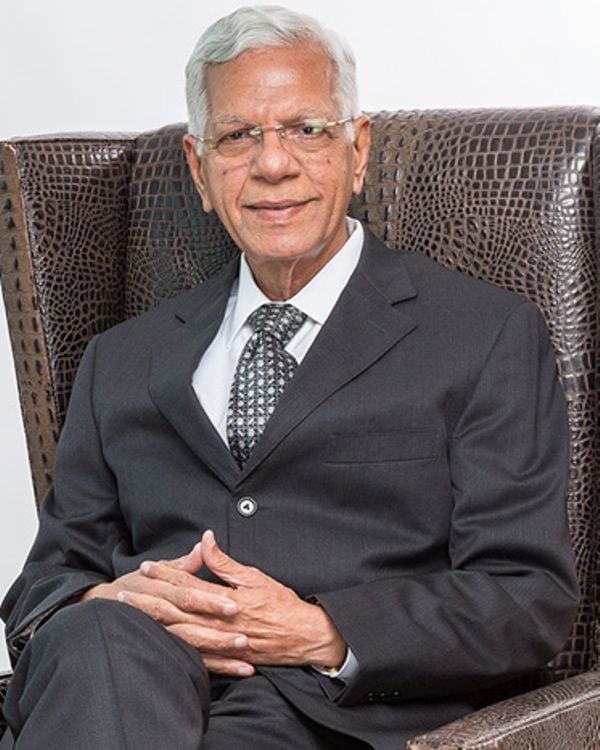 Celebrities
☑️Chandru Raheja
Chandru Lachmandas Raheja is an Indian businessman known for leading K. Raheja Corporation and for his long career in real estate, retail and hospitality.ト
Updated 2026-10-04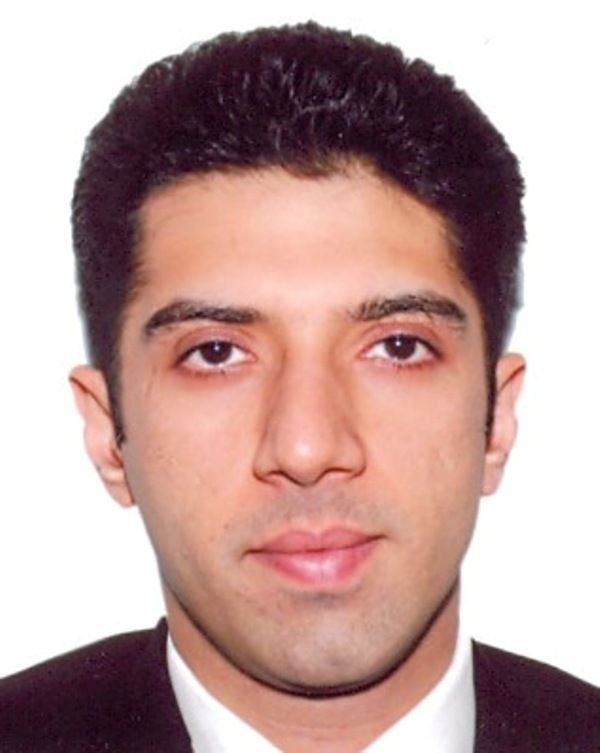 Celebrities
✅Neel Raheja
Neel Chandru Raheja is an Indian businessman who serves as Group President of K Raheja Corp. Born in Mumbai in 1974, he has guided the family's expansion—b
Updated 2026-10-04 Celebrities
✅Ravi Raheja
Ravi Chandru Raheja is an Indian businessman known for his leadership role at K. Raheja Corporation. Born and raised in Mumbai, he holds degrees from the H
Updated 2026-10-04 Celebrities
6 Girlfriends Of Salman Khan
A look at six women who have been linked to Bollywood star Salman Khan over the years, from early romances to high-profile relationships that captured wide
Updated 2026-10-04