
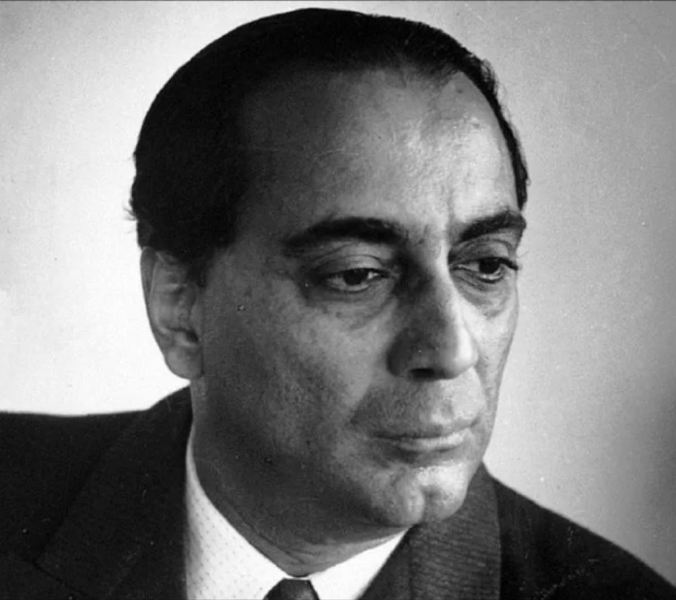
 Featured Biography
Image source: StarsUnfolded
Quick Info
Date of birth30 October 1909
Age56 (at time of death)
BirthplaceBombay, Bombay Presidency, British India (present-day Mumbai, Maharashtra, India)
ProfessionNuclear Physicist
NationalityIndian
Marital statusUnmarried
FamilyFather: Jehangir Hormusji Bhabha; Mother: Meherbai Bhabha; Brother: Jamshed Bhabha
Homi J. Bhabha Biography
Homi Jehangir Bhabha was an Indian nuclear physicist who founded key research institutions that shaped India’s atomic energy programme. A Cambridge-trained
Early life and backgroundHomi Jehangir Bhabha was born on 30 October 1909 in Bombay (then Bombay Presidency, British India). He came from a Parsi family: his father was Jehangir Hormusji Bhabha, a lawyer, and his mother was Meherbai Bhabha, a granddaughter of philanthropist Sir Dinshaw Petit. He grew up in Bombay and completed his early schooling at Cathedral and John Connon School before moving on to higher studies.
Bhabha pursued advanced education in science and engineering. He attended Elphinstone College and then studied at the Royal Institute of Science. He went to Caius College, Cambridge, where he took first-class honours in the Mechanical Sciences Tripos and later the Mathematical Tripos. He completed doctoral studies in theoretical and nuclear physics at Cambridge in the early 1930s, earning a doctorate under Ralph H. Fowler. During this period he held prestigious studentships and worked at the Cavendish Laboratory and with leading physicists in Cambridge and Copenhagen.
Career
Bhabha’s early research focused on cosmic rays and particle physics. His first scientific paper addressed the absorption of cosmic radiation and preceded the award of his doctorate. In the mid-1930s he produced theoretical work on electron-positron scattering — a result that later became known as Bhabha scattering — and collaborated with colleagues such as Walter Heitler on the theory of cosmic ray showers. His theoretical calculations agreed with experimental observations of cosmic ray cascades made by earlier investigators.
With the outbreak of World War II, Bhabha returned to India in 1939 and took up a position as Reader in the Physics Department at the Indian Institute of Science, which at the time was led by C. V. Raman. He was elected a Fellow of the Royal Society in 1942 and that same year received the Adams Prize.
Bhabha was a driving force behind the creation of India’s institutional base for fundamental physics and atomic energy. In 1944 he established the Cosmic Ray Research Unit with support from the Sir Dorabji Tata Trust and proposed a dedicated institute for fundamental research in physics. The trust and the government of Bombay supported that proposal, and the Tata Institute of Fundamental Research (TIFR) was inaugurated in 1945. Bhabha served as founding director and professor of physics at TIFR, expanding its facilities and scientific reach in subsequent years.
In 1948 he helped set up the Atomic Energy Commission and became its first chairperson. He pushed for dedicated facilities to support experimental work in atomic energy; this led to the establishment of the Atomic Energy Establishment Trombay (AEET) in 1954 and the creation of the Department of Atomic Energy the same year. AEET would later be renamed in his honour.
Bhabha represented India on international stages related to atomic energy. He attended International Atomic Energy Agency forums in the 1950s and served as president of the United Nations Conference on the Peaceful Uses of Atomic Energy held in Geneva in 1955. He also held national advisory roles, including membership of scientific advisory bodies to the Indian government.
Public profile
Bhabha received multiple honours during his career. He was awarded the Adams Prize in 1942 and the Padma Bhushan in 1954. He was nominated several times for the Nobel Prize in Physics in the early 1950s and mid-1950s and was elected a Fellow of the Royal Society. In 1958 he was recognized with a foreign honorary membership of the American Academy of Arts and Sciences. His scientific contributions, institutional leadership, and advocacy for atomic research led to his wide recognition in India and abroad.
Personal life
Bhabha remained unmarried. He belonged to a family engaged with public life and culture: his brother Jamshed Bhabha later became associated with the National Centre for the Performing Arts in Mumbai. Homi Bhabha’s paternal family included figures active in education and industry, and he grew up in an environment that valued both learning and public service.
Death
Homi J. Bhabha died on 24 January 1966 at the age of 56. He was among those lost when Air India Flight 101 crashed near Mont Blanc.
Latest updates
Institutions Bhabha founded—principally the Tata Institute of Fundamental Research and the Atomic Energy Establishment at Trombay—remain central to India’s scientific infrastructure. The Atomic Energy Establishment later became widely known by the name that honours him.
Editorial Review and Sources
This F4U profile is written from publicly available career and profile information, then reviewed for clarity before publication. If you spot an outdated detail about Homi J. Bhabha, send the page URL and a reliable correction source to f4udotin@gmail.com.
Reference context: StarsUnfoldedAccuracy
Request a Correction
Tell us what needs to be updated and share a reliable source so the editorial team can review it.
Ownership
Claim This Profile
If this profile is about you or your client, send your contact details and verification context.
Recent Work
Established TIFR in 1945 and developed it into a national center for fundamental physics research.
1945Led the Atomic Energy Commission from 1948 and oversaw the establishment of the Atomic Energy Establishment Trombay and the Department of Atomic Energy in 1954.
1948-1954Served as president of the Geneva conference in 1955 representing India on international atomic energy matters.
1955Career Highlights
- Reader, Indian Institute of Science (1939)
- Founder and director, Tata Institute of Fundamental Research (1945)
- Founder, Cosmic Ray Research Unit (1944)
- First chairperson, Atomic Energy Commission (1948)
- Established Atomic Energy Establishment Trombay and Department of Atomic Energy (1954)
- President, UN Conference on the Peaceful Uses of Atomic Energy (1955)
Frequently Asked Questions
When was Homi J. Bhabha born?
Homi J. Bhabha was born on 30 October 1909.
What is Homi J. Bhabha known for?
Homi J. Bhabha is known for nuclear Physicist.
What is Homi J. Bhabha’s marital status?
Homi J. Bhabha's marital status is listed as Unmarried.
Related Biographies
View all →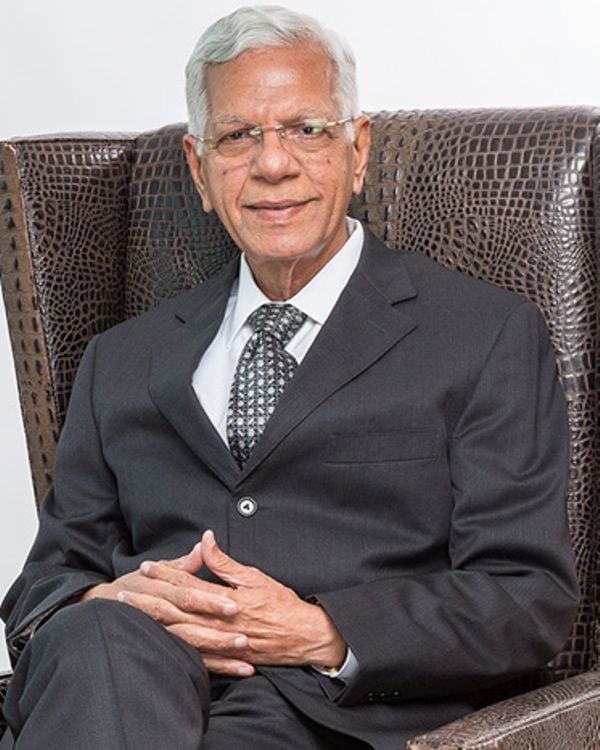 Celebrities
☑️Chandru Raheja
Chandru Lachmandas Raheja is an Indian businessman known for leading K. Raheja Corporation and for his long career in real estate, retail and hospitality.ト
Updated 2026-10-04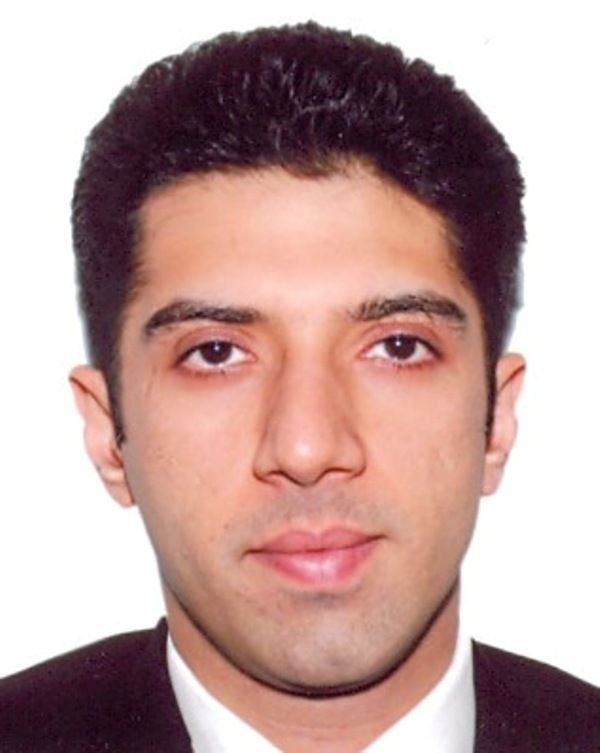 Celebrities
✅Neel Raheja
Neel Chandru Raheja is an Indian businessman who serves as Group President of K Raheja Corp. Born in Mumbai in 1974, he has guided the family's expansion—b
Updated 2026-10-04 Celebrities
✅Ravi Raheja
Ravi Chandru Raheja is an Indian businessman known for his leadership role at K. Raheja Corporation. Born and raised in Mumbai, he holds degrees from the H
Updated 2026-10-04 Celebrities
6 Girlfriends Of Salman Khan
A look at six women who have been linked to Bollywood star Salman Khan over the years, from early romances to high-profile relationships that captured wide
Updated 2026-10-04