
 Featured Biography
Image source: StarsUnfolded
Celebrities
J. Robert Oppenheimer Biography: Age, Career, Family and More
Quick Info
Date of birth22 April 1904
Age62 Years (at death)
BirthplaceNew York City, United States of America
ProfessionTheoretical Physicist
NationalityAmerican
Marital statusMarried
SpouseKatherine “Kitty” Oppenheimer
J. Robert Oppenheimer Biography
J. Robert Oppenheimer was an American theoretical physicist who led the scientific effort to build the world’s first atomic bomb. Born in New York City in
Early life and backgroundJulius Robert Oppenheimer was born on April 22, 1904, in New York City. He grew up in New York and completed preparatory schooling there, attending Alcuin Preparatory School and the Ethical Culture School. He went on to study at Harvard University, graduating summa cum laude with a Bachelor of Arts in chemistry, and continued graduate work at Christ’s College, Cambridge, before earning a PhD in physics at the University of Göttingen in Germany.
Oppenheimer’s upbringing and education established him as a highly cultured scientist: beyond his formal studies he enjoyed reading and writing poetry. He was American by nationality and identified with Judaism.
Career
Oppenheimer became a leading theoretical physicist and is widely known for his central role in the development of the world’s first atomic bomb. During World War II he served as director of the Los Alamos Laboratory, the scientific center of the Manhattan Project, which produced the first atomic weapons.
For his wartime and postwar work he received significant honors, including the Medal for Merit from President Harry S. Truman in 1946 and the Enrico Fermi Award, presented by the U.S. government in 1963 along with a cash prize.
Public profile
Following the war, Oppenheimer’s prominence placed him at the intersection of science, policy and national security. He maintained a high public profile as a government consultant and as a leading voice in debates about nuclear weapons policy.
In the early 1950s Oppenheimer came under intense scrutiny over past political associations and questions about his judgment in security matters. Allegations surfaced linking him and several close associates to members of the Communist Party USA. An incident involving a friend who had passed along a concern about another individual’s contacts with the Soviet Union led to criticism that Oppenheimer failed to report the matter promptly to authorities. A later allegation, raised in a 1953 letter to the FBI, asserted connections between Oppenheimer and Soviet intelligence; that letter prompted further investigation by the federal government and the revocation of his Q Clearance in December 1953.
The security case against him culminated in a formal hearing that began on April 12, 1954. The proceeding examined charges about his associations with leftist groups from 1938–1946, his handling of the episode with his friend, and his opposition to the development of the hydrogen bomb. The hearing panel found that many of the charges were at least partially true, recommended withdrawal of his security clearance, and concluded that certain past associations and judgment lapses constituted a security concern. At the same time, the panel rejected the notion that he had been a formal member of the Communist Party and acknowledged that he had generally kept secret information confidential. The case prompted an outpouring of support from many prominent scientists and public figures who testified on his behalf.
In December 2022 the U.S. Department of Energy announced that procedural errors had tainted the 1954 ruling. The Secretary of Energy stated that the earlier process was flawed and expressed the view that Oppenheimer’s loyalty had been affirmed and that his clearance should have been restored at the time.
Personal life
Oppenheimer married Katherine “Kitty” Oppenheimer. His personal relationships included earlier romantic involvement with Jean Frances Tatlock and a close relationship with Ruth Tolman, among others. He and Kitty maintained a family life while he carried out his scientific work.
Later years and death
Oppenheimer died on February 18, 1967, in Princeton, New Jersey, at age 62. The cause of death was laryngeal cancer.
Latest updates
In recent years there has been official reconsideration of the 1954 security proceedings. In December 2022 the Secretary of Energy announced that the earlier decision was invalidated due to procedural faults and stated that Oppenheimer’s loyalty should have been recognized. This development represented a formal reassessment of the government’s treatment of his postwar security status.
Editorial Review and Sources
This F4U profile is written from publicly available career and profile information, then reviewed for clarity before publication. If you spot an outdated detail about J. Robert Oppenheimer, send the page URL and a reliable correction source to f4udotin@gmail.com.
Reference context: StarsUnfoldedAccuracy
Request a Correction
Tell us what needs to be updated and share a reliable source so the editorial team can review it.
Ownership
Claim This Profile
If this profile is about you or your client, send your contact details and verification context.
Recent Work
Led the scientific team responsible for developing the first atomic weapons during World War II.
1942-1945Advised U.S. government bodies on nuclear policy and science in the postwar period.
1945-1954Career Highlights
- Directed the Los Alamos Laboratory and played a leading role in the Manhattan Project
- Received the Medal for Merit (1946)
- Awarded the Enrico Fermi Award (1963)
Frequently Asked Questions
When was J. Robert Oppenheimer born?
J. Robert Oppenheimer was born on 22 April 1904.
What is J. Robert Oppenheimer known for?
J. Robert Oppenheimer is known for theoretical Physicist.
What is J. Robert Oppenheimer’s marital status?
J. Robert Oppenheimer's marital status is listed as Married.
Who is J. Robert Oppenheimer married to?
J. Robert Oppenheimer is publicly listed as married to Katherine “Kitty” Oppenheimer.
Related Biographies
View all →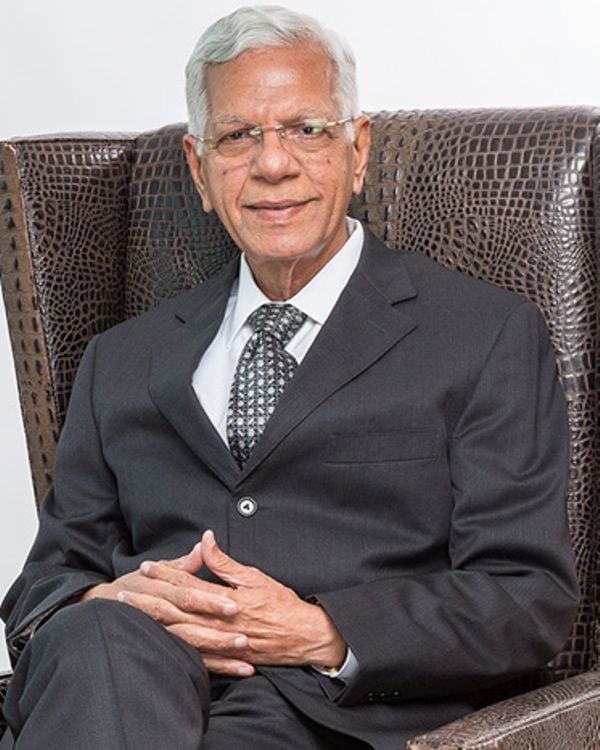 Celebrities
☑️Chandru Raheja
Chandru Lachmandas Raheja is an Indian businessman known for leading K. Raheja Corporation and for his long career in real estate, retail and hospitality.ト
Updated 2026-10-04 Celebrities
✅Neel Raheja
Neel Chandru Raheja is an Indian businessman who serves as Group President of K Raheja Corp. Born in Mumbai in 1974, he has guided the family's expansion—b
Updated 2026-10-04 Celebrities
✅Ravi Raheja
Ravi Chandru Raheja is an Indian businessman known for his leadership role at K. Raheja Corporation. Born and raised in Mumbai, he holds degrees from the H
Updated 2026-10-04 Celebrities
6 Girlfriends Of Salman Khan
A look at six women who have been linked to Bollywood star Salman Khan over the years, from early romances to high-profile relationships that captured wide
Updated 2026-10-04