
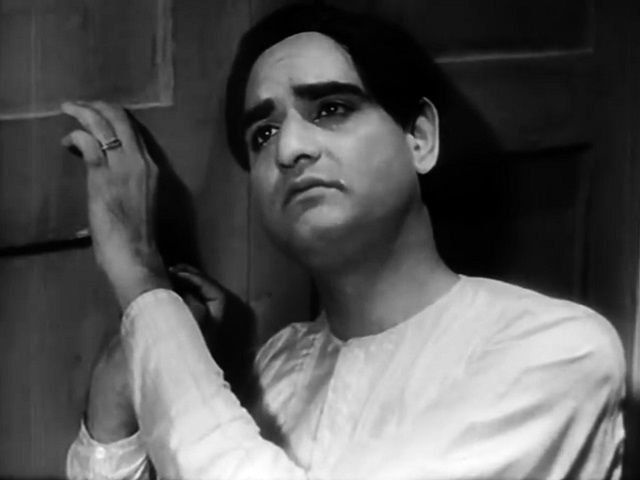
 Featured Biography
Image source: StarsUnfolded
Quick Info
Date of birth11 April 1904
Age42 (at time of death)
BirthplaceNawa Shahar, Jammu and Kashmir, British India
ProfessionPlayback singer
NationalityIndian
Marital statusMarried
SpouseAsha Rani
FamilyFather - Amarchand Saigal; Mother - Kesarbai Saigal; Brothers - Ram Lal Saigal, Mahendra Saigal; Children - Madan Mohan Saigal (son), Nina Merchant (daughter), Bina Chopra (daughter), Durgesh Nandani (daughter)
K. L. Saigal Biography
Kundanlal (K. L.) Saigal was a pioneering Indian playback singer and actor whose voice and screen presence helped shape early Indian cinema. Born in 1904,
Early life and backgroundKundanlal Saigal was born on 11 April 1904 in Nawa Shahar, in the region then described as Jammu and Kashmir, British India. He grew up in a household where religious music featured prominently; his mother often took him to bhajan and kirtan gatherings, experiences that exposed him early to devotional song. As a child he performed in local religious and theatrical events — including a recitation of a Meera bhajan at the Maharaja's court and a role in a Ramleela production — activities that helped shape his early musical sensibilities.
Saigal attended Ranbir Singh High School and later enrolled at Prince of Wales College (now Gandhi Memorial Science College) in Jammu. He left formal schooling at a relatively young age and supported himself through a series of jobs. Over the years he worked as a railway timekeeper, a theatre artist at the Gaiety Theatre in Shimla, and in sales roles including positions with the Remington Typewriter Company and later as a saree salesman in Kanpur. These varied experiences preceded his move into professional singing and film.
Career
In the early 1930s Saigal began performing in Calcutta’s musical circles, taking part in mehfil-e-mushaira and attracting the attention of local music practitioners. Harishchandra Bali introduced him to Rai Chand Boral and to B. N. Sircar of New Theatres, which led to a studio contract. His first screen appearances came in 1932 with three films that failed to make an impact. It was his fourth film, Puran Bhagat (1933), that brought him widespread recognition; several devotional songs he sang for that picture became very popular with audiences.
Saigal’s work in cinema and recording helped popularize older literary and classical forms for a broad moviegoing public. He is credited with reviving interest in ghazals of the poet Mirza Ghalib during the 1930s, and he also recorded and performed Rabindra Sangeet to the appreciation of Bengali audiences. He learned to speak Bengali convincingly and appeared in a number of Bengali films, expanding his reach beyond Hindi-language cinema.
His performance as the lead in Devdas (1935) marked a high point in his acting career; the film and its music brought him national attention. Later, after establishing himself in Bengali films, he relocated to Bombay (Mumbai) and worked with Ranjit Movietone, appearing in films such as Bhakta Surdas (1942) and Tansen (1943). Songs from his later films, including My Sister (1944) and Parvana (1946), continued to be widely admired. Several of his recordings from the late 1930s and 1940s — including compositions released in 1937 and in the mid-1940s — have endured with listeners over subsequent generations.
Public profile
Saigal’s voice and emotive delivery influenced an entire generation of later playback singers. Many prominent singers who followed him began by imitating elements of his style before developing their own voices. He was a public figure well known for both his singing and acting; contemporaries and later artists have cited him as a formative influence. He was married to Asha Rani in 1935 and the couple had children, including a son, Madan Mohan Saigal, and daughters Nina Merchant, Bina Chopra and Durgesh Nandani. His father was Amarchand Saigal and his mother was Kesarbai Saigal; he had brothers Ram Lal Saigal and Mahendra Saigal.
Later years and death
After completing his final film, Parvana (1946), Saigal expressed a desire to withdraw from film work and return to his ancestral home in Jalandhar. He suffered from chronic illness in his later years and died on 18 January 1947 in Jalandhar, Punjab, British India, at the age of 42. Details about the specific cause of his death are not recorded in the available material.
Personal notes
Saigal was known to play the harmonium and enjoyed singing from an early age. Accounts note that he drank and smoked, and a family perspective recorded later suggested his alcohol use began after medical advice for ailments such as backache. He owned an M G Saloon car and, during his recording career, commanded high fees for his services. He counted artists such as Faiyaz Khan, Pankaj Mullick and Pahari Sanyal among singers he admired.
Latest updates
Though Saigal’s career was cut short by his early death, his recordings and films remain part of the musical and cinematic history of India. Several of his songs, dating from the 1930s and 1940s, continue to be listened to and referenced by music lovers and younger generations alike.
Editorial Review and Sources
This F4U profile is written from publicly available career and profile information, then reviewed for clarity before publication. If you spot an outdated detail about K. L. Saigal, send the page URL and a reliable correction source to f4udotin@gmail.com.
Reference context: StarsUnfoldedAccuracy
Request a Correction
Tell us what needs to be updated and share a reliable source so the editorial team can review it.
Ownership
Claim This Profile
If this profile is about you or your client, send your contact details and verification context.
Recent Work
Last film completed by K. L. Saigal
1946Film featuring popular songs recorded by Saigal in 1944
1944Film for Ranjit Movietone during his Mumbai period
1943Film for Ranjit Movietone during his Mumbai period
1942Career Highlights
- Became widely known after Puran Bhagat (1933), which made his devotional songs popular
- Played the lead in Devdas (1935), a defining acting role
- Helped revive public interest in Mirza Ghalib's ghazals in the 1930s
- Recorded and performed Rabindra Sangeet despite being a non-Bengali, earning praise from Bengali audiences
People Also Search For
Frequently Asked Questions
When was K. L. Saigal born?
K. L. Saigal was born on 11 April 1904.
What is K. L. Saigal known for?
K. L. Saigal is known for playback singer.
What is K. L. Saigal’s marital status?
K. L. Saigal's marital status is listed as Married.
Who is K. L. Saigal married to?
K. L. Saigal is publicly listed as married to Asha Rani.
Related Biographies
View all → Celebrities
☑️Chandru Raheja
Chandru Lachmandas Raheja is an Indian businessman known for leading K. Raheja Corporation and for his long career in real estate, retail and hospitality.ト
Updated 2026-10-04 Celebrities
✅Neel Raheja
Neel Chandru Raheja is an Indian businessman who serves as Group President of K Raheja Corp. Born in Mumbai in 1974, he has guided the family's expansion—b
Updated 2026-10-04 Celebrities
✅Ravi Raheja
Ravi Chandru Raheja is an Indian businessman known for his leadership role at K. Raheja Corporation. Born and raised in Mumbai, he holds degrees from the H
Updated 2026-10-04 Celebrities
6 Girlfriends Of Salman Khan
A look at six women who have been linked to Bollywood star Salman Khan over the years, from early romances to high-profile relationships that captured wide
Updated 2026-10-04