
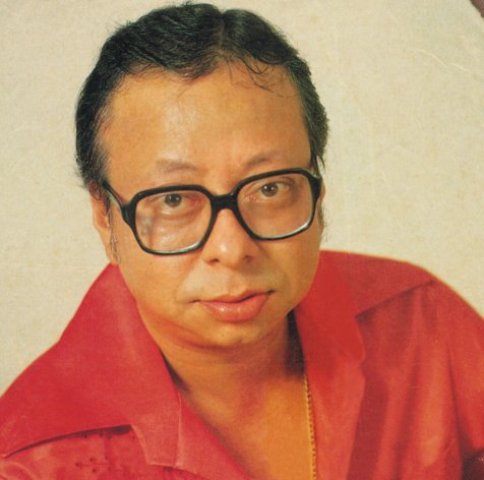
 Featured Biography
Image source: StarsUnfolded
Quick Info
Date of birth27 June 1939
Age54 Years
BirthplaceCalcutta, Bengal Presidency, British India
ProfessionMusic Director, Singer, Composer
NationalityIndian
Marital statusMarried
SpouseAsha Bhosle
FamilyFather - Sachin Dev Burman; Mother - Meera Dev Burman; Stepson(s) - Hemant Bhosle, Anand Bhosle; Stepdaughter - Varsha Bhosle
R. D. Burman Biography
Rahul Dev “R. D.” Burman, also known as Pancham or Tublu, was an Indian music director, composer and singer whose inventive scores shaped Hindi film music.
Early life and backgroundRahul Dev Burman was born on 27 June 1939 in Calcutta (now Kolkata) in the Bengal Presidency of British India. He grew up in a musical household: his father, Sachin Dev Burman, was an established music director and his mother, Meera Dev Burman, worked as a lyricist. The family belonged to Tripura’s royal Manikya lineage. From an early age he showed an aptitude for melody and instruments — he learned the harmonica and later studied sarod under Ali Akbar Khan after the family moved to Bombay (now Mumbai).
As a child composer he produced his first film tune at around nine years old. Several early contributions, including melodies used in 1950s films, grew out of these formative years assisting his father on projects and experimenting with musical ideas.
Career
Burman’s professional life covered composing, music direction and occasional singing. His first recorded work as a composer came in the mid-1950s and he began assisting on films through the late 1950s. Raaz (1959) was his first film as an independent music director, though the release was delayed; Chhote Nawab (1961) marked his first released film credit as a composer.
The 1960s brought Burman wider recognition. Teesri Manzil (1966) was his first major commercial breakthrough as an independent music director, and that success led to several popular projects in the following years, including Padosan (1968) and Waris (1969). When his father fell ill during the making of Aradhana (1969), Burman stepped in as an associate composer and completed the film’s music, contributing the tune for the song “Kora Kagaz Tha Yeh Man Mera.”
Throughout the 1970s and into the early 1980s he was one of Hindi cinema’s most influential composers, producing scores and songs for films such as Sholay (1975), Hum Kisise Kum Naheen (1977), Kasme Vaade (1978), Gol Maal (1979), Khubsoorat (1980) and Kudrat (1981). He also explored roles beyond composing, trying his hand at acting in films such as Bhoot Bungla (1965) and Pyar Ka Mausam (1969).
Burman was known for inventive sound choices and for blending Indian semi‑classical elements with contemporary textures. He used unconventional sources — from blown beer bottles to cups and saucers — and combined instruments like guitar and santoor to create distinctive arrangements. He sang on occasion as well and received a single Filmfare nomination for Best Playback Singer for a popular number from Sholay.
In the 1980s he continued to mentor and introduce new vocal talent to the industry. He gave early breaks to singers who went on to successful careers, and in 1986 his work on Ijaazat — featuring lyrics by Gulzar and songs sung by Asha Bhosle — was widely praised; the film’s song “Mera Kuch Samaan” won National Awards for Best Lyrics and Best Female Playback Singer.
By the late 1980s his commercial fortunes had waned as the film music landscape changed, but he still produced notable work, including songs for Parinda (1989) and music that released posthumously. A Latin American rock album titled Pantera was released in January 1987; the sessions for that album were recorded earlier in the 1980s in the United States.
Public profile
Known affectionately as Pancham, Burman’s nickname has a couple of popular origin stories tied to the Indian musical fifth note and comments made when he was a newborn. He was close to contemporaries such as Rajesh Khanna and Kishore Kumar; together the trio collaborated on dozens of films.
Over his career Burman composed for hundreds of films and several television serials across multiple Indian languages. His output included scores for Hindi, Bengali, Oriya, Tamil and Marathi films. He was influenced by Western jazz and admired singers such as Louis Armstrong, and his approach to arranging and sound design left a lasting imprint on Indian film music.
He received multiple Filmfare Awards for Best Music Director during his career and, after his death, continued to be honoured. A Filmfare award for new musical talent bears his name; a public square in Santa Cruz, Mumbai, was named after him in 2009; India Post issued a commemorative postage stamp featuring his image in 2013; and Google marked his 77th birthday with a Doodle in 2016. A documentary titled Pancham Unmixed and a later biography titled R.D. Burmania further explored his life and legacy.
Personal life
Burman married twice. He married Rita Patel in 1966; the marriage ended in separation in 1971. In 1979 he married playback singer Asha Bhosle. He had stepchildren from Asha Bhosle’s family, including Hemant Bhosle, Anand Bhosle and Varsha Bhosle. His lifestyle preferences included a fondness for non‑vegetarian dishes and hobbies such as cooking and watching sports.
Health, final years and legacy
Burman suffered health setbacks in the late 1980s, including a heart attack in 1988 and coronary bypass surgery the following year. He continued working, and some of his compositions were released after his death. He died of a heart attack on 4 January 1994 in Bombay at the age of 54.
His body of work—spanning hundreds of film scores, occasional playback singing, and continued influence on later generations of musicians—remains a touchstone in the history of Indian film music.
Latest updates
Posthumous releases and tributes have kept Burman’s music in the public eye. Several films have used his original or remixed material, and his life has been the subject of documentaries and books that examine his innovations and contributions to cinema music.
Editorial Review and Sources
This F4U profile is written from publicly available career and profile information, then reviewed for clarity before publication. If you spot an outdated detail about R. D. Burman, send the page URL and a reliable correction source to f4udotin@gmail.com.
Reference context: StarsUnfoldedAccuracy
Request a Correction
Tell us what needs to be updated and share a reliable source so the editorial team can review it.
Ownership
Claim This Profile
If this profile is about you or your client, send your contact details and verification context.
Recent Work
Latin American rock album recorded in the US (recorded 1983–84, released 6 January 1987)
1987Film for which he composed music released in 1989
1989Film whose music was released after his death; earned him a posthumous Filmfare Award for Best Music Director
1994Career Highlights
- Composed for nearly 331 films across several Indian languages and for television serials
- First major hit as an independent music director with Teesri Manzil (1966)
- Created memorable scores for landmark films including Sholay, Gol Maal and Amar Prem
- Introduced and promoted new singing talent in the 1980s
- Posthumously honoured with awards, commemorative stamp and other tributes
People Also Search For
Frequently Asked Questions
When was R. D. Burman born?
R. D. Burman was born on 27 June 1939.
What is R. D. Burman known for?
R. D. Burman is known for music Director, Singer, Composer.
What is R. D. Burman’s marital status?
R. D. Burman's marital status is listed as Married.
Who is R. D. Burman married to?
R. D. Burman is publicly listed as married to Asha Bhosle.
Related Biographies
View all →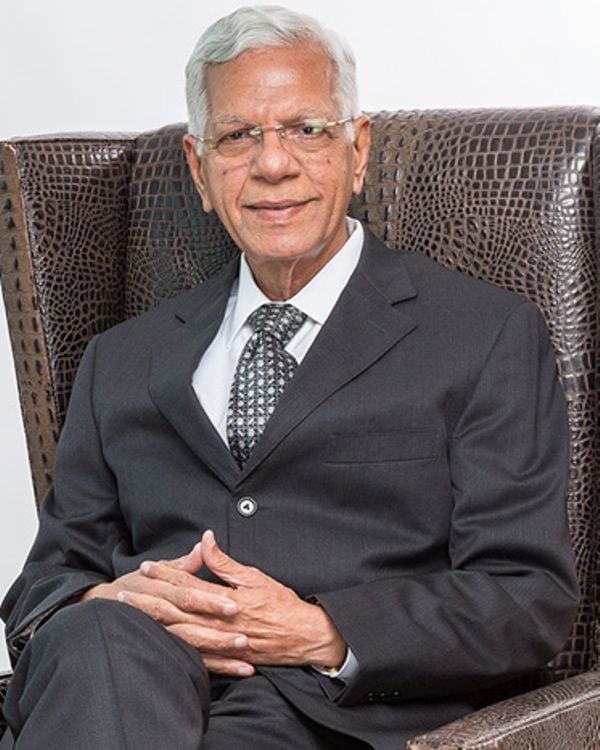 Celebrities
☑️Chandru Raheja
Chandru Lachmandas Raheja is an Indian businessman known for leading K. Raheja Corporation and for his long career in real estate, retail and hospitality.ト
Updated 2026-10-04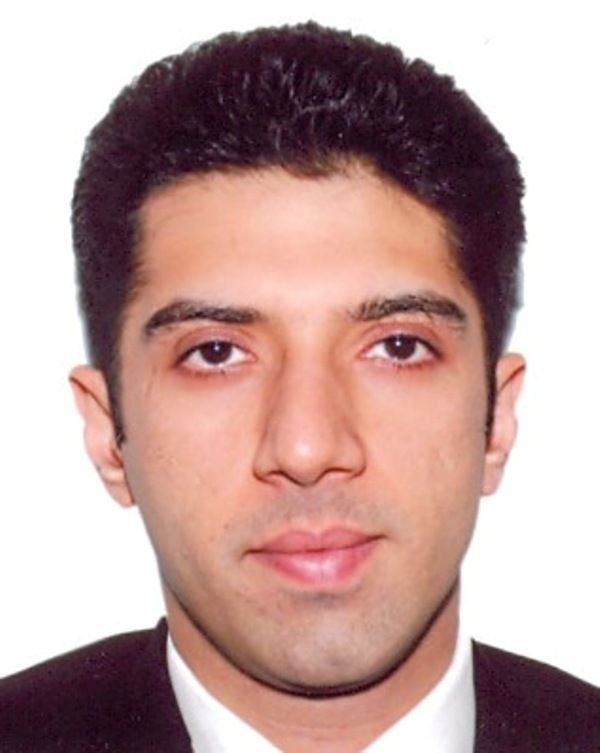 Celebrities
✅Neel Raheja
Neel Chandru Raheja is an Indian businessman who serves as Group President of K Raheja Corp. Born in Mumbai in 1974, he has guided the family's expansion—b
Updated 2026-10-04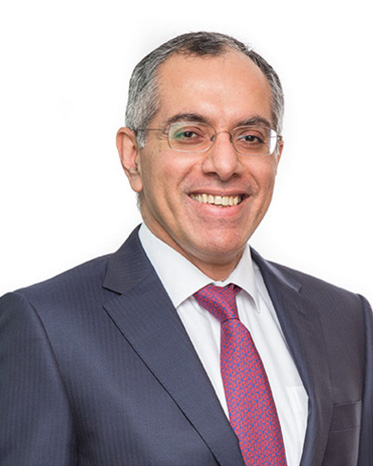 Celebrities
✅Ravi Raheja
Ravi Chandru Raheja is an Indian businessman known for his leadership role at K. Raheja Corporation. Born and raised in Mumbai, he holds degrees from the H
Updated 2026-10-04 Celebrities
1eye43
Indian rapper 1eye43, born Vivek, rose from challenging early circumstances in Chandigarh to build a following for his music. Known for distinctive tattoos
Updated 2026-10-22