
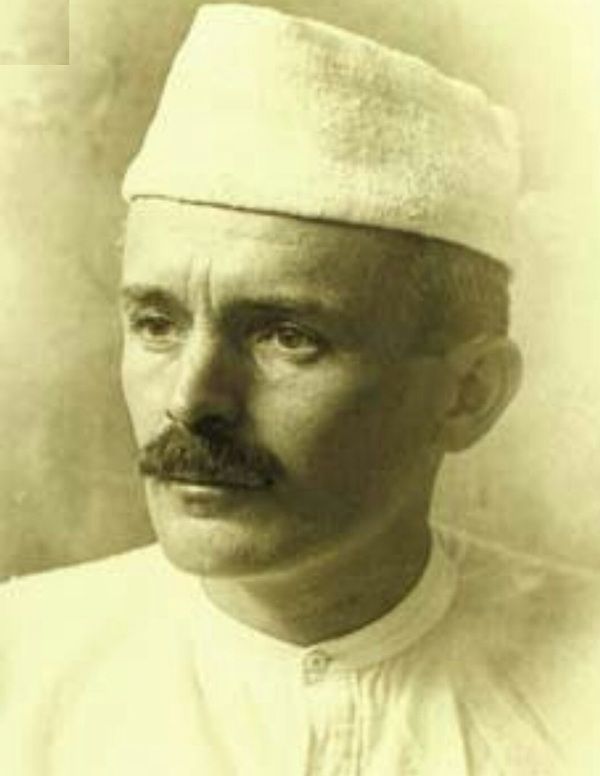
 Featured Biography
Image source: StarsUnfolded
Quick Info
Date of birth16 August 1882
Age63 Years (at time of death)
BirthplacePhiladelphia, Pennsylvania, United States of America
ProfessionOrchardist, Author, Politician
NationalityAmerican
Marital statusMarried
SpouseAgnes Benjamin (Priyadevi Stokes)
FamilySeven children; named children include Pritam Stokes, Lal Chand Stokes, Prem Stokes, Satyavati Stokes, Tara Stokes
Satyananda Stokes Biography
An American-born social worker turned orchardist and Indian nationalist, Satyananda Stokes introduced commercial apple cultivation to Himachal Pradesh and,
Early life and backgroundSamuel Evans Stokes Jr. was born on 16 August 1882 in Philadelphia, Pennsylvania. Raised in a well-to-do American family—his father was Samuel Evans Stokes Sr.—he left formal studies at Yale as a young man and answered a personal call to social service. In 1905 he traveled to India and began working with leprosy patients and other marginalized groups, initially at the Leper Home in Sabathu and later at relief efforts in Kangra and at a Christian mission in Kotgarh, Shimla.
Stokes adopted a simple lifestyle to fit in with the local communities he served. He changed his habits and dress, and for a period lived in a quasi-monastic manner. Early praise for his work came from both locals and visiting dignitaries, and his family in the United States supported his welfare projects after seeing his commitment.
Career
After settling in the hills of Himachal Pradesh, Stokes became a farmer and orchardist. He married Agnes Benjamin, a Rajput woman who later took the name Priyadevi, on 12 September 1912 and purchased farmland near her village at Barubagh, Kotgarh. Initially he cultivated wheat, barley and vegetables, adapting to the routines of local farmers.
Around 1916 Stokes introduced commercial apple varieties from the United States—Newton Pippins, King of Pippin and Cox’s Orange Pippin—to the Kotgarh area. He recognized the Himalayan climate and terrain as favorable for apple cultivation and worked to promote the crop among neighbouring farmers, helping them with cultivation, marketing and export. His efforts are credited with creating the regional apple industry that later became central to Himachal Pradesh’s agricultural economy.
Political and social engagement
Stokes became increasingly involved in Indian political life during the independence movement. Disturbed by events such as the Jallianwala Bagh massacre, he joined the Indian National Congress in 1921 and represented Kotgarh at the All India Congress Committee session in Nagpur that year. He opposed British practices such as impressed labour and publicly sided with Indian workers; his activism led to his arrest on sedition charges in 1921.
He embraced the noncooperation spirit of the time, adopted khadi clothing, and worked alongside Indian leaders. Prominent figures of the independence movement noted his commitment; his role was distinctive because he was an American who had taken up Indian citizenship of purpose and action.
Education, religion and writing
In 1924 Stokes founded Tara High School in memory of a young son who had died. The school focused on educating local village children—particularly girls—and offered instruction in Hindi, English, religion, horticulture and self-defense.
Personal loss and spiritual transformation led Stokes to a formal change of faith. In 1932, influenced by Arya Samaj teachings and by study of the Bhagavad Gita and the Upanishads, he adopted Hinduism and changed his name to Satyananda Stokes; his wife adopted the name Priyadevi. He learned Sanskrit and continued to blend his social, spiritual and practical work.
In 1937 he built a small temple called Paramjyoti Mandir (Temple of Eternal Light) near his home, Harmony Hall, a two-story house he had constructed on the ridge above Thanedhar in Shimla. The temple’s design reflects an integration of local and scriptural inspiration, and its construction was supported financially by business figures who admired his work.
Public profile
Stokes authored several books and essays reflecting his social and spiritual thought. Titles published during his lifetime include works that address religion, national self-realization and the meaning of life. He remained an active public figure in Himachal Pradesh—teacher, orchardist, political activist and community leader—until his health declined.
Latest updates
Satyananda Stokes died on 14 May 1946 in Kotgarh, Shimla, after a prolonged illness. He was 63. He is remembered in Himachal Pradesh for the apple industry he helped establish, for his role in local education and social welfare, and for his active support of India’s independence movement.
His family included his wife Priyadevi (born Agnes Benjamin) and seven children, among them sons Pritam Stokes, Lal Chand Stokes and Prem Stokes, and daughters Satyavati Stokes and Tara Stokes. Two children’s names are not recorded in the material provided.
Stokes’s life bridged cultures and causes: an American by birth who became a farmer, educator, temple founder and nationalist in India, he left a legacy in horticulture and community service that endures in Himachal Pradesh.
Editorial Review and Sources
This F4U profile is written from publicly available career and profile information, then reviewed for clarity before publication. If you spot an outdated detail about Satyananda Stokes, send the page URL and a reliable correction source to f4udotin@gmail.com.
Reference context: StarsUnfoldedAccuracy
Request a Correction
Tell us what needs to be updated and share a reliable source so the editorial team can review it.
Ownership
Claim This Profile
If this profile is about you or your client, send your contact details and verification context.
Recent Work
Brought apple varieties from the United States to Kotgarh and promoted commercial apple farming among local farmers starting in 1916.
1916Founded a school in 1924 focused on educating village children, especially girls, teaching languages, religion, horticulture and self-defense.
1924Built a temple near his home in 1937 inspired by the Bhagavad Gita and Upanishads, supported by local patrons.
1937Career Highlights
- Introduced commercial apple cultivation to Himachal Pradesh beginning in 1916
- Joined the Indian National Congress in 1921 and represented Kotgarh at the Nagpur session
- Founded Tara High School in 1924 to educate village children, with a focus on girls
- Converted to Hinduism in 1932 and adopted the name Satyananda Stokes
- Built Paramjyoti Mandir near Harmony Hall in 1937
People Also Search For
Frequently Asked Questions
When was Satyananda Stokes born?
Satyananda Stokes was born on 16 August 1882.
What is Satyananda Stokes known for?
Satyananda Stokes is known for orchardist, Author, Politician.
What is Satyananda Stokes’s marital status?
Satyananda Stokes's marital status is listed as Married.
Who is Satyananda Stokes married to?
Satyananda Stokes is publicly listed as married to Agnes Benjamin (Priyadevi Stokes).
Related Biographies
View all → Celebrities
☑️Chandru Raheja
Chandru Lachmandas Raheja is an Indian businessman known for leading K. Raheja Corporation and for his long career in real estate, retail and hospitality.ト
Updated 2026-10-04 Celebrities
✅Neel Raheja
Neel Chandru Raheja is an Indian businessman who serves as Group President of K Raheja Corp. Born in Mumbai in 1974, he has guided the family's expansion—b
Updated 2026-10-04 Celebrities
✅Ravi Raheja
Ravi Chandru Raheja is an Indian businessman known for his leadership role at K. Raheja Corporation. Born and raised in Mumbai, he holds degrees from the H
Updated 2026-10-04 Celebrities
6 Girlfriends Of Salman Khan
A look at six women who have been linked to Bollywood star Salman Khan over the years, from early romances to high-profile relationships that captured wide
Updated 2026-10-04