

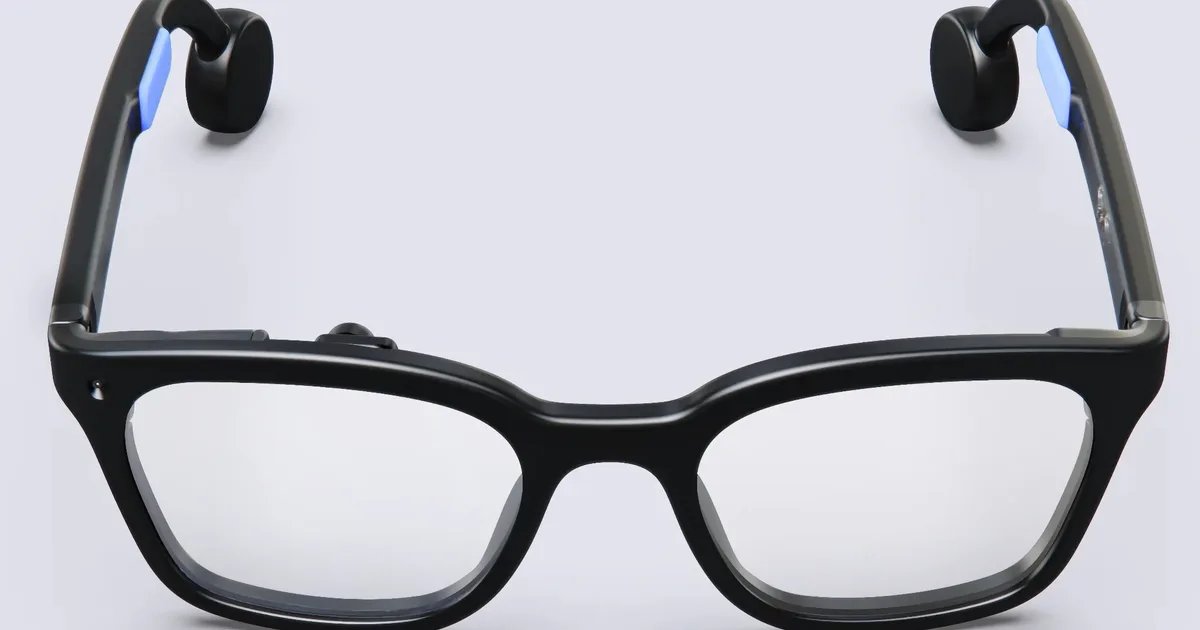
Always-on cameras and microphones in smart glasses sound cool until you realize someone else might be watching too. Almost all AI wearables today send your audio and visual data to the cloud for processing.
That creates a two-fold problem: a slight delay every time your data is sent to servers for processing, and the uncomfortable reality that your point-of-view data is stored on the cloud and is no longer private.
Three startups, namely Brilliant Labs, Neuphonic, and TheStage AI, aim to tackle these issues by moving the entirety of data processing on the hardware itself.
Brilliant Labs
Three companies, one smart solution
Each of the three companies brings a distinct piece to the puzzle. Brilliant Labs is manufacturing the Halo smart glasses, integrating its on-device vision inference along with its AI memory feature.
Neuphonic handles AI voice conversations, running its ultra-low-latency text-to-speech models locally, making the conversations feel natural and instantaneous. Finally, TheStage AI will provide the engine that makes it all run efficiently with instant processing and low battery drain.
Brilliant Labs
The result is smart glasses that can see, hear, and respond in real time, all without phoning home with your personal data.
Why this matters more than you think
It matters as more and more of our personal data is ending up on the cloud and shared with platforms that store, analyze, and potentially monetize it, with us having no control over it.
Bobak Tavangar, CEO of Brilliant Labs and former Apple program lead, put it bluntly and said, “AI glasses are soon going to be everywhere around us: always-on cameras and microphones capturing our lives. That’s either exciting or terrifying, depending on where that data lives and who is monetizing it.”
That’s a fair point. The more AI moves from your phone screen into something you wear on your face, the more personal the data becomes. Knowing that data stays local, converted into encrypted embeddings rather than raw footage, makes a meaningful difference.
What else do you get with the Halo glasses
Privacy is a strong hill to plant your flag on, but users still need features that make the device genuinely useful, at a cost that doesn’t break the bank. Thankfully, the Halo glasses seem to strike the right balance between features and price.
The Halo glasses will support context-aware AI that sees and hears in real time, a private memory feature that recalls what you’ve seen and heard, and Vibe Mode, which generates custom AI mini-apps on demand.
You will get all this at a reasonable price of $349, which is actually quite good for a privacy-focused AI smart glasses, especially if the company can deliver on all its promises.
