

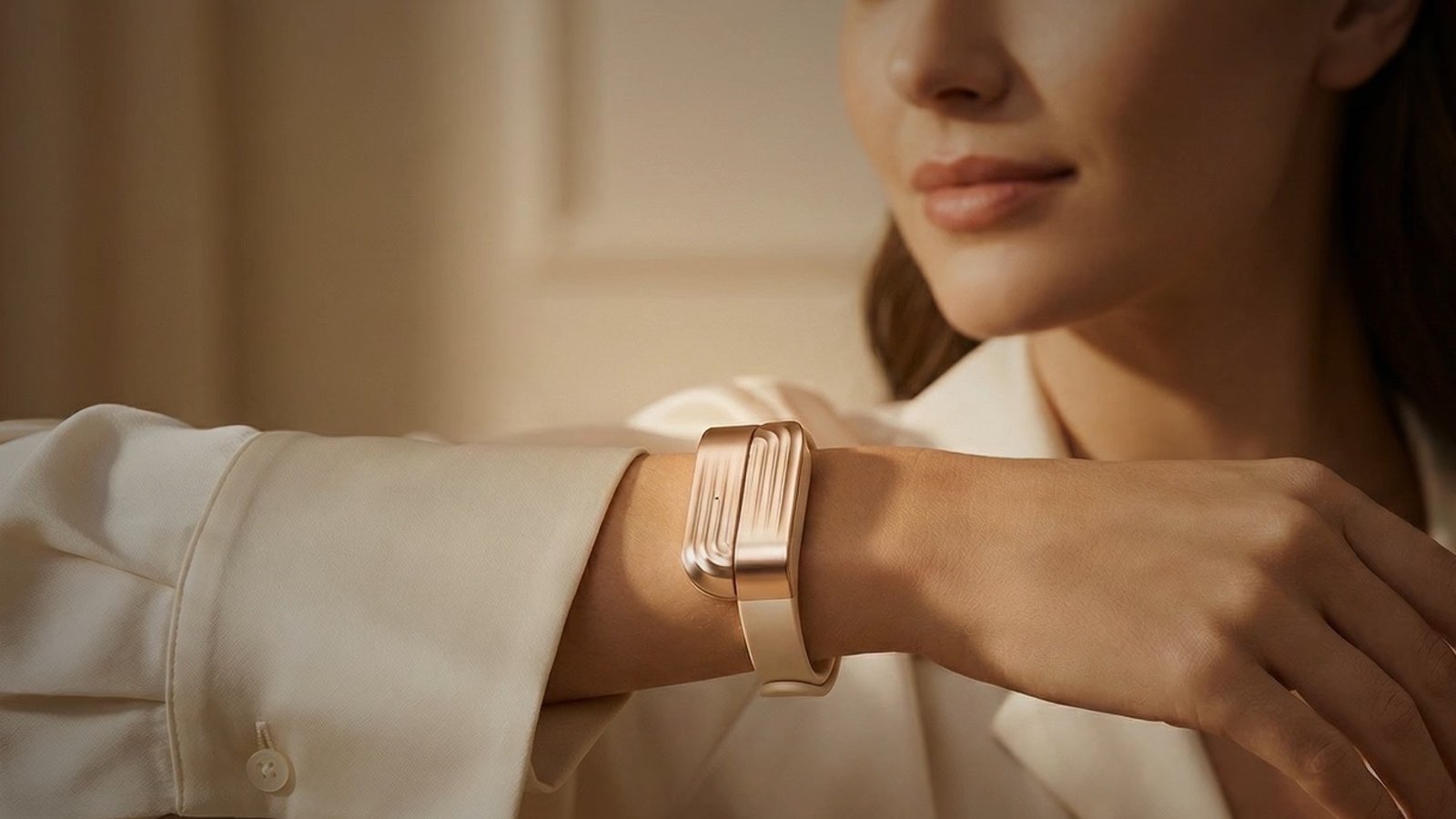
The wrist wearable promises continuous tracking and real-time estrogen and progesterone insights
Women’s health startup Clair has unveiled a wrist-worn wearable that tracks four key reproductive hormones without requiring blood or urine samples.
Founded by Stanford graduates Jenny Duan and Abhinav Agarwal, the Clair wearable uses a complex array of 10 sensors to monitor over 500 biomarkers.
By feeding this data into AI models trained specifically on female physiology, the company claims 94% accuracy in cycle-phase classification, enabling users to understand the hormonal drivers of their mood, energy, and recovery in real time.
These include estrogen, progesterone, luteinising hormone (LH), and follicle-stimulating hormone (FSH), without the need for invasive blood draws or urine tests.
Unlike traditional trackers that guess cycle stages based on temperature alone, Clair says it aims to close the data gap for women with irregular cycles, PCOS, or those entering perimenopause.
Advertisement
Beyond direct hormone tracking, the device also simplifies physiological signals, such as skin temperature, resting heart rate, HRV, sleep patterns, breathing rate, and electrodermal activity, against hormonal fluctuations.
Taken together, this could yield insights that help explain why eight hours of sleep can still leave someone exhausted, or why certain workouts feel harder during specific phases of the cycle.
“Today’s wearables track steps, heart rate, and sleep, but they tell women nothing about the hormones that fundamentally shape how they feel, perform, and age,” said Agarwal in a blog post detailing the brand’s mission.
When Clair is available
The Clair app enters beta this February, with the hardware slated for launch in November.
Its arrival comes amid a growing wave of women-focused health tech. Startups like Peri, Eli Health, and Biologica are all targeting hormone intelligence in different forms, reflecting a broader shift in the wearables and wellness industries toward closing gaps in women’s health.
If Clair delivers on its claims, it won’t just be another tracker; it could mark a meaningful expansion of what health data looks like and who it’s designed for.
Advertisement
