

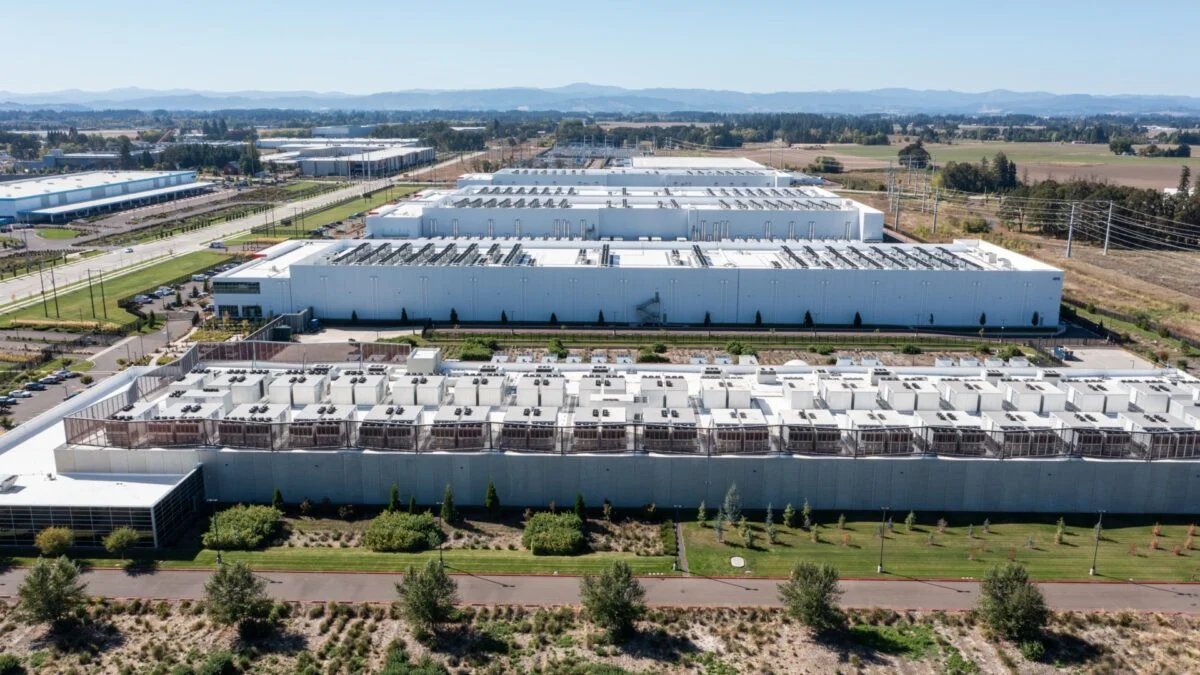
Denver Mayor Mike Johnston announced this week that the city will be imposing a moratorium on the development of new data centers.
If approved in an upcoming city council ordinance vote, the moratorium is expected to last “several months,” the city shared in a press release, as officials review and create new policy around data centers. The review process will target “responsible land, energy, and water use as well as zoning and affordability for ratepayers,” and will be in collaboration with residents, climate experts, and industry leaders, the announcement says.
“Data centers power the technology we depend upon and strengthen our economy. But as this industry evolves, so must our policies,” Mayor Johnston said in a statement. “This pause allows us to put clear and consistent guardrails in place while protecting our most precious resources and preserving our quality of life.”
Data centers have received measurable scrutiny over the past year due to their monstrous energy demand. Locals living near these centers have complained about water shortages, rising power bills, and above-average air pollution. The increase in data centers also goes hand in hand with a push for natural gas, a notorious polluter that is a cheaper but more carbon-intensive energy source than clean alternatives.
The push for a moratorium is also driven by uncertainty over the societal impact of AI, or rather a hypothetical end-version of AI called superintelligence that will allegedly be smarter than any human. As the technology develops at an unprecedented rate and with very limited regulatory oversight, authorities are having a hard time understanding and governing its impact on the economy or the human psyche. Meanwhile, experts are sounding the alarm that the unchecked development of AI could already be leading to tangible problems, from declining early-career employment rates to rising AI-related mental health episodes.
Some economists are also worried that AI might not lead to the massive productivity gains it promises on the very quick timeline that tech CEOs swear by, potentially leading to an AI bubble that could pose trouble for the entire U.S. economy and turn the data center gold rush into a waste of money and resources.
Activists have been calling for a national moratorium on data center development for months. Back in December, more than 250 environmental organizations asked Congress to impose a federal moratorium on the approval and construction of new data centers.
Calls for a federal moratorium are likely falling on deaf ears. The Trump administration is incredibly pro-AI, considers the technology imperative to national security and competition with China, and has threatened states with lawsuits if they try to regulate AI in any way that it deems anti-innovation.
Nevertheless, local leaders are marching on, with some states considering data center moratoriums even longer than Denver’s.
The New York State Senate introduced a bill earlier this month that would put a three-year moratorium on data centers if it becomes law. Maryland, Oklahoma, Vermont, Georgia, Maine, and major data center hub Virginia state legislatures are all currently considering moratoriums ranging from two to four years.
There is some federal-level recognition of this push as well. Sen. Bernie Sanders was the first national politician to openly call for a moratorium in December, and he was quick to applaud Denver’s decision.
“A few months ago, when I proposed a moratorium on AI data centers, it was perceived as a radical, fringe, and Luddite idea. Well, not anymore,” Sen. Sanders said in a statement on Monday, renewing his calls for a federal moratorium. “We cannot sit back and allow a handful of billionaire Big Tech oligarchs to make decisions that will reshape our economy, our democracy, and the future of humanity. We need serious public debate and democratic oversight over this enormously consequential issue.”
Politicians gunning for moratoriums are not necessarily completely opposed to AI or data centers. The gist of the calls is that regulatory bodies need time to understand the true impact of the technology and the sites before going forward. That sentiment was also present in a House Investigations and Oversight Subcommittee hearing on Tuesday.
“The U.S. has long been a global leader in the standardization, collection, and open dissemination of high-quality data for every major sector of national importance, including power, buildings, manufacturing, and transport sectors. We’ve done this for every major sector, that is, except for one, and that is data centers,” UC Santa Barbara professor Eric Masanet said as an expert witness at the hearing. “In fact, no other major U.S. sector, and especially one that is growing so quickly, suffers from as many public data blind spots.”
According to Masanet, “very few” data center operators disclose data on energy and water use, and when they do report, it is often already out-of-date by the time it reaches analysts. Simultaneously, Masanet says that real-time details on the infrastructure requirements of current data center construction projects are “kept secret through NDAs.”
“All of us, policymakers, regulators, researchers, local communities, really, the American people, need consistent, reliable, transparent data to make informed decisions about data center growth,” California Rep. Zoe Lofgren said in the hearing. “All we hear from the administration is that the best thing for America is more data centers built as quickly as possible in as many parts of the country as possible. That strikes me as foolish and short-sighted.”
