

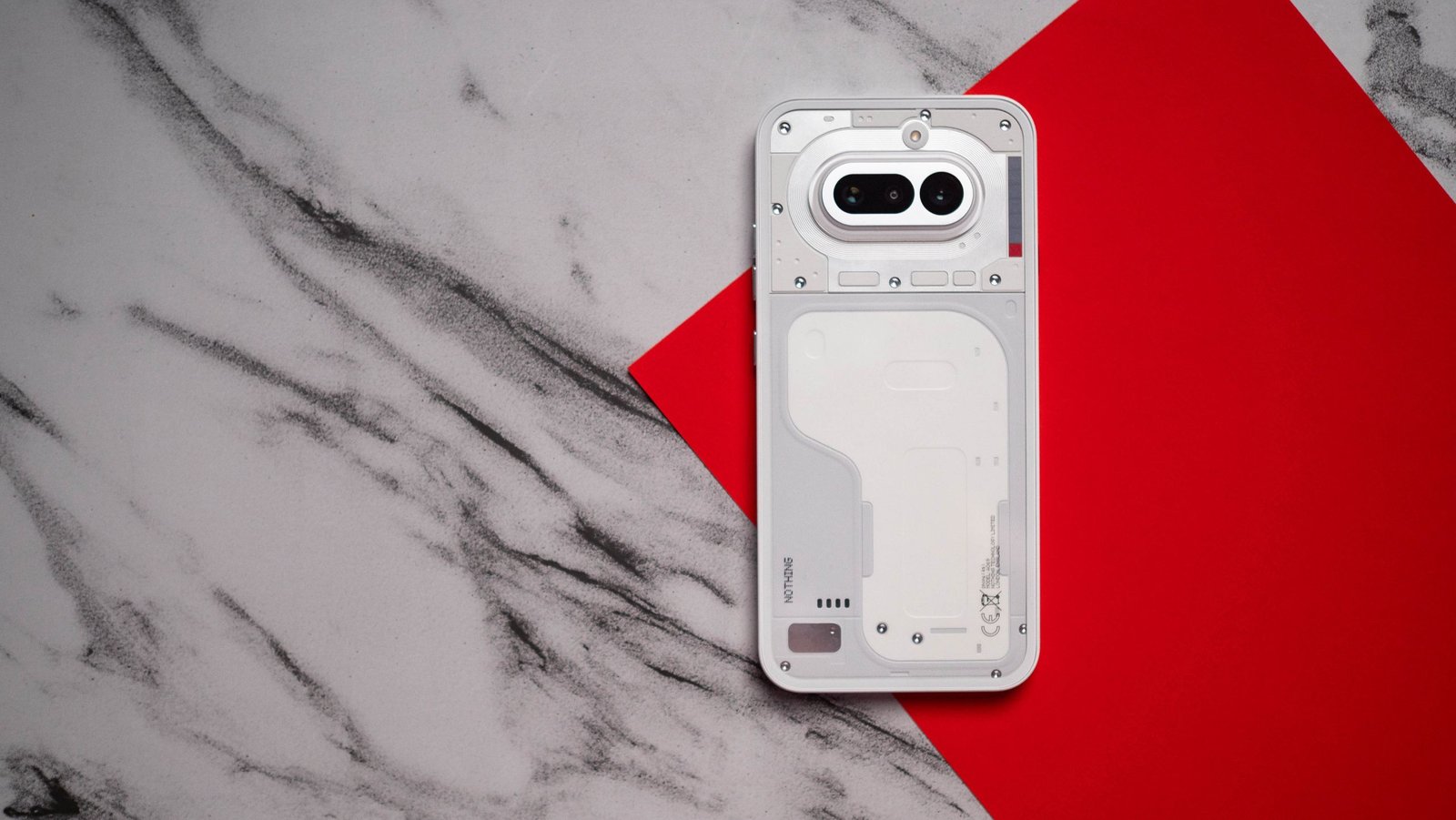
There’s no question that Nothing is now an established presence in the handset industry, and while the brand clearly likes doing things its own way, it’s evident that it can make great products. While we won’t get a flagship this year — the Phone 3 will be the default choice in this area — Nothing is building on the foundation of the excellent Phone 3a, and rolling out the Phone 4a.
After using the Phone 3a , I called it the best budget phone you can buy, and I still stand by that. The phone had a unique design, great software with unique extras, good cameras, and a terrific all-round value. With the global RAM situation and a few upgrades under the hood, the Phone 4a misses out on that value; the phone starts at ₹31,999 for the standard 8GB/128GB version in India. There’s also an 8GB/256GB model that costs ₹34,999, and the 12GB/256GB edition is ₹37,999.
Article continues below
You may like
Nothing but the best software
(Image credit: Apoorva Bhardwaj / Android Central)
I use a lot of budget and mid-range phones, and the software on these devices tends to be underwhelming to say the least. That’s why it’s great to see Nothing focus so much in this area; the Phone 4a has the best software in this category, and only the Pixel 10a comes close.
The software on the Phone 4a is distinctive; Nothing’s design aesthetic extends to the UI as well, and whether it’s the custom widgets or the playful interface, the phone just feels great to use. The interface itself is fluid, and at no point did I get the feeling that I was using a mid-range phone.
(Image credit: Apoorva Bhardwaj / Android Central)
Nothing is also doing a decent job with AI features; the Essential Key is great to save information easily, and Essential Space collates all of that information and makes it actionable. The mode now has cloud access as well, so you can use it on any Nothing phone. There’s a slate of other AI-assisted tools, and I like that Nothing didn’t go overboard in this area, instead focusing on utilities that you’ll actually end up using.
The Phone 4a comes with Android 16 out of the box, and Nothing says it will provide three years of software updates.
A design like nothing else
(Image credit: Apoorva Bhardwaj / Android Central)
Nothing’s products always stood out because of their design, and the Phone 4a is no different. The rear of the device has a unique aesthetic that’s different to the Phone 3a, with the Glyph Bar now located on the right. The camera island looks cleaner this year, and I like the evolution of the design quite a bit.
Image 1 of 3
(Image credit: Apoorva Bhardwaj / Android Central)(Image credit: Apoorva Bhardwaj / Android Central)(Image credit: Apoorva Bhardwaj / Android Central)
What’s also good to see is that the Phone 4a is available in four color options; the blue and pink models are distinctive in their own right, but I still want to see a yellow Nothing phone — is that too much to ask? The in-hand feel is pretty good, and the matte sides make a difference.
The phone doesn’t look like a mid-ranger, and the vibrant color choices this year allow it to stand out a little bit from its predecessors.
What to read next
Cameras that have nothing to hide
(Image credit: Apoorva Bhardwaj / Android Central)
The Phone 4a has a 50MP Samsung GN9 main camera, and it’s joined by a 50MP Samsung JN5 tele lens, a rarity in this category. What’s also great is that the phone gets 3.5x optical zoom this year, and it has a W-style prism lens, something that you just don’t see on a mid-range phone. There’s also an 8MP wide-angle lens, and a 32MP camera at the front.
Basically, this is one of the best camera systems in this category, and Nothing outdid itself this year. A new addition I like is presets that let you alter the tone of the images quite significantly. You can make your own presets, use the preloaded choices, or download additional ones — the extensibility lets you tweak the camera to a greater extent.
Image quality itself is pretty great, and I have no issues with the resultant photos taken by the phone.
Internals that are nothing but delightful
(Image credit: Apoorva Bhardwaj / Android Central)
The Phone 4a is powered by the Snapdragon 7s Gen 4, and it does a good enough job even with demanding games. It may not measure up to high-end phones, but honestly, that isn’t a huge limitation, and the phone handles most day-to-day tasks without breaking a sweat.
The 6.78-inch OLED gets brighter this year, and the 1.5K resolution is plenty — I didn’t see any issues with the panel, and there’s a decent level of customizability. I’m using the model with 12GB of RAM and 256GB of storage, and I didn’t see any slowdowns. Nothing switched to UFS 3.1 storage this year, and while the base model still gets 128GB, I like that there’s a 512GB variant.
Another point to highlight is that the Indian model gets a bigger 5,400mAh battery, and it manages to last a day with relative ease. Nothing uses the standard USB PD charging protocol, and although you don’t get a charger in the box, it is easy to charge the phone with just about any PD charger.
Nothing like a good phone
(Image credit: Apoorva Bhardwaj / Android Central)
Overall, the Phone 4a has proven to be a good upgrade to the Phone 3a. It costs a lot more, but you also get enough new features and upgrades that it justifies the price tag.
