

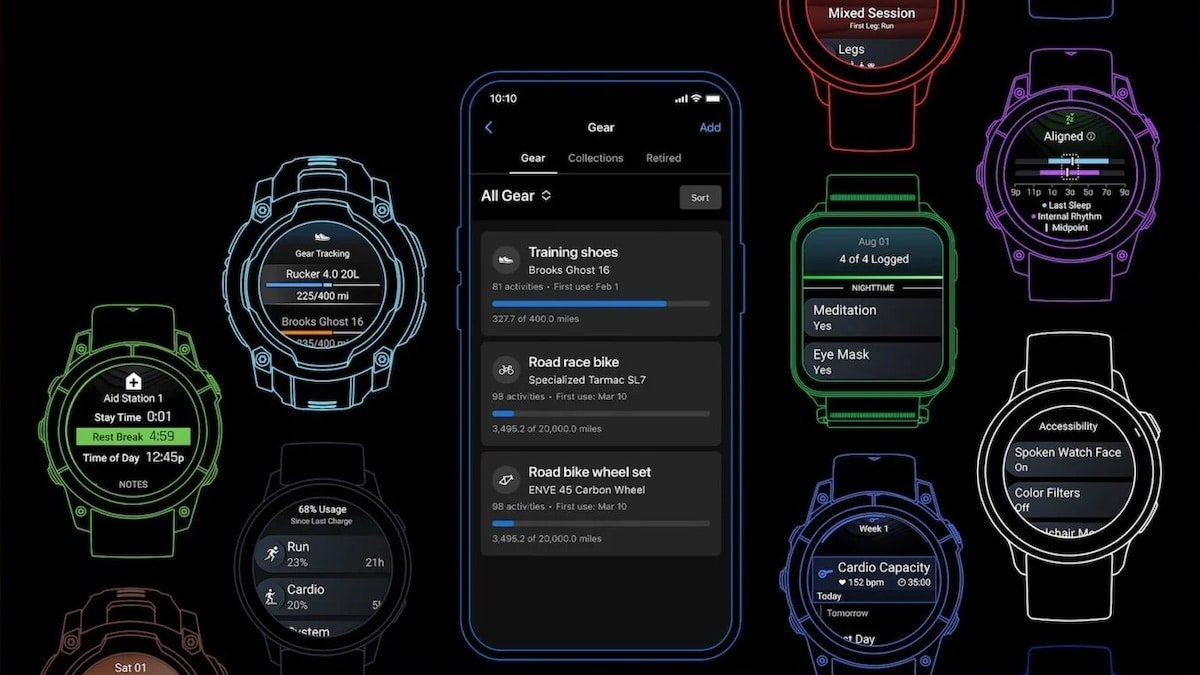
Garmin has begun rolling out its February 2026 software update and it touches a lot of products at once. Gear tracking gets a proper overhaul and newer watches pick up features like course planner, mixed sessions and sleep alignment, but the comparison tables make it clear that access depends heavily on which model you own.
The update covers devices such as Venu X1, vivoactive 6, Forerunner 570 and 970 and the latest fēnix and Enduro watches, alongside more limited updates for others. On paper it looks generous. In practice it reinforces the familiar split between newer and older hardware. And this seems to be by choice rather that the result of hardware limitations.
Gear tracking finally feels finished
Gear tracking is where Garmin did the most real work this time. The feature now supports more gear types, includes a searchable database for shoes and bike models and lets you group items into collections. Once set up, gear can be auto assigned to activities without much thought.
What really helps is that some watches now show gear usage directly on the wrist, including a simple progress indicator. It turns gear tracking from something you occasionally remember to log into something that just runs in the background. This part of the update lands well and feels overdue.
New features land unevenly
The other headline additions are course planner and sports scores. Course planner lets you build a race or long effort in Garmin Connect, complete with cut off times and checkpoints, then follow it on the watch. Sports scores bring live match info to your wrist when paired to a phone.
Alongside those are mixed session tracking, expanded Garmin Fitness Coach plans, sleep alignment and lifestyle logging for things like caffeine and alcohol. On recent watches these features slot in naturally. On older models many of them simply do not appear at all.
Looking at the comparison tables, the pattern is obvious. Newer and higher end watches get almost everything. Mid range models get some of it. Older devices and certain Edge computers rely on the phone app or miss out entirely.
So are older devices being left behind
This is what most of the debate is circling around. People with newer watches are largely fine with the update – no surprise there. But those on devices that are only a few years old are a lot less relaxed, especially when missing features feel like software decisions rather than hard hardware limits.
From Garmin’s perspective, this is familiar territory. New features usually move forward with new launches and only occasionally flow back. It is less about price or materials and more about where a device now sits in Garmin’s current lineup.
From the user side, that can feel frustrating. A watch that is only a few years old can suddenly fall into a grey zone where it still works fine but stops picking up new software ideas. When those features look mostly software driven, the gap is harder to justify.
The February 2026 update does move things forward in sensible ways. Gear tracking finally feels useful. Training tools are a bit more flexible. Accessibility additions matter for the people who actually need them.
At the same time, it also shows how chopped up the lineup has become. Two watches that look very similar on paper can now feel quite different in day to day use. That gap does not look like it is closing anytime soon, and it is something people will keep in mind when the next round of Garmin watches lands.
Sources: Garmin Quarterly Update, press release
Subscribe to our monthly newsletter! Check out our YouTube channel.
And of course, you can follow Gadgets & Wearables on Google News and add us as a preferred source to get our expert news, reviews, and opinion in your feeds.
