

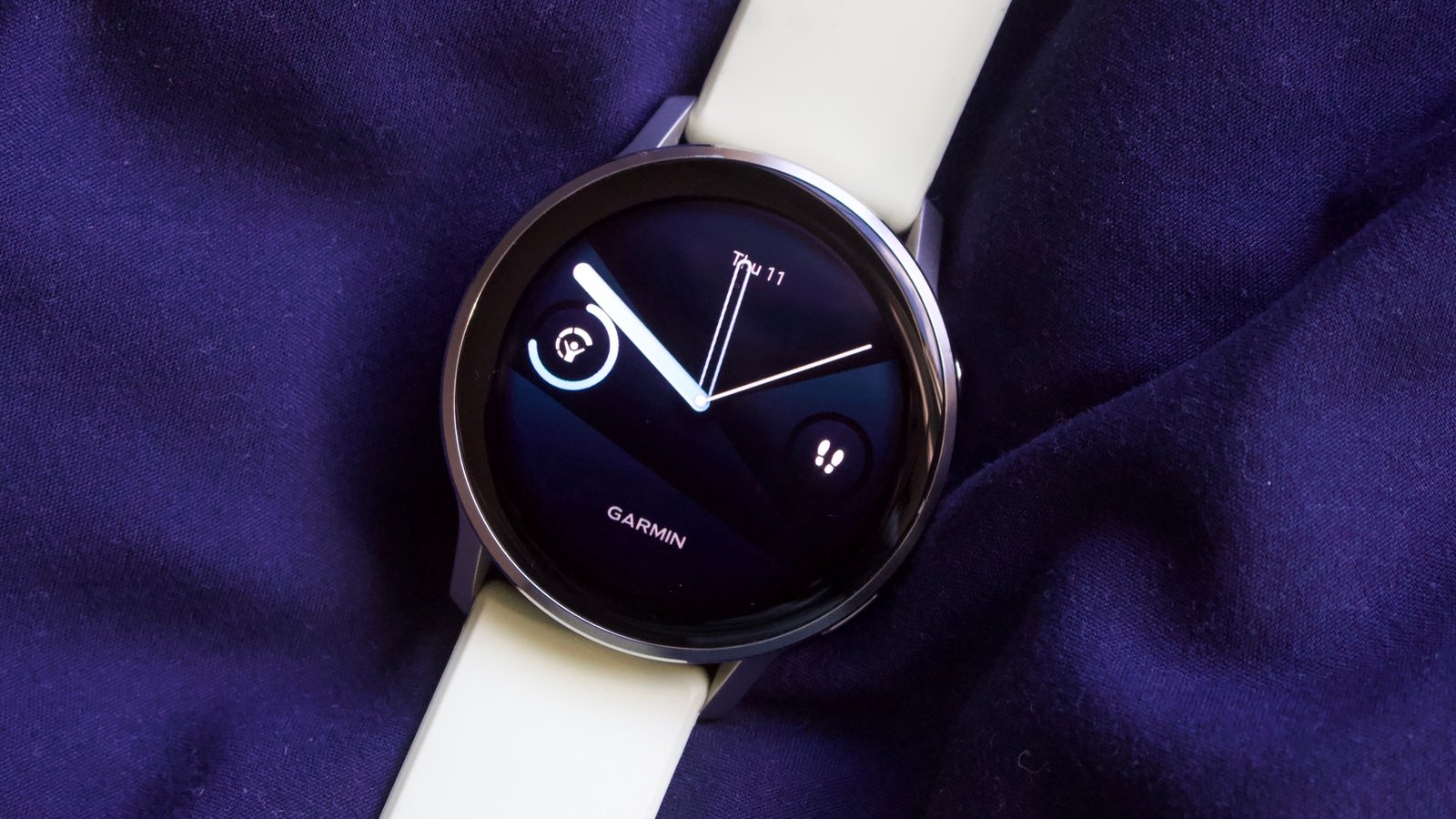
A stylish and balanced update at a big cost
The Garmin Venu 4 is undoubtedly the brand’s most polished smartwatch-styled tracker to date. It successfully bridges the gap between a lifestyle wearable and a serious sports tracker, adding a brighter AMOLED display, a handy flashlight, and reliable dual-frequency GPS. However, a significant price hike makes it harder to recommend over the best smartwatches—at least for the casual user. It remains a superior fitness tracker with far better battery life than its rivals, but, at this price, you really have to want those specific Garmin strengths to justify the premium.
More premium feel than previous generations
Flashlight on both case sizes
Wide range of tracking software upgrades
A hefty price jump from Venu 3
Still quite limited smart features
Fewer physical buttons
The Venu line has long served as Garmin’s main alternative to the Apple Watch—a fitness-focused tracker that’s both unisex and stylish. That’s all still true with the latest edition, the Venu 4.
It remains Garmin’s most well-rounded device for the downtime between workout sessions. And, for the first time, lands with a more expensive sibling above it: the square-faced Venu X1, which arrived last summer.
That doesn’t mean the Venu 4’s price has been squeezed, though. Instead, it follows an unfortunate trend for Garmin launches over the last couple of years, and arrives at a much higher cost than previous generations.
Somewhat justifying the extra outlay, the Venu 4’s key upgrades include a full-metal case, a brighter display, a built-in flashlight, and dual-frequency GPS—as well as the brand’s latest suite of tracking insights.
It’s a comprehensive update and a worthy upgrade for previous Venu owners, but the lofty price tag means there’s now a very good reason to opt for an Apple Watch or Android watch instead. Here’s our full impressions from long-term testing.
Advertisement
Price and competition
As mentioned, the Venu 4 does cost a fair chunk more than the Venu 3. The Venu 4 arrives at $549.99, which is an $100 increase from the Venu 3’s initial MSRP. If you shop around, you can pick up the Venu 3 for closer to $349.
This pushes the latest Venu into a very different pricing category than before, where it sat much closer to the Apple Watch, Google Pixel Watch, and others. For watches like this, there’s not many that sit north of $500.
The Apple Watch Series 11 starts at $399, and the Google Pixel Watch 4 is also cheaper at $349.99. These are less capable, long-lasting fitness trackers than the Venu 4, but far superior smart devices.
Instead, the Venu 4 pushes more towards the price of flagship sporty smartwatches, like the Polar Vantage V3 ($699) and Suunto Race 2 ($499).
Within Garmin’s lineup, it also notably competes with the similarly priced Forerunner 570, though it is at least $200 less expensive than Garmin’s top-end Forerunner 970.
Advertisement
Design and display
(Image credit: Wareable)
The Venu remains a smartwatch available in 41mm or 45mm case sizes. Both versions feature design updates from the Venu 3, including added steel, resulting in a slightly heavier and thicker appearance. The case color and strap options continue to provide some of the most unisex choices in Garmin’s lineup. Overall, though, it remains a sleek look and is very comfortable to wear during workouts, sleep, and everything in between.
A significant upgrade is the addition of the flashlight. Similar to the Forerunner 970 and Fenix 8, this LED torch is located on the top edge of the case and can be activated by pressing and holding the bottom physical button. We’ve mentioned this feature in other reviews, and we’re big fans. Although it isn’t as bright as the ones on the 970 or Fenix 8, we’ve found it helpful at night, both indoors and outdoors.
(Image credit: Wareable)
The screen you’ll be staring down at is the same size and resolution as the one found on the 45mm Venu 3. That’s a perfectly vibrant, sharp 1.4-inch AMOLED touchscreen with a 454 x 454 resolution.
Brighter all around
We had no major complaints about the Venu 3’s visibility, even in sunny conditions, but the Venu 4’s display is also much brighter. Garmin has doubled the panel’s maximum brightness to 2,000 nits. And while you’re not likely to have it running at full tilt all the time, it’s definitely a handy upgrade for those who spend a lot of time outdoors.
Advertisement
Aside from those new features and the odd design tweak (such as dropping the indices from the 41mm Venu 3 for this generation), much remains the same. That ensures this latest edition also features an expected 5 ATM rating, making it suitable for submersion to a depth of 50 metres. We’ve jumped in the pool with it and kept it on for showers, and while you might find the screen can be activated during a wash, it’s disabled when you use the onboard swim tracking.
Smart features
(Image credit: Wareable)
Garmin has upgraded the Venu 4 with its newest in-house OS, integrating sports and health features more closely with smartwatch functions. Overall, it performs effectively. Features like animations when achieving step or elevation goals enhance the watch’s stylish and sometimes playful software.
True to Garmin’s design, the watch offers plenty to explore. And, unlike its sport-focused models, most interactions are performed through the touchscreen, with just two physical buttons on offer this time. That’s a downshift from the three available in the previous generation, and it’s not a change we necessarily love.
Having a third button wouldn’t change the overall feel of the case, but it would significantly change how you navigate the Venu 4. Without it, we found ourselves spending more time cleaning the touchscreen from constant swipes around the UI.
(Image credit: Wareable)
Advertisement
Elsewhere, you’re getting almost all of Garmin’s smartwatch features, except for the LTE capabilities added to the Fenix 8 Pro.
It’s still a watch that displays your notifications effectively. And if you have an Android phone, you’ll find the notification features more extensive, including pulling in images, replying to texts, and managing calls. Android users can even mirror turn-by-turn directions from Google Maps, which remains a neat touch (that we wish was available via iOS).
The built-in microphone and speaker now have more uses, too. Previously, you could take calls over Bluetooth, but you can now speak to your Venu 4 to adjust screen brightness, set timers, or display the current weather. The voice command has been a bit buggy for us—often booting us out of the feature after we ask it to do something—but, given we’ve had solid experiences with this on other models, we’re inclined to think it’s just a one-off with our test unit.
(Image credit: Wareable)
Business as usual
Features like payments and music support are also pretty well executed—particularly the latter, which is the best you’ll find from a non-smartwatch brand.
The ability to add third-party music services such as YouTube Music and Spotify to let you store audio offline (music service subscription permitting) remains something that Polar, Suunto, and Coros just simply can’t offer. It also means Garmin has a key smart feature in its comparison with Apple and Android watches.
Advertisement
Garmin Pay support is less solid, given bank support varies dramatically by country, so it’s worth checking compatibility first if this is a feature you want to put to good use. And, after many years of waiting, there are still no signs of any improvement in places like the UK for this feature.
Access to Garmin’s Connect IQ Store provides access to more apps, watch faces, and data fields. This still won’t give you anything close to the experience of the Apple App Store or Google Play Store in terms of breadth of apps or overall polish, however.
(Image credit: Wareable)
‘How was your day?’
Another neat addition is the brand’s Evening Report, which bookends the existing morning report available on the likes of the Venu 3. Around 90 minutes before a scheduled bedtime, users are prompted by a screen showing any upcoming alarms, events, and workout suggestions based on the day’s activity. These reports are also customizable, allowing you to control the information you see.
The biggest compliment to pay Garmin is that other smartwatches have adopted this feature in the last year or so since it first arrived. We personally find the morning reports more useful, but the evening updates are a nice, natural touch and can help refocus your intentions and decisions for the next day before bed.
Health and sleep tracking
(Image credit: Wareable)
Advertisement
Speaking of sleep, the Venu 4 provides Garmin’s most advanced sleep tracking available. It features a sleep alignment metric not found on earlier Venu models, which assesses how well your sleep aligns with your natural circadian rhythm. To gain this insight, you’ll need to wear the Venu for three weeks to determine if your sleep patterns are well synchronized.
This all heavily depends on Venu’s ability to accurately track your sleep. We compared its core sleep statistics to those from the Oura Ring 4, one of the top trackers available, and found that Venu performed quite well.
Most nights showed about a 10-minute difference in sleep duration. The recorded times for falling asleep and waking up were also similar. However, sleep stages showed more time spent in certain stages. Sleep scores tended to be more lenient, even on nights with poor sleep.
(Image credit: Wareable)
Heart rate tracking and Health Status
Garmin continues to use its latest Gen 5 Elevate heart rate sensor, providing continuous heart rate data and Bluetooth pairing with external monitors. Heart rate accuracy, both during continuous monitoring and during workouts, has generally been reliable. Even during more intense sessions, as shown below, it performed well compared to Garmin’s HRM 600 chest strap.
(Image credit: Wareable)
Advertisement
Along with the ECG support offered with the last Venu, we’re now also getting a new Health Status insight. Garmin has tagged this feature as beta. It essentially monitors heart rate, HRV, respiration, skin temperature, and Pulse Ox (if enabled) data ranges during sleep.
It’s a bit like Whoop’s Health Monitor feature, and aims to make it easier to identify when ranges might be a bit off. It’s easily viewable from the watch when added as a widget, and, while not completely ready to launch, it displays some reliable-looking metrics.
(Image credit: Wareable)
Discover your trends
Another addition to the health features is Lifestyle Logging.
Similar to features on other smartwatches, it works by recording specific events in your day to help connect those behaviors with the metrics the Venu can monitor. This includes logging caffeine consumption, using nasal strips, sleep patterns, late meals, or time spent with your kids.
(Image credit: Wareable)
Advertisement
You can log behaviors directly from the watch, making it more inviting to use. Is it a groundbreaking feature? Not exactly.
Really, this depends on how invested you are in discovering your personal trends—and how that develops over time once you’ve gleaned some initial info. We think even the most dedicated users will struggle to keep up manually logging for months and years on end—and the prompts can get tiring on those weeks when you’re not fully invested.
Still, it’s an example of Garmin catching up with the rest of the crowd here, so it’s difficult to fault it too heavily. We only wish it were a bit more proactive, along the lines of Whoop’s Healthspan feature, which automatically pulls many of these trends without manual logging.
Sports and fitness tracking
(Image credit: Wareable)
Sports tracking is Garmin’s core strength—so, naturally, the Venu 4 excels in this area. It offers many features, including some significant ones for both runners and Pilates enthusiasts.
That’s led by Garmin’s excellent, tried-and-tested dual-frequency GPS, which gives you the best positioning technology that the brand has to offer right now.
Advertisement
We’ve been using it side-by-side with another Garmin with the same architecture (the Forerunner 970), and, while data for distance tracking hasn’t been identical, it’s been the kind of difference we’d be content with seeing at the end of a race. And, crucially, it’s a step up from the Venu 3’s single-band capabilities.
(Image credit: Wareable)
(Image credit: Wareable)
(Image credit: Wareable)
Garmin’s Daily Suggested Workouts, which used to focus mainly on cycling and running, now also include walking and general fitness routines to appeal to a broader audience.
These options appear when you track specific activities or are prompted in your morning and evening reports. Overall, there are more features for users interested in tracking activities beyond the core ones like running, cycling, and swimming.
(Image credit: Wareable)
A much-improved workout companion
The Garmin Venu 4 now also includes access to strength-focused Coach workouts, previously available only to runners and cyclists on higher-priced models. It also supports multi-sport transitions, making it suitable for triathletes.
Advertisement
Meanwhile, outdoor enthusiasts will appreciate the improved navigation features, such as breadcrumb-style navigation, back-to-start, and trackback modes (even if the watch still lacks the full mapping capabilities of Garmin’s dedicated outdoor watches). These upgrades, at the very least, should help users stay on course and easily find their way back, making the watch a more versatile tracker than any Venu before it.
(Image credit: Wareable)
While you might miss some of Garmin’s newest training metrics, the essential ones are included. So, Training Readiness is on hand to provide a quick overview of your recovery needs, and Garmin’s Body Battery remains a superb way to check in on your energy levels during the day.
Metrics like Training Status also allow you to analyze the reasons behind your productive or unproductive training weeks based on data such as VO2 max and heart rate variability. If you’re interested in these training insights and features, there’s plenty available that aligns well with what another Garmin watch showed us about our training progress.
Battery life
(Image credit: Wareable)
A look at the quoted battery life numbers for the Venu 4 shows a smartwatch that has dropped in performance, whether you’re using its smartwatch features or more power-sapping ones like GPS. It’s 12 days instead of 14, or 4 days instead of 5 if you keep the screen on at all times.
Advertisement
Yet we never felt shortchanged by the battery, and it certainly didn’t require charging every 1 or 2 days like proper, fully-featured smartwatches. With the screen set to always-on, it would typically last to a fifth day before needing a top-up. So, if you can live without the screen being on continuously, you will absolutely get closer to the promised maximum of 12 days.
The addition of dual-frequency GPS means that using it in the most accurate GPS mode will drain the battery faster—but no more so than other Garmin watches with the same hardware. We’ve been testing alongside a Forerunner 970, and the battery drop after an hour’s use was the same, 4%.
As ever, Garmin also includes a battery-saver mode to extend the Venu 4’s life and get more time out of it. And the battery estimate mode (which shows battery life in days instead of a percentage) gives you a helpful, dynamic sense of when you might need to grab the charger, depending on what you’re doing (for example, this estimate changes when you turn the flashlight on).
As you would expect, you also get Garmin’s proprietary charging cable included. It’s pretty unhelpful to have to carry around a cable that isn’t USB-C these days, obviously, but the brand won’t change anytime soon, so you’ll have to make your peace with it.
