

With gas prices trending upward this spring, the appeal of going electric for some has never been stronger.
However, with the average price of a new EV (and vehicles overall, regardless of powertrain) still hovering at historic high transaction prices, those who are interested in trading their vehicle for something else may feel stuck between a rock and a hard (i.e., expensive) place.
The good news for those who want to go electric is that the used EV market in 2026 has reached a tipping point. Heavy depreciation on earlier long-range models, combined with the arrival of redesigned 2026 models in showrooms, means you can now pick up a capable electric commuter for a fraction of its original MSRP.
If you’re looking to trade your gas station stops for home charging, these three used EVs offer the best combination of range, reliability, and value.
3
Nissan Leaf (2018–2025)
Bargain-bin escape from high gas prices
The Nissan Leaf has a long history, but like any other successful consumer product, it’s undergoing an identity shift to stay competitive in a new market. With the all-new, crossover-style 2026 Leaf now arriving at dealerships, the classic second-generation hatchbacks can serve as a bargain-bin escape from high gas prices.
- The 2026 Shift: Nissan’s recent move to a liquid-cooled battery and NACS (Tesla-style) charging port for the newest generation makes the older air-cooled models much easier to negotiate for at the dealership.
- Total Range: While the 2026 model targets over 300 miles of range, you can snag a used Leaf Plus (2019–2025) with a 62 kWh battery that offers a respectable 215 miles.
Base Trim Engine
EV
Base Trim Transmission
Automatic
Base Trim Drivetrain
Front-Wheel Drive
- Trade-off: Older models use the CHAdeMO fast-charging standard, which is becoming less common than the CCS or Tesla NACS plugs. Crucially, unlike other EVs, the Leaf lacks a widely supported adapter for the Tesla Supercharger network. However, if you plan to charge 90% of the time at home, this older plug is actually a strong reason to demand a lower sales price.
Best for: Budget-focused buyers who want a reliable, comfortable commuter and have a dedicated place to charge at home.
What’s Included
M12 impact driver, hammer drill, 3/8-inch ratchet, charger, two batteries
Warranty
5-year warranty on tools, up to 3-year warranty on batteries.
If you’re looking for a great DIY starter kit from Milwaukee, this M12 3-tool combo kit is it. With an impact driver, hammer drill, and 3/8-inch ratchet, along with a 4Ah and 2Ah battery, this kit is a great starting point for projects both at home and on your vehicle.
2
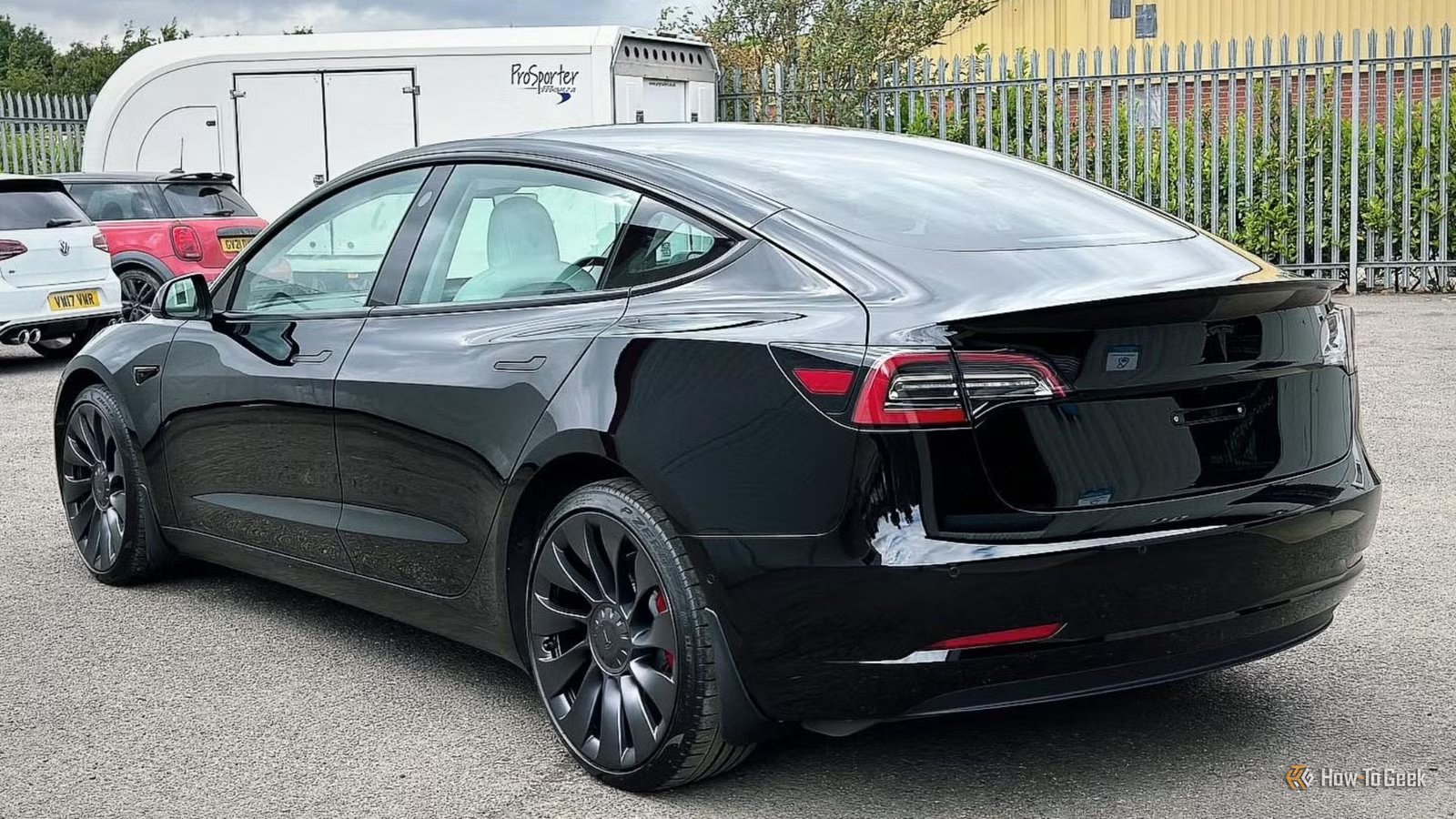
Tesla Model 3 (2017–2021)
One How-To Geek staff member traded his BMW M2 for a Model 3
It might seem rare to call a Tesla a budget pick, especially in light of more recent news around the MSRP for the discontinued Model S and X, but early Model 3s have become a sweet spot on the 2026 used EV market.
While Tesla introduced a new base Standard trim for $36,990, savvy shoppers are targeting 2019 through 2021 model years, which have dipped into the $18,000 to $22,000 range.
- New Features for Less: The 2026 base model omits several premium touches to hit its price point. By going used, you can find Long Range versions that include the 14-speaker audio system and the dual-motor all-wheel drive system, features often missing or restricted on the new Standard trim, for about half the price of a new one.
- Supercharger Network: The biggest perk of buying a used Tesla remains its seamless access to the Supercharger network. Even as other manufacturers switch to Tesla’s NACS plug-in, the software integration in an actual Tesla from the start makes longer trips more manageable.
Base Trim Engine
Electric
Base Trim Transmission
Single Speed Automatic
Base Trim Drivetrain
Rear-Wheel Drive
- Updated Features: Unlike a pre-owned gasoline vehicle, an older Model 3 may have more features than when it was new because of over-the-air updates from Tesla. Whether new infotainment options or refinements to the regenerative braking system, these real-time updates bring additional value that other used vehicles won’t match.
Best for: Drivers who want high-end tech and the world’s best charging infrastructure without the sticker shock of a new car.
Here at How-To Geek, one of my colleagues traded his beloved BMW M2 for a Tesla Model 3. While nervous at first, he now has no regrets trading for his 2021 Model 3, because not only did he save money making the switch to electric, but the car is also a blast to drive.
Related
Buying a used hybrid? 5 critical checks that could save you thousands
The biggest headache with a used hybrid isn’t always the main battery.
1
Chevrolet Bolt EV & EUV (2017–2023)
The people’s champion of the EV world
The Chevy Bolt takes our top spot because it represents the most mathematically sound way to escape high gas prices in 2026. While the nameplate has seen its share of ups and downs, the Chevy Bolt remains the range-per-dollar king on the pre-owned market.
- Battery Recall: Every Bolt produced between 2017 and 2022 was recalled for new battery packs as part of an extensive, and later expanded, NHTSA campaign. Buyers looking at a pre-owned Bolt should ask whether the recall has been performed on the specific Bolt they are considering. If the recall has been completed, the new battery would have been “reset” with a full factory warranty, regardless of the Bolt’s model year or miles.
- Long-Range Driving: EPA-rated from 238 to 259 miles of range. Even by 2026 standards, that is more than enough to handle a week of average commuting without ever needing to touch a public charger.
Base Trim Engine
Electric
Base Trim Transmission
Single Speed Automatic
Base Trim Drivetrain
Front-Wheel Drive
- Bolt EV vs. EUV: If you want a bit more rear legroom and the option for Super Cruise (GM’s hands-free highway driving tech), look for the EUV model introduced in 2022. It’s slightly larger and feels more like a crossover.
- Slow Charging Catch: The only real downside to the older Bolt is its 55kW peak DC fast-charging speed. While the 2026 model has targeted charging speeds nearly three times faster (roughly 150kW), the older versions take about 60 minutes to go from 10% to 80% at a public station.
Best for: The pragmatic buyer who wants the most range for the least money and does the vast majority of their charging at home.
Quick tips before you buy a pre-owned EV
Escaping the volatility of gas prices is a great feeling, but used EV shopping requires a slightly different checklist than a traditional car.
- Battery Health: Ask the dealer for a battery State of Health report. Most modern EVs display a battery health percentage in the settings menu. If it’s below 80%, use that as a negotiation tool.
- Verify the Port: Most public chargers are switching to the Tesla-style NACS plug. If your used EV has a CCS or CHAdeMO port, budget about $150 to $200 for a high-quality adapter.
- Test Drive: Because EVs don’t have engine noise to mask other sounds, you’ll be able to hear worn suspension components or interior rattles more clearly. Pay attention to the regenerative braking process, too. Ensure the vehicle slows down smoothly and naturally when you lift off the accelerator on the test drive, an indicator that the motor and inverter are communicating correctly.
Switching to a pre-owned EV doesn’t just save you money at the pump; it can also reduce your maintenance costs and give you a much quieter driving experience. If you have the ability to charge at home and a daily commute under 150 miles, the math for a used EV has never looked better.
